Waiting on the Mail: When American Life Ran on Postage Stamps and Patience
The Sound of the Mail Truck
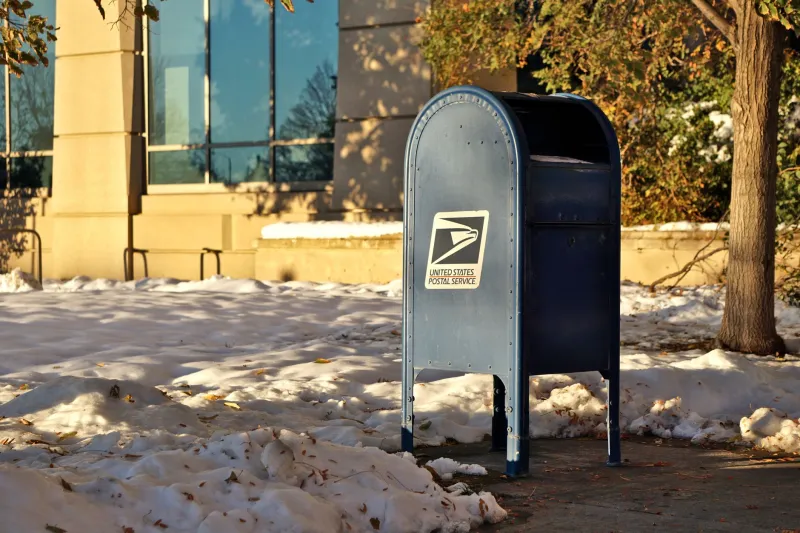
There was a particular sound — a specific combination of engine rumble, squeaky brakes, and the metallic snap of a mailbox lid — that once organized a significant portion of the American day. If you grew up before the internet made everything instant, you probably remember exactly what it felt like to hear that sound and walk down the driveway to see what had arrived.
Maybe it was a letter from a college you'd applied to. Maybe it was a check you'd been waiting on. Maybe it was just a catalog and a water bill. But you didn't know until you opened the box. And that not-knowing, that daily ritual of anticipation, was woven into the fabric of ordinary American life in a way that's genuinely difficult to reconstruct now.
The mail wasn't just a delivery system. It was a rhythm. And for most of the twentieth century, American life ran to that rhythm in ways most people have completely forgotten.
The Architecture of Waiting
Consider what it actually meant to send a letter in, say, 1975.
You wrote it — by hand or on a typewriter — and you thought carefully about what you said, because there was no unsending it. You addressed the envelope, affixed a stamp, and dropped it in a mailbox. If you were lucky and mailing within the same region, your letter might arrive in two or three days. Cross-country, you were looking at a week. International mail could take two to three weeks, sometimes longer.
Now think about what that meant for the actual business of living.
If you were applying for a job, you mailed your resume and cover letter and then waited — genuinely waited, sometimes for two or three weeks — before you could reasonably expect any response. If you were corresponding with a relative about holiday plans, you needed to start that conversation in October to have it resolved by December. If you were a small business owner waiting on a payment from a client, you built that lag time into your cash flow calculations, because the check really was in the mail, and the mail really did take that long.
Decisions that today happen in the span of a text message thread once unfolded over weeks of careful, considered correspondence. The pace wasn't a bug. It was the only option available, and people structured their lives around it accordingly.
When a Postal Strike Was a National Emergency
If you need evidence of how central the postal service once was to American life, look no further than the 1970 postal strike — the first and only time in American history that a federal workforce went on strike in defiance of federal law.
The walkout began in New York City and spread across the country within days. The Nixon administration declared a national emergency and deployed the National Guard to sort mail in New York City. The guardsmen were largely ineffective — mail sorting is a skilled job — and the backlog became catastrophic within days.
Banks couldn't process transactions. Businesses couldn't receive payments. Social Security checks didn't arrive. People who depended on mailed medications ran short. The entire country felt the disruption almost immediately, because the entire country was running on mail in ways that had no backup system.
That's how load-bearing the postal service was. It wasn't a convenience. It was the circulatory system of American commerce and communication.
The Love Letter Problem
There's a dimension of the mail era that gets lost when we only talk about logistics and commerce, and that's what it meant for personal relationships.
Writing a letter to someone you cared about — whether a romantic partner, a faraway friend, or a grandparent in another state — was an act of sustained attention. You sat down, you gathered your thoughts, and you wrote something that was meant to carry emotional weight across a physical distance. You couldn't fire off a quick message and follow it up two minutes later with a clarification. What you wrote had to stand on its own for however long it took to arrive.
And on the receiving end, that letter was an event. People saved letters. They re-read them. They kept them in shoeboxes and dresser drawers and returned to them years later. A letter from someone you loved was a physical object that held meaning in a way that a text notification simply cannot replicate.
The slowness enforced a kind of emotional intentionality. You didn't write to someone because it was easy. You wrote because you meant it.
Same-Day Everything and the Collapse of Patience
The shift didn't happen all at once. Email arrived gradually in the 1990s and slowly drained urgency from the postal system. Then came online shopping, which initially still involved a five-to-seven business day wait for delivery — a timeline that now feels antique. Then Amazon Prime normalized two-day shipping. And then one-day. And then same-day.
Today, the expectation isn't just that communication is instant. It's that physical objects should arrive almost as fast as information. The gap between wanting something and having it has been compressed to the point where waiting even 48 hours can feel like an inconvenience.
This is, by any practical measure, extraordinary. The logistics infrastructure required to deliver a package ordered at 9 a.m. to a front door by 8 p.m. the same day is genuinely staggering.
But something has been recalibrated in the process. The patience that mail demanded — the capacity to sit with wanting something, to plan around a delay, to let anticipation build over days rather than hours — has largely atrophied. We are less practiced at waiting than any previous generation in American history.
What the Mailbox Knew
There's a reason the mailbox was once such a charged object in American life. It represented possibility and disappointment in roughly equal measure. Good news and bad news arrived in the same slot, at the same time, and you couldn't know which was waiting until you opened it.
That uncertainty taught something. It taught people to plan ahead, to communicate deliberately, to value the response when it finally came. The slowness wasn't just a feature of the technology. It was a feature of the culture that grew up around that technology.
The mail still runs six days a week across most of the country. The trucks still make their rounds. But the mailbox at the end of the driveway carries a fraction of the emotional and practical weight it once did.
Something arrived, and then something faster replaced it. Whether we're richer or poorer for the trade is worth a moment's thought — which, appropriately enough, is about all the time we tend to give things anymore.