Rows Between the Roses: When the American Backyard Was a Working Garden, Not a Weekend Project

Photo: Joe Haupt from USA, CC BY-SA 2.0, via Wikimedia Commons
Somewhere between the patio furniture and the fire pit, the American backyard quietly changed its job description. For most of the twentieth century, that patch of ground behind the house wasn't primarily a place to relax. It was a place to work. And the work it did — growing actual food that actual families actually ate — was considered ordinary, not impressive.
Today, a neatly labeled herb planter earns a spot on Instagram. In 1955, a similar setup would have been considered the bare minimum.
From Victory Gardens to Everyday Vegetables
The story of the American kitchen garden doesn't start in the postwar suburbs. It starts a few years earlier, during World War II, when the federal government launched one of the most successful domestic food campaigns in the country's history.
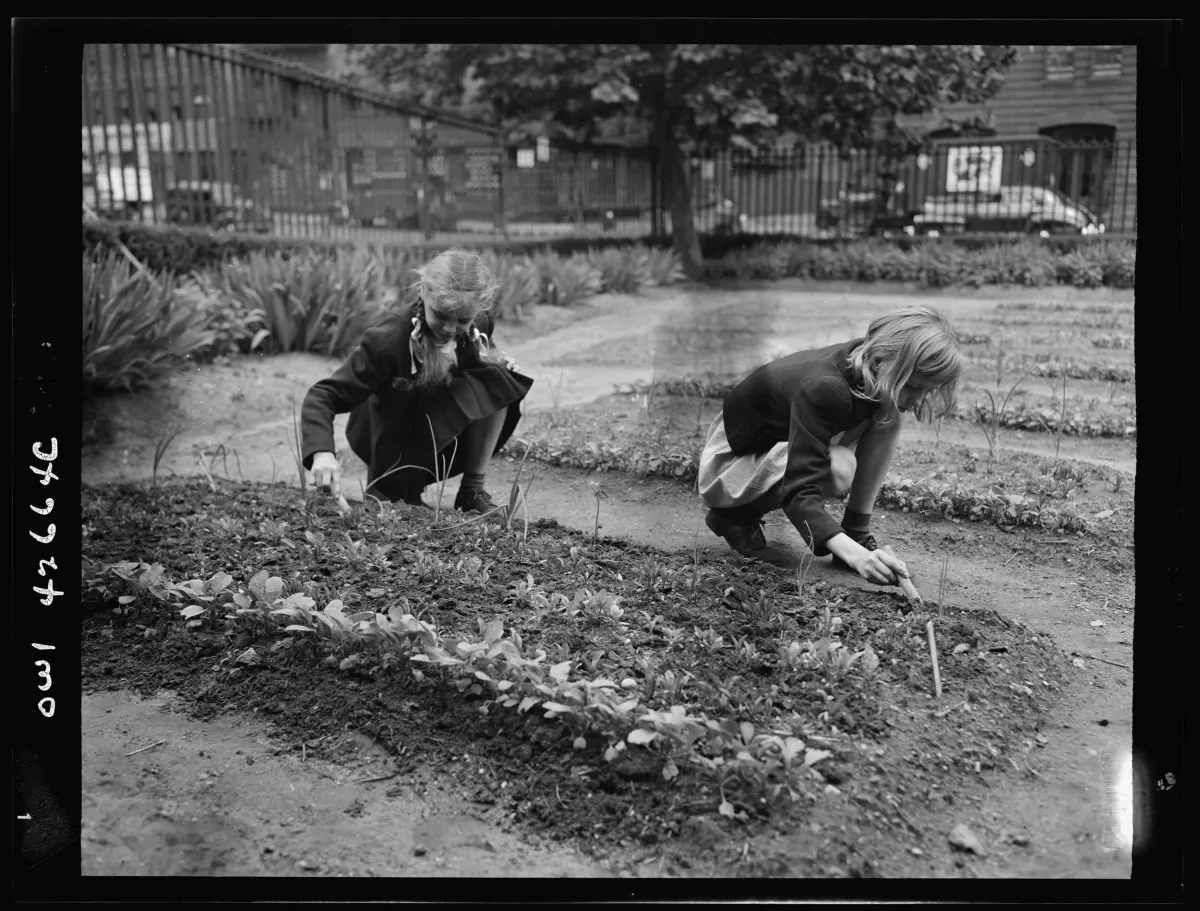 Photo: Victory Gardens, via www.treehugger.com
Victory Gardens were a national response to wartime food rationing and supply chain pressure. The government encouraged — and in some cases essentially expected — American households to grow their own vegetables, freeing up commercially produced food for military use. At the program's peak, an estimated 20 million Victory Gardens were producing roughly 40 percent of the fresh vegetables consumed in the United States. People were gardening in backyards, vacant lots, city parks, and rooftops.
 Photo: United States, via img1.etsystatic.com
When the war ended, many of those gardens didn't. The habit had taken root — literally and culturally. For families that had grown up during the Depression and then rationed through the war, growing your own food wasn't a political statement or a lifestyle choice. It was simply what sensible people did.
The Practical Garden of the 1950s and '60s
In the postwar decades, a working backyard garden was a normal feature of American domestic life — particularly in rural areas and smaller cities, but common enough in the suburbs too.
These weren't decorative gardens. They weren't curated or photographed. They were productive. A typical plot might include tomatoes (always tomatoes), green beans, summer squash, cucumbers, peppers, and whatever else the family ate regularly. Corn if there was enough space. Potatoes if the soil was right. Strawberries along a fence line.
The harvest wasn't just for summer salads. It fed the whole year. Home canning was a serious domestic skill, not a craft project. Families put up dozens of quart jars of tomatoes, pickles, green beans, and preserves every August and September, lining cellar shelves with food that would last through winter. A good canning season meant real financial relief — fewer trips to the grocery store, lower food bills, better eating through the cold months.
Seeds were saved and traded between neighbors. Composting happened naturally because throwing away kitchen scraps felt wasteful. Watering was done by hand or with simple hoses, and children were expected to help. The garden was a family enterprise, not a solo pursuit.
What Drove It: Necessity, Not Novelty
It's important not to romanticize the working garden of the mid-twentieth century. Most families didn't tend their plots because they found it spiritually fulfilling or because they were worried about pesticide exposure. They did it because fresh produce was expensive, sometimes scarce, and because growing your own was simply the practical thing to do.
For rural families and those in smaller towns, the grocery store might be a real distance away, and the selection when you got there was often limited. A backyard garden provided variety and freshness that the store couldn't always match. For urban and suburban families on tight budgets, homegrown vegetables represented genuine savings — real money that didn't have to be spent on food.
The relationship with the food was also fundamentally different. You knew exactly where it came from because you put it there. You watched it grow. You picked it at the right moment because you'd learned what ripe actually looked like. The tomato you ate in August tasted the way it did partly because it had been on the vine that morning.
The Long Drift Away From the Soil
The working kitchen garden began its slow retreat in the 1960s and '70s, pushed back by a combination of forces that all pointed in the same direction: away from the effort of growing and toward the convenience of buying.
Supermarkets expanded dramatically, offering year-round produce at prices that made gardening feel less financially essential. Frozen vegetables became a staple of the American freezer. The rise of two-income households meant less time at home for maintenance-heavy activities. Suburban lots got smaller. And perhaps most significantly, a generation grew up eating food that came from stores rather than soil — and found the idea of growing their own food slightly unfamiliar, even unnecessary.
By the 1990s, the backyard vegetable garden had shifted from a normal domestic feature to an optional hobby. People who kept serious kitchen gardens were seen as unusually dedicated — the kind of people who made their own jam and had opinions about heirloom tomato varieties. Which, of course, some of them did.
The Rediscovery — and What It Reveals
Here's the irony that makes the whole arc so interesting: Americans are rediscovering backyard gardening right now, and they're treating it like a discovery.
The pandemic years sent millions of people to their backyards with seed packets and YouTube tutorials, producing what garden supply retailers described as the biggest surge in home gardening in decades. Young urban dwellers are growing herbs in apartments. Container gardens are everywhere. Farmers' markets have become social destinations. There's a whole aesthetic built around the "kitchen garden" — raised beds with neat signage, companion planting, composting systems that cost more than a semester of community college.
None of this is bad. It's genuinely good that people are reconnecting with where food comes from. But the fact that growing a tomato now feels like an achievement worth posting about says something real about how far the disconnect has traveled.
For a postwar grandmother who put up sixty jars of tomatoes every August while also raising three kids and holding down part-time work, a single raised bed of cherry tomatoes would not have been a lifestyle statement. It would have been a Tuesday.
Two Generations, Two Different Relationships With the Ground
What changed wasn't just behavior — it was the entire framework through which Americans understand their relationship to food. For mid-century households, food was something you participated in producing. Today, for most Americans, food is something you consume. The supply chain is invisible, the seasons are irrelevant (strawberries in December, no problem), and the idea that your backyard could meaningfully contribute to what you eat feels slightly radical.
The working garden didn't just feed families. It kept them connected to a basic truth: that food comes from somewhere specific, requires actual labor, and tastes better when you had something to do with making it happen.
That truth didn't go anywhere. It's just been waiting patiently in the soil for someone to remember it.