Static, Luck, and a Dollar Forty-Nine: How Teenagers Once Hunted Down Music They Loved
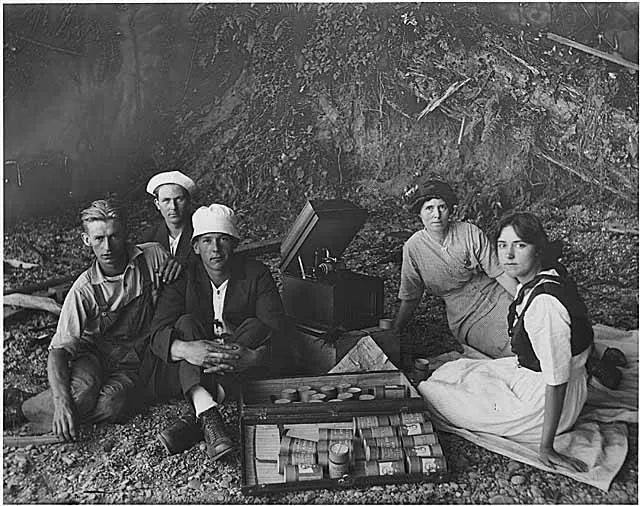
Photo: Carl Henry Moen, Public domain, via Wikimedia Commons
There's a specific feeling that barely exists anymore — the feeling of hearing a song for the first time through a car radio, not knowing who made it, scrambling to catch the DJ's announcement before the next track started, and then spending the next three days trying to find it again.
For American teenagers across four decades, that was just how music worked. Discovery was an event, not a feature.
The DJ Was the Algorithm
In the 1950s, rock and roll arrived in American bedrooms through a small miracle of engineering: the transistor radio. Cheap enough to actually own, small enough to hide under a pillow, powerful enough to pull in signals from stations miles away, the transistor radio gave teenagers their first genuinely private soundtrack. Parents didn't have to approve the station. Nobody else had to be in the room.
But the music you heard was entirely at the mercy of whoever was behind the microphone. Radio DJs weren't just announcers — they were taste-makers with genuine power. A DJ in Chicago or Memphis or Los Angeles could break a song regionally just by spinning it repeatedly. If your local station didn't pick it up, you might never hear it at all. Geography shaped your musical world in ways that are almost impossible to replicate today.
The DJ introduced the track, maybe cracked a joke, read a dedication, and moved on. If you weren't paying attention when the song title got announced, you were in trouble. You'd be humming four bars of something with no name for weeks.
The Record Store as Discovery Engine
When radio wasn't enough — or when you'd heard something you needed to actually own — the record store became the next step in the hunt.
Record stores in the 1960s and 70s weren't just retail outlets. They were community spaces where you could spend an hour flipping through bins without buying anything, and nobody threw you out. The covers alone told you something. You learned to read them — the label, the production credits, the liner notes that sometimes ran to several paragraphs of dense, enthusiastic text.
Many stores had listening booths: small enclosed spaces with a turntable where you could preview an album before committing your allowance to it. The booth was a democratic institution. You could spend twenty minutes in there with a record you'd never heard of, just because the cover caught your eye. Some of the most important musical discoveries in American teenage life happened in those booths, on a Saturday afternoon, on a total whim.
The dollar-forty-nine single was its own ritual. You'd buy the 45 rpm record — one song on each side — carry it home, and play it until the grooves started to fade. That physical object, that small black disc, represented a real investment of time and money. You didn't accumulate fifty songs casually. You chose carefully.
The Tape-Trading Underground
By the late 1970s and through the 1980s, the cassette tape created an entirely new layer of music discovery that operated almost entirely outside the official channels.
Mixed tapes — personally curated collections recorded from vinyl or other tapes — became the currency of teenage social life. Making one for someone was a genuine act of effort and intimacy. You had to plan the sequence, time it so the songs fit the tape length, record in real time, and hand-write the track listing on the insert card. A good mixed tape took an afternoon to produce.
Receiving one meant you were being introduced to someone else's entire musical personality. You'd encounter artists you'd never heard on the radio, songs that never got airplay, sounds from cities or subcultures that hadn't reached your town yet. The tape was a direct line into another person's taste — curated, personal, and irreplaceable.
If a tape wore out or broke, the music on it might genuinely disappear from your life. There was no streaming backup, no cloud library. The physical object was the only copy you had.
The Speed of Slow Discovery
Here's what all of this adds up to: music discovery was slow. Genuinely, structurally slow in ways that aren't fully captured by saying "there was no internet."
A song might take months to travel from a regional market to national attention. An artist could be massive in New York while being entirely unknown in Kansas City. Your musical knowledge had genuine geographic limits, and those limits shaped your taste, your identity, and your sense of what was out there.
Today, a song can reach fifty million people in seventy-two hours through TikTok. An algorithm built on your previous thirty seconds of listening behavior will serve you something new before you've finished your current track. Discovery is instant, global, and essentially frictionless.
The obvious upside is access. Music that would have remained regional, underground, or simply obscure now finds its audience without needing a major label deal or a sympathetic DJ. That's genuinely good for artists and listeners both.
What the Friction Actually Gave You
But here's the trade-off that doesn't get talked about enough: the difficulty of the old system created investment.
When you spent three weeks trying to identify a song, finally tracked it down at a record store, paid for it with your own money, and wore out the grooves playing it — that song meant something different than a track that appeared automatically in a playlist you didn't build. The effort was embedded in the memory.
There's a reason people who grew up in the vinyl and cassette era tend to have an almost physical relationship with the music of their youth. They remember where they were when they first heard it, who gave them the tape, which booth they were standing in. The discovery was an experience, not just a transaction.
Algorithms are remarkably good at finding you music you'll probably like. What they can't replicate is the feeling of finding it yourself — through static, luck, and a dollar forty-nine.