The Long, Glorious Emptiness of Summer: How American Kids Lost the Freedom of Having Nothing to Do
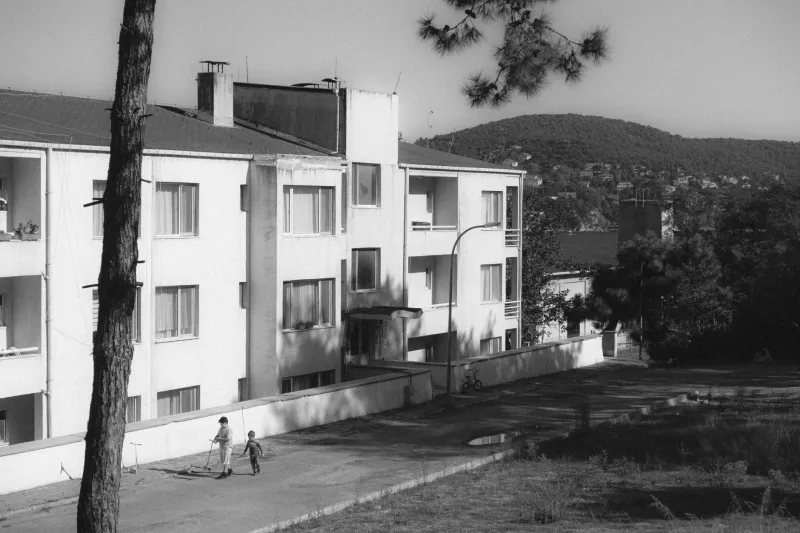
Sometime around the last week of May, school let out and something remarkable happened: nothing. Nothing was scheduled. Nothing was planned. The days ahead were a blank, and filling them was entirely your problem.
For American kids growing up in the 1960s, 70s, and into the 80s, this was the central fact of summer. Your parents went to work. You went outside. What happened between those two events was largely up to you, your bike, whoever was around, and the particular geography of your neighborhood. The creek behind the subdivision. The empty lot on Maple Street. The woods that started where the last cul-de-sac ended and seemed to go on forever.
That summer — open, unmonitored, beautifully purposeless — is now essentially a historical artifact.
What Summer Actually Looked Like
The unstructured summers of previous generations weren't idyllic in every detail. Kids got bored. They got into trouble. They got hurt in ways that would prompt a call to a pediatrician today but were then treated with a garden hose and a Band-Aid. They fought with siblings, resolved it themselves, and moved on. They built things that collapsed, invented games with improvised rules, and spent long afternoon hours doing what can only be described as existing — lying in grass, watching clouds, thinking thoughts that didn't lead anywhere in particular.
Parental supervision was present but not intensive. A mother might glance out the kitchen window periodically. A father might call everyone in for dinner at six. But the hours between breakfast and that dinner call were largely ungoverned territory, and children navigated them independently.
This wasn't neglect. It was the prevailing philosophy of childhood, largely unexamined because it had always been that way. Kids needed air and space and other kids. The rest would sort itself out.
The Scheduling Revolution
The shift began gradually in the late 1980s and accelerated sharply through the 1990s and 2000s. Multiple forces converged. Crime coverage on cable news made neighborhoods feel more dangerous than the statistics actually warranted. Dual-income households left fewer parents available for the informal neighborhood supervision that had once provided a loose safety net. College admissions grew more competitive, and the idea that childhood summers should contribute to a resume began to take hold in anxious middle-class households.
Camps multiplied — not just traditional sleepaway camps with canoeing and campfires, but specialized programs covering robotics, coding, creative writing, athletic performance, SAT prep, and leadership development. Enrichment became the operative word. The question shifted from what will the kids do all summer to what will the kids accomplish all summer, and those are very different questions with very different answers.
Today, a significant portion of American children — particularly in middle-class and upper-middle-class households — move through summer on schedules that rival the school year in density. One camp ends on a Friday. Another begins Monday. Afternoons are filled with lessons or practices. Evenings involve screens, which provide stimulation but rarely the particular kind of creative emptiness that an afternoon with nothing to do used to generate.
What Boredom Was Actually For
Here's the part that tends to surprise people: researchers who study child development have spent decades making the case that boredom isn't a problem to be solved. It's a condition to be used.
When children have nothing to do, they are forced to generate their own stimulation. This is cognitively demanding work. It requires imagination, planning, negotiation with other kids, tolerance for frustration, and the willingness to try things that might not work. The child who is bored on a Tuesday afternoon in July and ends up building a fort out of scrap lumber and bicycle parts is exercising a set of mental muscles that no structured enrichment program can replicate — because the key ingredient is the absence of adult direction.
Developmental psychologists have linked unstructured play time to stronger executive function, greater creativity, higher tolerance for ambiguity, and better emotional regulation. The child who has to figure out how to fill their own afternoon also learns, gradually and without realizing it, how to manage themselves — how to sit with discomfort, how to generate motivation from nothing, how to fail at something small and keep going.
These are not minor skills. They are, arguably, among the most important skills an adult can have.
The Anxiety We Replaced It With
The irony of the scheduling revolution is that it was driven partly by parental anxiety — and there's growing evidence it may be producing more of it in the next generation. Studies tracking children through adolescence have found that kids with less autonomy in childhood tend to report higher rates of anxiety and lower self-efficacy as teenagers. They are less comfortable making decisions independently, less resilient when plans fall apart, and more dependent on external validation and structure.
This makes a certain intuitive sense. If you've never had to fill a blank afternoon, you haven't practiced sitting with uncertainty. If every summer was a sequence of organized activities, you haven't learned what it feels like to want something badly enough to go find it yourself.
There's also the matter of what those unstructured summers produced culturally. A remarkable number of American artists, musicians, writers, engineers, and entrepreneurs cite long, aimless childhood summers as the incubation period for their eventual passions. The kid who spent three summers obsessively building model rockets in the garage because there was nothing else to do. The teenager who taught herself guitar because the afternoons were empty and she needed something to fill them. Necessity — even the mild, comfortable necessity of boredom — is a surprisingly powerful creative engine.
The Summer That Still Exists, Barely
None of this means that camps are harmful or that structured activities have no value. They clearly do. The question is one of balance — and whether American parents, collectively, have tipped so far toward scheduled enrichment that they've accidentally engineered out one of childhood's most productive experiences.
Some families are pushing back deliberately, building genuine empty days into summer calendars and resisting the impulse to fill every gap. Some pediatricians are now formally prescribing unstructured outdoor play as a health intervention, which is a strange sentence to have to write but reflects where we've arrived.
The long, hot, unscheduled American summer — the one where the biggest decision before noon was which direction to ride your bike — produced generations of adaptable, creative, self-directed adults. It also produced a lot of scraped knees and sunburns and afternoons that felt, in the moment, completely wasted.
In retrospect, those might have been the best afternoons of all.