Sorry, We're Closed: How America Once Ran Its Entire Life Around Store Hours
Sorry, We're Closed: How America Once Ran Its Entire Life Around Store Hours
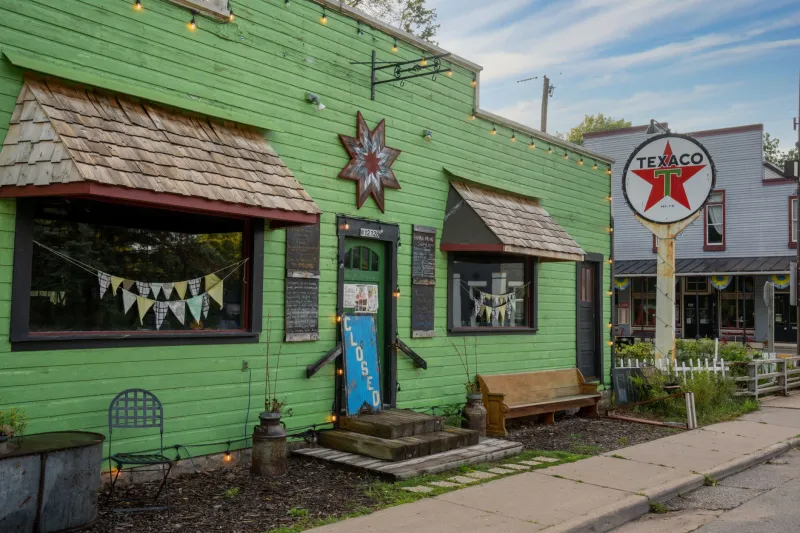
There's a particular kind of frustration that younger Americans have never experienced. It goes something like this: you need something — a specific bolt from the hardware store, a prescription refilled, a check cashed — and you get there at 5:15 on a Tuesday, and the lights are off and the door is locked and a hand-lettered sign says Closed. See You Tomorrow.
And that's it. That's the whole story. You go home empty-handed and you try again tomorrow.
For most of the twentieth century, this was simply how American life worked. Stores had hours. Hours had edges. And the edges were non-negotiable.
The Weekly Puzzle of Getting Things Done
Planning errands in postwar America required something modern life has largely eliminated: actual forethought.
Grocery stores typically closed by six in the evening. Banks kept even stricter hours — often nine to three, Monday through Friday, with a half-day on Saturday that ended at noon. Hardware stores in small towns sometimes closed on Wednesday afternoons, a holdover from an earlier era when merchants gave themselves a mid-week rest. Pharmacies might stay open a little later, but not by much.
Sunday was the great wall. Blue laws — regulations rooted in religious tradition — kept most retail businesses shuttered across huge swaths of the country well into the 1980s. In many states, you couldn't legally buy alcohol, clothing, or furniture on a Sunday. Some counties restricted grocery sales until after noon, to allow churchgoers to attend services first. If you ran out of something on a Sunday afternoon, you either borrowed it from a neighbor or you did without.
This meant that American households operated with a kind of logistical discipline that would feel almost military by today's standards. You kept a running list. You did your banking on Thursday because Friday was too close to the weekend. You bought enough groceries on Saturday morning to last the week because the store wouldn't be there for you on Sunday evening when you realized you'd forgotten something.
The Clock That Organized the Week
What's easy to miss, looking back, is how much this structure actually organized community life.
Because everyone was working around the same constraints, there was a shared rhythm to the week. Monday morning meant the hardware store was restocked. Saturday was grocery day for most families — which meant the parking lot was full and you'd run into half the neighborhood. The bank closing at noon on Saturday wasn't an inconvenience unique to you; it was a universal condition that everyone navigated together.
Local merchants knew their customers' schedules intimately, because those schedules were largely predictable. The butcher knew Mrs. Henderson came in every Thursday. The pharmacist knew which families picked up their prescriptions on Fridays. Commerce was woven into the weekly routine in a way that made it feel like part of the community's fabric rather than a frictionless service available on demand.
There's also something worth saying about what those closed hours meant for the people working inside them. Store employees had evenings. They had Sundays. The boundary between work time and personal time was firm — not because of policy documents or HR negotiations, but because the sign on the door said Closed and everyone, including the owner, went home.
The Long Unraveling
The shift didn't happen overnight. It crept in gradually, starting in the 1970s and accelerating through the 1980s and '90s as competition intensified and consumer expectations began to shift.
The rise of regional shopping malls pushed hours later into the evening, since anchor stores needed to justify the real estate with foot traffic. Supermarkets discovered that staying open until ten o'clock at night captured a whole demographic of after-work shoppers who hadn't existed in the era of nine-to-five retail. Convenience stores — 7-Eleven's slogan literally referenced being open from seven in the morning to eleven at night, which once felt radical — gradually normalized the idea of retail access outside traditional hours.
By the 1990s, 24-hour grocery stores were appearing in major cities. Walmart's supercenter format began offering round-the-clock access. The concept of "too late" was quietly being erased from American commerce.
Blue laws fell one by one, challenged in courts and abandoned by legislatures responding to retail lobbying and shifting public attitudes. Today, only a handful of states retain any meaningful Sunday restrictions on alcohol sales, and even those feel like historical footnotes.
Always Open, Always On
Now, of course, the idea of a store being unreachable is almost absurd. Amazon will deliver to your door before breakfast. Grocery apps will send someone to shop for you in under an hour. Your bank lives in your pocket and never sleeps. The concept of "store hours" has become almost quaint — a charming detail from small boutiques and farmers' markets that lean into it as a lifestyle brand choice rather than a practical constraint.
The convenience is real and genuinely valuable. Nobody is seriously arguing for a return to Wednesday closures and Saturday noon banking. But something did quietly disappear when the last hard edges came off the American commercial week.
The shared rhythm is gone. The predictability that once made communities feel synchronized has been replaced by a kind of frictionless, individual, always-available flow that connects no one to anyone in particular. You can shop at three in the morning in your pajamas, and that's remarkable. But you won't run into your neighbor doing it.
What the Closed Sign Actually Said
A locked door at 5:15 was inconvenient. No question. But it also said something quiet and important: this place has a life outside of serving you. The people inside it go home. The week has a shape. Come back tomorrow.
There was a kind of dignity in that — for the business, for the workers, and maybe even for the customer, who was gently reminded that not everything was available on demand. Some things required planning. Some things required patience. And occasionally, some things just had to wait until Monday.