Twenty-Four Chances to Get It Right: The Anxious, Beautiful Age of Film Photography
The Click That Meant Something
Somewhere in a shoebox in a closet in middle America, there's a blurry photo of someone's thumb. Maybe a ceiling. Maybe a face cut in half by bad framing. And right next to it, a genuinely perfect shot — a kid mid-laugh at a birthday party, frozen forever in slightly washed-out Kodak color.
That's what film photography was. A mix of luck, patience, and the occasional triumph that felt all the more meaningful because you had no idea it was coming.
For most of the twentieth century, taking a photo was a deliberate act. You didn't just point and fire twenty times hoping one landed. You had twenty-four exposures — maybe thirty-six if you splurged — and every single one cost you something. Not just money, though there was plenty of that involved. It cost you thought. It cost you intention.
The Economics of a Single Shot
Here's something that's easy to forget: film photography wasn't cheap. A roll of 24-exposure Kodak film might run you three or four dollars in the 1980s. That sounds like nothing now, but developing and printing that roll could cost another eight to twelve dollars at your local drugstore or one-hour photo lab. So every roll you burned through represented a real financial decision.
Families at Christmas would sometimes shoot an entire roll across the whole holiday season — not because they didn't want more photos, but because they were being careful. You didn't take five nearly identical shots of the tree and pick the best one. You took one. Maybe two if it was really important. Then you moved on.
Professional photographers talk about the discipline that created. Every frame demanded a considered eye. You checked your light. You thought about composition. You made sure everyone was actually looking before you pressed the shutter. The camera wasn't a machine gun. It was a single-shot rifle, and you aimed before you fired.
The Week-Long Wait
But the part that's genuinely hard to explain to anyone who grew up with a smartphone is the waiting.
You'd finish a roll of film — which might have taken you three months to shoot, covering a summer vacation, a graduation, and a couple of random Sunday afternoons — and then you'd drop it off. At the pharmacy. At the grocery store photo counter. At a dedicated film lab if you were serious about quality. And then you waited. Usually a week. Sometimes longer.
When you finally picked up that envelope of prints, you were opening a small time capsule. The photos inside represented moments you'd half-forgotten. A barbecue from six weeks ago. A niece you'd seen at Easter. The light at the beach that one afternoon when everything felt perfect.
Sometimes you were thrilled. Sometimes you were crushed. A photo you were certain had captured something real came back blurry, or dark, or with a stranger's elbow cutting through the frame. That moment was gone. There was no second take. No going back.
What Scarcity Did to Memory
There's a psychological argument — and it's a compelling one — that scarcity made film photographs more valuable, not just as objects, but as memories.
When you only have twenty-four shots for a two-week vacation, you become selective about what deserves to be documented. You're not photographing your meal. You're not taking a photo of the parking lot outside the motel. You're saving your frames for the things that actually matter: the kids at the Grand Canyon rim, your spouse laughing at something dumb you said, the sunset that stopped you mid-sentence.
Those choices, made in the moment, created a curated record of a life. The shoebox might have been disorganized, but what was inside it was real. Selected. Earned.
Today, the average smartphone user takes somewhere between 10 and 20 photos per day. Some take far more. A single weekend trip might generate 400 images, most of which will never be looked at again after the initial scroll-through. They live in the cloud, technically preserved, practically invisible.
We've traded the anxiety of scarcity for the paralysis of abundance.
The One-Hour Photo and the Polaroid
Not everyone waited a week, of course. The one-hour photo lab — a genuine retail revolution when it arrived in force during the 1980s — cut the agony down considerably. Chains like Fotomat, with their tiny drive-through kiosks in parking lots across the country, became part of the American landscape. You could drop off a roll on your lunch break and pick it up after work.
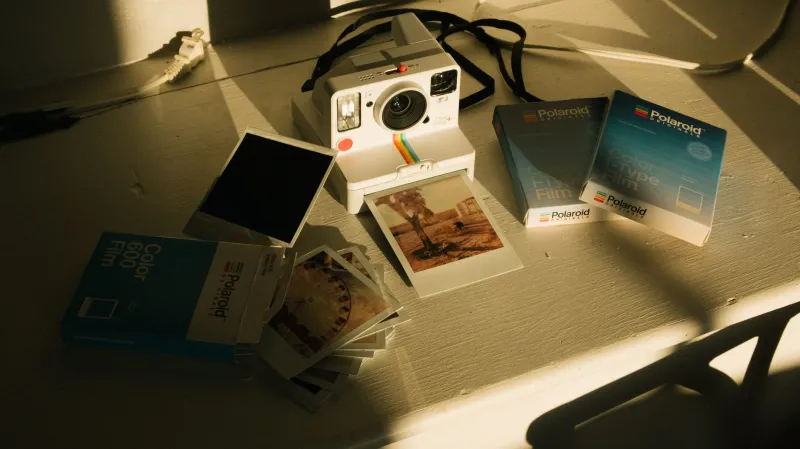
And then there was the Polaroid. The instant camera that produced a physical print in minutes, that strange little square you shook in the air even though the instructions specifically told you not to. The Polaroid was its own kind of magic — immediate, imperfect, irreplaceable. One shot, one print, no copies. If you lost it, it was gone.
Both of these were attempts to close the gap between the moment and the memory. But even they required a certain commitment that today's photography simply doesn't.
What We Gained, What We Gave Up
It would be dishonest to pretend that digital photography isn't a remarkable improvement in most practical ways. The ability to immediately review a shot, adjust, and reshoot has made photography more democratic, more accessible, and technically better across the board. Family photos are sharper now. Lighting is corrected automatically. Moments that would have been lost to bad exposure are saved by software.
But something quieter has been lost in the exchange. The photograph as a considered act. The anticipation of development. The physical envelope of prints handed across a pharmacy counter. The specific joy of a photo that came out better than you expected, proof that you'd been paying attention at exactly the right moment.
Film forced you to be present in a way that a phone camera, however sophisticated, simply doesn't require.
The shoebox is mostly gone. The cloud holds everything now. Whether it holds it the same way is a question worth sitting with.