Scissors on Sunday: The Newspaper Insert That Ran the American Household
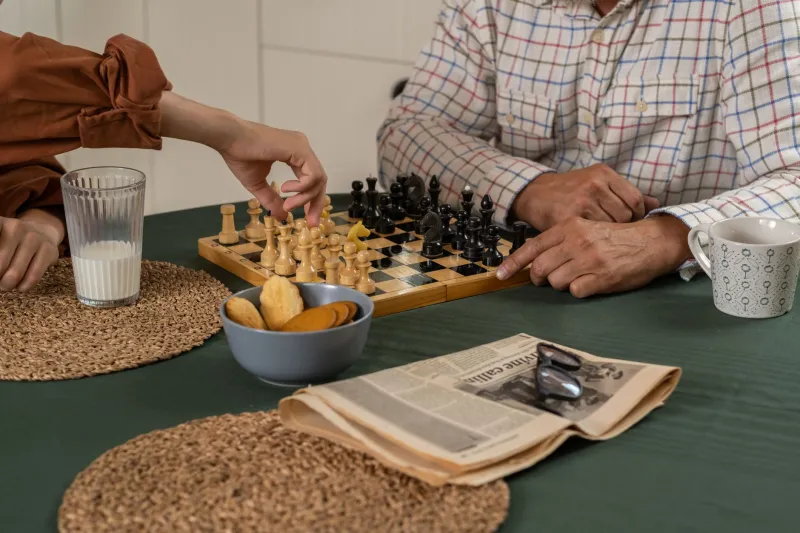
Sunday mornings used to have a particular sound in American kitchens. Coffee percolating. The rustle of newsprint. The clean snip of scissors through paper. And underneath it all, a kind of low-level domestic concentration — the sound of a household organizing itself for the week ahead.
The Sunday newspaper circular was not glamorous. It was not aspirational in the way a lifestyle magazine might be. It was purely functional, and that was exactly the point. It told you what was on sale, where, and for how long. And if you were paying attention — if you'd saved last week's inserts and cross-referenced the prices — it could meaningfully change what your family ate and what you spent doing it.
The Anatomy of the Insert Stack
For anyone who grew up before the internet reshaped retail, the Sunday paper was almost two separate objects. There was the newspaper itself — news, sports, comics, crossword — and then there was the stack. The inserts. Sometimes half an inch thick on a good week, sliding out from between the sections in a cascade of color-printed paper.
Grocery circulars anchored the pile. Kroger, Safeway, Winn-Dixie, Piggly Wiggly — whatever your regional chain happened to be, their weekly ad was in there, organized by department and printed in a font size designed for people who were genuinely reading it. Drug store circulars came next. Then the big coupon books: Valassis, SmartSource, the RedPlum inserts that were basically their own small magazines.
A serious coupon household treated these inserts as source material. The process had steps. You scanned the grocery circular first, noting what was on sale and whether you needed it. Then you cross-referenced with the coupon books — because a sale price combined with a manufacturer's coupon was a different category of savings entirely. Some households kept a small accordion file or a coupon binder, organized by product category, so that last month's coupon for pasta sauce could be retrieved the moment pasta sauce went on sale.
This was not casual. This was a system. And the people who ran it — often, though not exclusively, the women managing household budgets — were genuinely skilled at it.
The Weekly Cadence It Created
What the Sunday circular did that no algorithm has quite replicated is give shopping a rhythm.
The sales reset on Wednesday at most chains, which meant the Sunday insert was planning the week from a position of maximum information. You knew what was cheap. You built meals around it. Chicken thighs on sale meant a roast chicken Tuesday and chicken soup Thursday. Ground beef marked down meant meatloaf or tacos or both. The menu emerged from the prices, not the other way around.
This imposed a kind of intentionality that felt like constraint at the time but functioned as structure. You weren't browsing an infinite number of possibilities. You were working within a specific set of options, and the creative challenge was making the most of them. Families who operated this way consistently — and millions did — developed a practical fluency with food costs that most households today have simply never needed to build.
The planning conversation happened too. Sunday morning coupon review was often a shared activity. What do we need? What's a good price on this? Should we stock up? These weren't profound exchanges, but they were regular ones, and they kept both partners in a household oriented around the same budget and the same week.
What Replaced It (And What Got Lost)
Digital coupons and app-based deals have technically preserved the savings. You can clip digital coupons to your store loyalty card, browse online circulars, and get push notifications when something you've bought before goes on sale. The discounts exist. The mechanics are arguably more convenient.
But something about the experience changed fundamentally. The app delivers deals to you passively, based on your purchase history. You're not scanning and selecting; you're being served a curated version of savings that someone else's algorithm decided was relevant. The skill — the cross-referencing, the category awareness, the timing — isn't really required anymore. Which means it isn't really being developed.
And the rhythm is gone. There's no Sunday morning moment, no weekly reset, no shared planning session built around a concrete artifact sitting on the kitchen table. Shopping has become continuous and ambient. You order things when you think of them, or when an ad reminds you, or when you're standing in the store and your phone tells you there's a deal. The intentionality that came from working within a weekly structure has dissolved into a constant low-level purchasing mode that's harder to track and easier to overspend within.
A Ritual Worth Remembering
Nobody is suggesting we go back to accordion coupon files as a lifestyle choice. But it's worth pausing on what that Sunday morning ritual actually accomplished beyond the savings on soup cans.
It made consumption deliberate. It created a moment — weekly, predictable, shared — when a household looked at what it needed, what things cost, and how to bridge the two intelligently. That kind of structured engagement with the household economy is harder to find now, buried somewhere under an infinite scroll of deals that never quite end and never quite begin.
The scissors are in a drawer somewhere. The Sunday paper, if it still arrives, is thinner than it used to be. And the weekly rhythm of the American kitchen is a little quieter for it.