Your Name on a Waiting List: What It Meant to Want a Book Badly Enough to Wait for It
There is a specific, almost forgotten feeling: writing your name on a small slip of paper and tucking it inside the back cover of a library book. Or better yet, handing your card across a wooden desk to a librarian who typed your name into a system — sometimes a physical card catalog, sometimes an early computer terminal — and told you, with the calm authority of someone managing a scarce resource, that the book you wanted was already checked out but that you'd be notified when it came in.
You walked out empty-handed. And somehow that was okay.
The Card That Meant Something
The American public library card was, for most of the twentieth century, among the first official documents a child received with their own name on it. Not a school ID, not a sports registration form — a library card. Issued by the public library, signed (eventually) by the child, and treated with a seriousness that the object itself, a small rectangle of cardboard or laminated paper, barely seemed to warrant.
But the weight was real. The library card was access. It was the credential that let you borrow from a shared collection of knowledge that your family could never have afforded to own outright. In an era before the internet, before home video, before anything resembling on-demand information, the public library was genuinely the most democratic institution in most American towns. Rich kids and poor kids held the same card. The stacks didn't care who you were.
And the card had limits, which mattered. You could check out a certain number of books. You had a specific return date. You owed a fine — small but real — if you were late. These constraints weren't bureaucratic inconveniences. They were the operating logic of a shared resource, and navigating them taught something about responsibility and about community that's harder to learn when everything is unlimited and individually owned.
The Waiting List as Emotional Investment
Popular books had waiting lists. This is difficult to fully explain to anyone who came of age with instant digital downloads, but the waiting list was a meaningful experience in itself.
When a new novel by a beloved author came out — say, a new Stephen King in the early 1980s, or a John Grisham thriller in the 1990s — the library might receive two or three copies for a community of tens of thousands. The list formed immediately. Your name might be twentieth on it. The librarian would estimate, based on the two-week checkout period, that you'd be waiting roughly ten weeks.
Ten weeks is a long time to want something. And that wanting did something to the eventual experience of getting it. When the call finally came — and in many libraries, this was a literal phone call, someone from the circulation desk letting you know your hold was ready — the anticipation had been building for months. You went to pick it up the same day. You read it faster. You remembered it longer.
There's a psychological principle at work here that behavioral economists have spent considerable time documenting: delayed rewards feel more rewarding. The waiting list wasn't just an inconvenience. It was, accidentally, a mechanism for deepening engagement.
The Serendipity of the Physical Stacks
Beyond the waiting list, there was something else the physical library offered that no digital catalog has ever quite replicated: the accident of discovery.
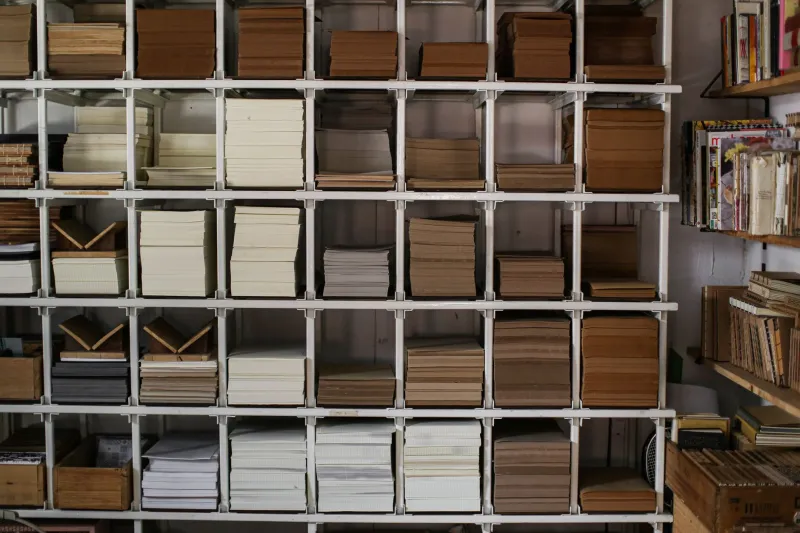
When you went to the stacks to find a specific book, you had to walk through other books to get there. The Dewey Decimal System placed related subjects near each other, which meant that looking for one thing inevitably put you in proximity to related things you hadn't thought to search for. You'd pull the book you came for, and then something on the adjacent shelf would catch your eye — a title, a spine design, a subject heading — and you'd pull that one too.
This is browsing in its truest form. Not the algorithmically curated "you might also like" version that streaming services and online retailers offer, which is really just a mirror of what you already know you enjoy. Real browsing is exposure to the genuinely unexpected. It's how readers stumbled onto authors they'd never heard of, subjects they'd never considered, and entire corners of human knowledge they had no idea existed.
The digital library — for all its extraordinary convenience and reach — is largely a search-based environment. You find what you're looking for. The system helps you find more of the same. The lateral, accidental discovery that the physical stacks enabled is harder to replicate in an architecture built around queries and recommendations.
What Unlimited Access Actually Cost Us
This isn't an argument against digital libraries or ebook lending platforms. The ability to access millions of titles from anywhere, including titles unavailable in your local collection, is a genuine and significant expansion of what a library can be. The Libby app alone has introduced millions of Americans to the concept of borrowing ebooks and audiobooks from their public library — which they already pay for through taxes — without ever setting foot inside a building.
But unlimited access changes the relationship with the material. When you can have anything instantly, nothing quite carries the weight that scarcity once gave it. You download a book and then download seven more before you've finished the first. The queue is infinite. The urgency is low. The waiting list that once sharpened your desire has been replaced by a wishlist that just keeps growing.
What's missing isn't the inconvenience. It's the investment. The waiting list asked you to declare, with your name on a slip of paper, that you wanted this specific thing enough to wait for it. That small act of commitment changed the reading that followed.
The Library Is Still There
American public libraries haven't disappeared, though their funding battles are real and ongoing. Many have evolved into community hubs — offering maker spaces, job training, early childhood programs, and yes, digital lending alongside physical collections. The librarians are still there, still doing the quiet, undervalued work of connecting people with information.
But the experience of holding a library card as your first credential, of writing your name on a waiting list and meaning it, of wandering the stacks until something found you — that's harder to come by now. Not impossible. Just requiring more intention than it used to.
Sometimes the best things were the ones you had to wait for.