When the Lights Went Out at Five: America's Lost World of Closed Doors and Quiet Sundays
Photo: Miklos Suba, Public domain, via Wikimedia Commons
When the Lights Went Out at Five: America's Lost World of Closed Doors and Quiet Sundays
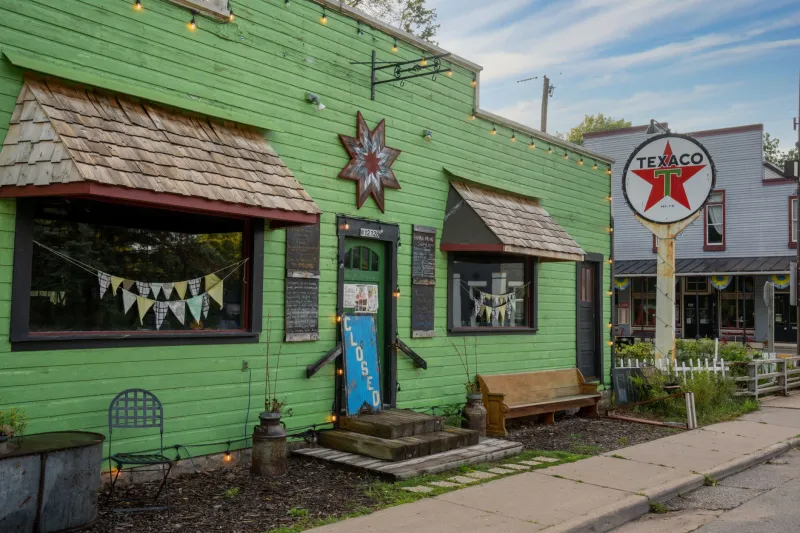
Picture this: it's 5:15 on a Wednesday afternoon. You need milk. The grocery store closed fifteen minutes ago. You're not getting milk tonight.
For most of American history, that wasn't an inconvenience — it was just life. Stores had hours, and those hours had edges, and when the clock hit the end of the business day, the lights went off and the doors locked. No exceptions, no extended holiday hours, no self-checkout running until midnight. The world closed, and everyone understood that.
We've moved so far from that reality that it takes a real mental effort to imagine it.
The Schedule That Ran Everything
Through most of the twentieth century, American retail operated on a rhythm that would feel almost medieval by today's standards. Department stores and shops in most towns opened around nine in the morning and closed by five or six in the evening. Saturdays might stretch a little later. Sundays were largely off the table.
Blue laws — regulations rooted in religious tradition — kept Sunday commerce locked down across huge swaths of the country well into the 1980s. In many states, you couldn't buy a car, purchase alcohol, or shop at a department store on Sunday regardless of what you needed or how much money you had. The law wasn't just cultural; it was literal. Violators got fined.
Grocery stores were typically shuttered by early evening. Banks operated on even tighter windows — often closing at three in the afternoon, Monday through Friday, which gave working Americans a genuinely narrow slot to manage their finances in person. The phrase "banker's hours" wasn't a compliment. It was a dry observation about just how limited access to your own money actually was.
Pharmacies kept longer hours out of necessity, and a handful of diners ran late into the night. But the concept of a store that never closed, a gym open at 3 a.m., or a customer service line reachable at any hour? That existed only in the imagination.
What People Did Instead
Here's the thing about hard limits: they force planning. When the store closes at five and stays closed all Sunday, you learn to think ahead. Weekly shopping trips became a genuine household ritual. Families planned meals around what they had on hand, not what they could grab in twenty minutes. Running out of something wasn't the end of the world — it was an inconvenience you managed until Monday morning.
Neighborhood relationships filled in some of the gaps. Borrowing a cup of sugar from next door wasn't a cliché — it was a functional solution to a closed grocery store. Neighbors knew each other partly because they occasionally needed each other in practical, immediate ways.
The closed Sunday created something that's almost impossible to manufacture today: a collective pause. Nearly everyone was home. Nearly every store was shut. The rhythm of the week had a natural rest built into it, and that rest was shared rather than individual. Families spent Sundays together not just by choice but by default. There wasn't much else to do.
The Long Road to Always Open
The shift didn't happen overnight. It came in waves, driven by competition, consumer demand, and changing demographics.
Supermarkets began pushing later hours in the 1960s and 70s as suburban growth created new shopping patterns. Convenience stores — the 7-Elevens of the world — made "open late" part of their entire identity and brand. The first true 24-hour grocery stores appeared in the 1970s, mostly in larger cities, and were treated as a novelty worth writing about in the newspaper.
By the 1980s, blue laws had been repealed in most states, and Sunday shopping became standard. The 1990s brought big-box retail, which competed partly on extended hours. By the 2000s, Walmart supercenters were running around the clock, and the idea of a store closing at all felt increasingly optional.
Today, the always-open economy is so complete that a store closing at ten at night feels almost early. Gyms advertise 24-hour access as a basic feature. Online retail doesn't even acknowledge the concept of closing time.
The Hidden Costs of Never Closing
The convenience is real. Nobody is seriously arguing for a return to 5 p.m. closings. But the shift carried costs that don't always make it into the conversation.
Somebody has to staff the midnight shift. The expansion of hours pushed a significant portion of the American workforce into schedules that run against every natural sleep rhythm — nights, split shifts, rotating weekends. Research on shift workers consistently shows higher rates of sleep disorders, cardiovascular stress, and disrupted family life. The store that's open at 2 a.m. is open because a person showed up to work at 2 a.m.
The collective Sunday pause is gone, replaced by individual choices about how to spend each hour. That sounds like freedom — and in many ways it is. But shared downtime had a social function that purely personal downtime can't fully replace. When everyone stops at the same time, you're more likely to stop together.
A World That Knew Its Limits
The old closing-time culture wasn't just about inconvenience or lack of technology. It reflected a shared agreement that business had a place in daily life — and that place had edges. The store closed. The bank closed. The day ended. That agreement shaped how people planned, how neighborhoods functioned, and how families spent their time.
We traded that structure for access, and access is genuinely valuable. But the next time you're wandering the cereal aisle at eleven at night, it's worth remembering: that option comes with a price tag that doesn't appear on the receipt.