When Dialing Wrong Meant Real Consequences: America's Lost Era of Telephone Precision
The Sound That Ruled America's Social Life
Beep-beep-beep. That relentless busy signal wasn't just an inconvenience — it was the gatekeeper of American communication for decades. Before call waiting arrived in the 1970s and cell phones made everyone perpetually reachable, that harsh electronic tone could derail evening plans, postpone important conversations, and turn simple phone calls into elaborate strategic missions.
Today, when someone doesn't answer, we fire off a text, leave a voicemail, or try again in five minutes. But for generations of Americans, a busy signal meant game over. Come back later and try your luck again.
When Phone Numbers Lived in Your Head, Not Your Contacts
Remember when Americans actually memorized phone numbers? Not just their own, but dozens of them — friends, family, work, the pizza place, the movie theater's showtimes line. Children learned their home number the same way they learned their address, because getting lost and needing to call home meant finding a payphone and knowing those seven digits by heart.
Without contact lists or speed dial, your brain was your phone book. Families kept handwritten phone directories stuck to refrigerators with magnets, and losing that scrap of paper with someone's new number meant potentially losing touch entirely. There was no "I'll just look them up on Facebook later."
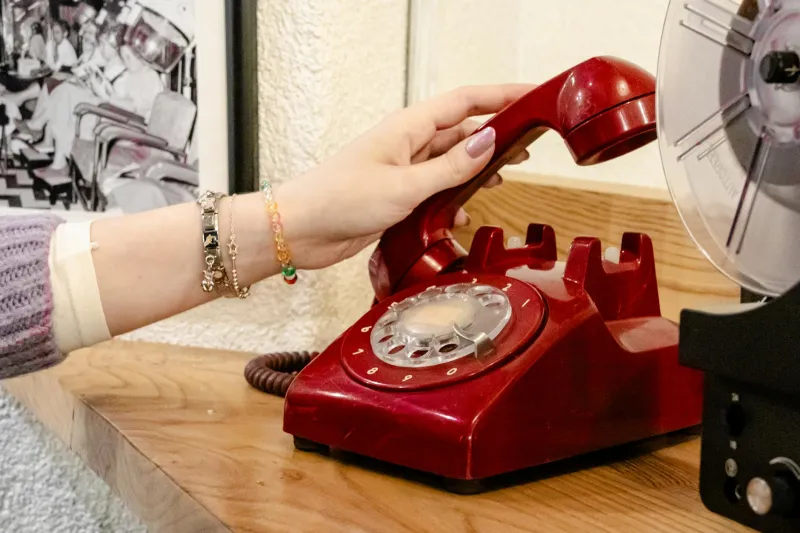
The ritual of memorizing a new friend's number was part of the friendship itself. You'd repeat it back to them, maybe write it on your hand, then practice dialing it in your head on the drive home. Numbers had rhythm and personality — some were satisfying to dial on a rotary phone, others were frustrating sequences of high digits that took forever to spin.
The Household Politics of a Single Phone Line
Most American homes had exactly one phone line, which meant one family member could hold the entire household hostage. The stereotype of the teenager sprawled across their bed, twirling the phone cord while monopolizing the line for hours, wasn't just comedy — it was domestic reality.
Parents would set kitchen timers for phone calls. Siblings would hover nearby, making threatening gestures and mouthing "Get off!" Families developed elaborate systems of phone etiquette: no calls during dinner, no tying up the line when Dad was expecting a work call, and absolutely no marathon conversations when someone was waiting for important news.
Imagine trying to coordinate plans with friends when only one person in each household could use the phone at a time. Group activities required a telephone tree — one person would call the next, who would call the next, passing information down the chain like a game of telephone. If someone wasn't home or their line was busy, the chain broke, and plans fell apart.
The Lost Art of Telephone Timing
Calling someone required social intelligence that's completely foreign today. You had to consider: Was it too early? Too late? Were they likely to be eating dinner? Did they have small children who might be napping? Calling at the wrong time wasn't just inconsiderate — it was relationship-damaging in a way that sending a text at midnight simply isn't.
People developed internal clocks around phone etiquette. You didn't call before 8 AM or after 9 PM unless it was an emergency. Sunday mornings were off-limits in many households. Calling during popular TV shows was social suicide.
Businesses had limited phone hours, and there was no such thing as leaving a voicemail. If the dentist's office was closed, you had to remember to call back during business hours. Miss that window, and your toothache would have to wait another day.
When Busy Signals Created Real Social Barriers
The busy signal wasn't just annoying — it was exclusionary. Popular kids whose phones were constantly busy became even more socially powerful because reaching them required persistence and luck. Families with multiple teenagers were effectively cut off from the world for hours each evening.
Businesses lost customers to busy signals. Restaurants couldn't take reservations if their line was tied up. Radio stations ran contests where the first caller won prizes, but actually getting through meant redialing dozens of times, competing against other listeners frantically working their rotary dials.
There was something oddly democratic about it, though. Rich or poor, everyone got the same busy signal. Money couldn't buy you a second phone line in most neighborhoods, and even wealthy families had to negotiate sharing their single connection to the outside world.
The Silence We've Lost
Today's world of instant communication makes the busy signal era seem primitive, but something was lost in the transition. Phone calls felt more intentional when they required effort. Conversations were more focused when you knew other people might be trying to reach the same line. Families talked to each other more when the phone wasn't always available as an escape.
The busy signal taught patience in a way that modern technology actively discourages. You learned to wait, to try again later, to accept that immediate gratification wasn't always possible. Sometimes the most important conversations were the ones you had to work hardest to begin.
In our hyperconnected age, where every notification demands instant attention and every thought can be immediately shared, there's something almost quaint about a time when reaching another human being required strategy, timing, and just a little bit of luck.