Twenty-Four Chances to Get It Right: Life Before the Infinite Camera Roll
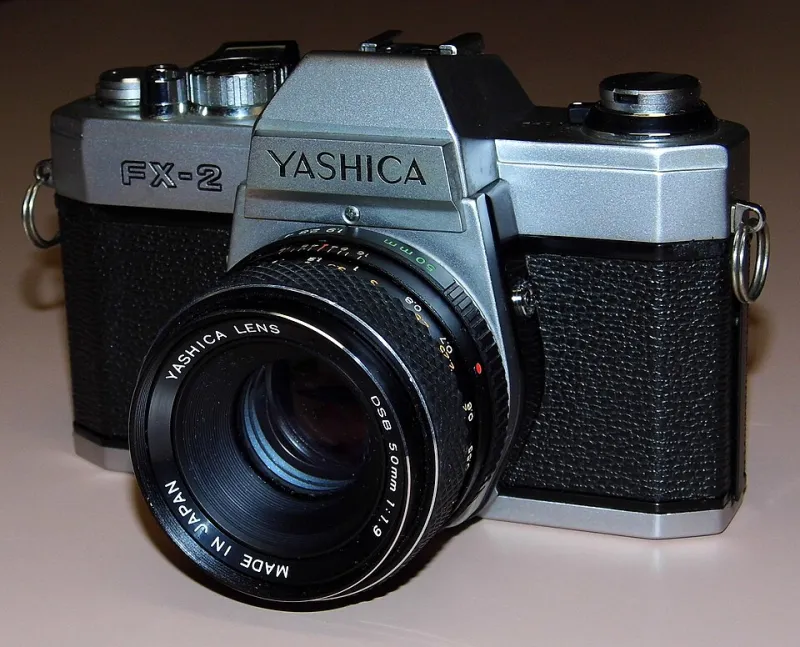
Photo: Joe Haupt from USA, CC BY-SA 2.0, via Wikimedia Commons
There's a particular kind of photograph that doesn't really exist anymore. You know the one — slightly blurry, a little underexposed, someone caught mid-blink with a paper birthday hat sliding off their head. It's imperfect in about four different ways simultaneously. And yet it sits in a physical album somewhere, carefully slid behind a plastic sleeve, because it was one of only two photos taken at that entire birthday party and it was the better one.
That photo meant something. Not because it was beautiful, but because someone decided the moment was worth spending a frame on.
The Economy of the Shutter Click
For most of the twentieth century, photography was a genuinely rationed activity. A standard roll of 35mm film gave you 24 exposures. Some rolls held 36. Either way, you were working with a finite resource — and once you clicked the shutter, that was one fewer frame left.
Then came the waiting. You couldn't check the back of the camera to see if the shot worked. You finished the roll (sometimes taking weeks or months to do it), dropped it off at a drugstore or a dedicated photo lab, and came back anywhere from a few days to a couple of weeks later to pick up your prints. The envelope handed over the counter contained photographs you had essentially forgotten taking.
Opening that envelope was its own ritual. You'd flip through the stack right there at the counter, seeing Christmas morning or your nephew's first steps for the first time — weeks after the moment had passed. Some shots were perfect. Many were not. A few were complete mysteries: a blurry close-up of carpet, a dark rectangle that might have been a wall, an accidental self-portrait taken when the camera bumped against something in a bag.
You paid for all of them regardless.
Choosing What Was Worth Remembering
Because film cost money — both to buy and to develop — people made decisions about what to photograph. Not everything made the cut. Ordinary Tuesday dinners didn't get documented. A nice sunset might not either, if you only had a few frames left and the holidays were coming up. Photography was reserved for occasions: birthdays, graduations, family gatherings, vacations.
This selectivity shaped what a family's visual record looked like. Flip through a photo album from the 1960s or 70s and you'll notice that every image carries a certain weight. Someone chose to press that button. Someone thought this moment — this specific slice of time — was worth the cost and the wait.
There's an intentionality baked into those old prints that's genuinely hard to replicate now. When everything is photographable and free, nothing quite demands to be photographed.
The Arrival of Infinite
Digital cameras arrived in consumer hands through the late 1990s, but it was the smartphone that truly collapsed the old constraints. By the early 2010s, most Americans were carrying a camera capable of taking thousands of high-quality images without ever buying film, visiting a lab, or paying for prints. Storage was essentially unlimited. Review was instant. Deletion was free.
The behavior change was immediate and dramatic. People started photographing everything — meals, sunsets, traffic jams, their own faces at dozens of slightly different angles. The average American now takes somewhere in the range of 1,000 to 2,000 photos per year. Some estimates run considerably higher for heavy smartphone users. A single family vacation might generate 400 images across a long weekend.
How many of those 400 images will be looked at again in ten years? Honestly, probably very few. Most will sit in a cloud storage folder, unsorted and unprinted, gradually becoming inaccessible as platforms change and devices get replaced.
What Happened to the Album
The physical photo album was the original version of what we now call a camera roll — except it was curated. Someone sat down, sorted through the prints, decided which ones were worth keeping, and arranged them in a way that told a story. Captions got written in the margins. Dates were noted. Bad shots got tossed.
That curation process was actually a form of memory work. You were deciding, consciously, what your family's story looked like. You were choosing which version of an event to preserve.
Today, most people's photographic archives are enormous and nearly useless. The sheer volume makes it almost impossible to find anything specific. The lack of physical prints means there's nothing to hand down, nothing to pull out at a reunion, nothing that survives a platform shutdown or a lost password.
Some families are pushing back — printing photo books through online services, creating annual albums, making deliberate choices about what to preserve. But it requires actively swimming against a current of infinite accumulation.
The Photograph as a Presence Problem
There's one more shift worth sitting with. In the film era, taking a photograph meant being present for a moment long enough to decide it was worth capturing. The camera came out deliberately, the shot was composed with some care, and then it went back in the bag.
Now, the phone is already out. The photo is taken before the moment is fully registered. Sometimes the photo replaces the experience rather than recording it — we've all stood in a crowd where half the people are watching an event through a tiny screen rather than with their actual eyes.
None of this means digital photography is worse. The accessibility is genuinely wonderful. The ability to share a moment with a family member across the country within seconds is a real gift. But there's something worth acknowledging in what those 24 frames demanded of us — attention, intention, and the willingness to trust that some moments were worth remembering even if no camera captured them.