A Handshake and a Willingness to Show Up: How Teenagers Once Walked Into Summer Jobs
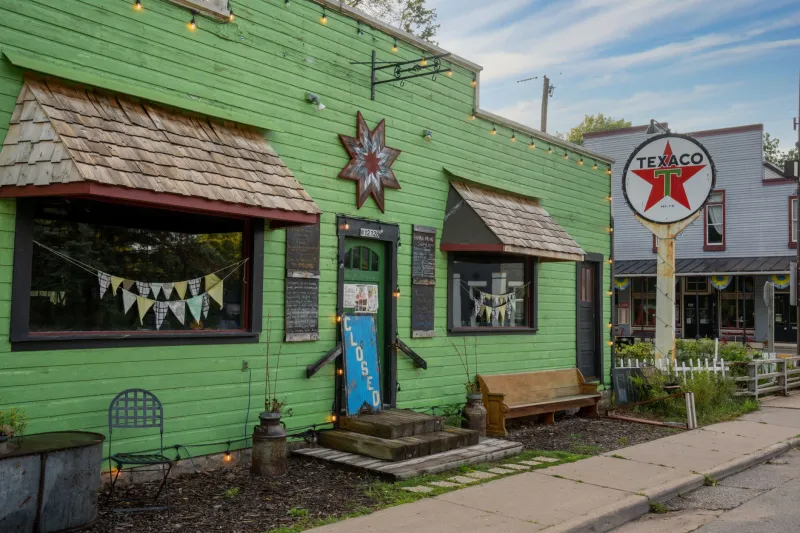
Somewhere around the last week of May, the ritual would begin. School let out on a Friday. By Monday morning, a sixteen-year-old kid in a clean shirt was walking down Main Street, stopping at the hardware store, the gas station, the grocery, or the lumberyard, asking if they were hiring for the summer.
No resume. No application portal. No email to a regional HR department that might respond in two to four business weeks. Just a conversation, a look in the eye, and a question: can you start Thursday?
For much of the 20th century, that was how millions of American teenagers entered the workforce. The path was short, human, and built on a kind of trust that the modern hiring process has largely engineered out of existence. What replaced it is more thorough, more documented, and considerably less useful for a seventeen-year-old trying to figure out who they are.
How It Actually Worked
The informal teen job market of mid-century America ran on a combination of community reputation and personal introduction. Your neighbor owned the hardware store. Your uncle worked at the plant and knew the foreman. Your father went to church with the guy who ran the landscaping crew.
A word from the right person carried more weight than any written credential. If someone vouched for you — said you were reliable, that your family was solid, that you showed up when you said you would — that was essentially your reference check. The employer wasn't hiring a stranger. They were hiring somebody's kid, and somebody they trusted had already done the vetting.
For kids without those direct connections, the walk-in was the standard approach. You dressed reasonably well, you showed up in person, you asked for the owner or the manager, and you made your case face to face. Employers responded to the gesture itself. It took initiative to walk through that door. It took a certain kind of nerve to ask a grown adult for work. That quality — showing up — was exactly what most of those jobs required, and demonstrating it on the spot was a more honest audition than anything a form could capture.
The jobs themselves were physical and unambiguous. Stocking shelves, mowing grass, washing dishes, pumping gas, baling hay, running deliveries. The training was brief. The work was real. You either did it or you didn't, and everyone found out quickly which kind of person you were.
The Paperwork Arrived Later
The gradual formalization of teen employment didn't happen all at once. It crept in over decades, driven by legitimate forces: child labor regulations that needed enforcing, insurance requirements that needed documenting, and a liability culture that made employers increasingly cautious about anyone under 18.
The expansion of large chain employers — fast food franchises, big-box retailers, national grocery chains — also changed the landscape significantly. A locally owned hardware store could hire the neighbor's kid on a handshake because the owner was personally accountable for that decision. A regional franchise could not. Every hire had to go through the same standardized process, regardless of who was applying or what anyone's father had said at church.
By the late 1990s, even small employers were adopting formal applications as a matter of routine. Background checks, once reserved for positions involving significant financial responsibility, trickled down to entry-level retail. Online application systems, introduced in the 2000s, removed the human element from the initial contact entirely. A teenager applying for a summer job at a grocery chain now submits their information to a system that may or may not forward it to a human being, and may or may not generate a response.
The walk-in — that direct, nerve-requiring, impression-making gesture — became functionally impossible at most large employers. "We don't accept applications in person" became a standard reply.
What the Informal System Was Actually Teaching
The old model had real flaws. It was susceptible to nepotism and discrimination. Kids without community connections — or whose families sat outside the dominant social networks of a given town — were at a structural disadvantage. The system rewarded who you knew as much as what you could do, and who you knew was not equally distributed.
But within those limitations, the informal teen job market was doing something that the modern system largely doesn't: it was teaching young people how to present themselves to adults they didn't know, how to negotiate a basic transaction, and how to connect effort with reward in a way that felt immediate and personal.
When you walked into a store and asked for work and got it, the cause-and-effect was clear. You did a thing, it worked, you have a job. When you submit an online application into a portal and receive an automated rejection email three weeks later, the feedback loop is broken entirely. You don't know what worked, what didn't, or what you might do differently. You just know it didn't happen.
The confidence that came from early, successful job-seeking was its own form of education. You learned that you could walk into unfamiliar situations and hold your own. That adults would take you seriously if you took yourself seriously. That a summer of honest work entitled you to honest pay and a certain kind of self-respect that nothing else at sixteen was offering.
The Long Shadow of the Application Portal
Today's teenagers aren't lazy or disengaged. They're navigating a hiring system that was not designed with them in mind. The standardized application process that works reasonably well for an adult with a work history is a blunt instrument when applied to a fifteen-year-old looking for their first job.
Some of what changed was necessary. Some of it was inevitable. But it's worth acknowledging what the handshake economy understood that the portal economy doesn't: that the act of showing up, in person, with nothing to offer but willingness and a good word from someone who knew you, was itself a form of qualification.
Not every kid had access to it. But the ones who did came out the other side knowing something useful about themselves.
That knowledge was worth more than the paycheck.