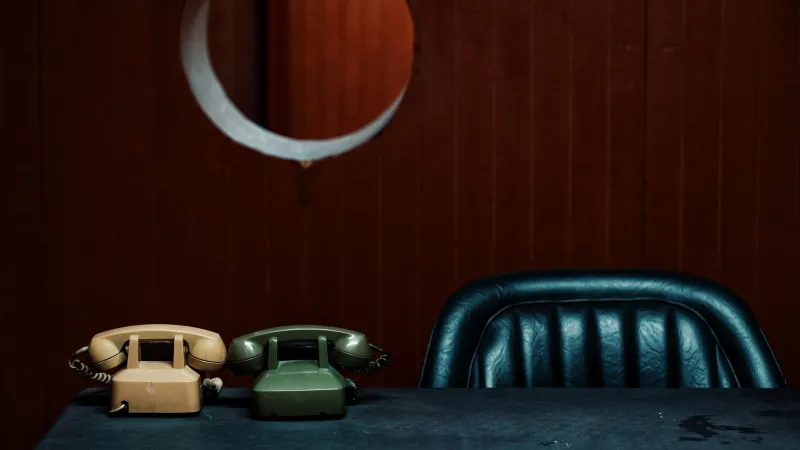
The Week You Spent Not Knowing: Medicine Before Everything Became Instant
The Envelope on the Kitchen Table
Somewhere in America in 1968, a woman named Dorothy is sitting at her kitchen table waiting. She went to the doctor three days ago — a Tuesday, she remembers, because she had to arrange a ride and cancel a hair appointment. The doctor examined her, ordered some bloodwork, and said the results would come back in about a week. Maybe a little longer.
She doesn't know what's wrong. The doctor used words she didn't fully understand and gave her a look that could have meant several things. She's been sleeping badly. She's been running through possibilities in her head the way you do when the information gap is wide and the anxiety is filling it.
The envelope, when it finally arrives, contains a form letter with numbers she can't interpret. She has to call the office. The receptionist puts her on hold. The doctor calls back two days later.
From symptom to answer: nearly two weeks. That was normal. That was just how it worked.
Diagnosis in the Age of Patience
For most of American medical history, uncertainty wasn't a flaw in the system — it was the system. Diagnostic tools were limited, lab turnaround times were measured in days, and imaging technology that could peer inside a living body without surgery was either primitive or nonexistent for most of the twentieth century.
X-rays, introduced in the early 1900s, were genuinely revolutionary for their time, but they required processing, interpretation, and a radiologist's report that could take days to reach your physician. Blood tests existed but ran through manual laboratory processes that simply couldn't be rushed. A biopsy result might take a week or more. Patients were, by necessity, expected to wait.
Physicians of that era developed a different kind of diagnostic skill to compensate. They listened longer. They observed more carefully. They relied heavily on physical examination — palpating, percussing, listening through stethoscopes — because the alternative tools were slow or unavailable. Medical school trained doctors to read the body directly, because the body was often the only fast data source they had.
The relationship between doctor and patient was shaped by this reality. You trusted your physician not just because of their credentials but because they were the person standing between you and a very long wait in the dark.
When the Machines Got Faster
The transformation didn't happen all at once. It came in waves.
CT scanning arrived in clinical use in the early 1970s, and MRI technology followed in the 1980s. These weren't just improvements on X-rays — they were different in kind, capable of producing detailed cross-sectional images of soft tissue, organs, and neural structures that had previously been invisible without surgery. For the first time, doctors could see inside a patient's brain without opening the skull.
Laboratory automation accelerated through the 1980s and 1990s, compressing multi-day blood panels into same-day or even same-hour results. Point-of-care testing — devices that could analyze a blood sample right in the exam room — began moving certain tests out of the central lab entirely.
By the 2000s, digital imaging meant that a radiologist in one city could review a scan from a hospital in another state within minutes. The physical envelope on Dorothy's kitchen table had become an electronic message in a patient portal.
The Body as a Real-Time Data Stream
What's happened in just the last decade goes beyond even that. We have moved from faster diagnosis to continuous monitoring — a shift that would have seemed like science fiction to any physician practicing before 1990.
The Apple Watch can now detect atrial fibrillation and generate an ECG reading. Continuous glucose monitors worn by diabetic patients track blood sugar in real time, every few minutes, and send alerts to a smartphone when levels move out of range. Wearable devices track heart rate variability, blood oxygen levels, sleep stages, and activity patterns around the clock.
Some hospitals now use AI-assisted imaging analysis that can flag potential anomalies in a chest X-ray or CT scan in seconds — not to replace the radiologist, but to prioritize which scans need urgent attention. Genomic testing can identify inherited disease risks from a saliva sample. Liquid biopsy technology is being developed that may eventually detect certain cancers from a blood draw before symptoms appear.
Dorothy's two-week wait has, in many cases, become a two-minute answer.
The Anxiety That Didn't Go Away
Here's the uncomfortable part: faster answers haven't necessarily produced calmer patients.
In some ways, the opposite has happened. Continuous health monitoring has created a new category of anxiety — the low-level, persistent surveillance of your own body that wearables encourage. When your watch tells you your resting heart rate was slightly elevated last night, and you don't know why, and you can search symptoms at 2 a.m. and find seventeen alarming possibilities, the speed of information doesn't always feel like reassurance.
Medical professionals have a term for it now: cyberchondria — the anxiety spiral that online symptom searching reliably produces. The old model kept you in the dark, which was its own kind of hard. The new model floods you with data and partial information, which turns out to be a different kind of hard.
There's also a subtler shift in how patients and doctors relate to each other. When diagnosis required waiting and the physician was the gatekeeper of interpretation, the relationship had a different quality — more deferential on the patient's side, perhaps, but also more personal. Today, many patients arrive at appointments having already diagnosed themselves, having read the same studies their doctor has read, and sometimes having ordered their own lab work through direct-to-consumer services. That's empowering. It's also occasionally a recipe for a very tense fifteen-minute appointment.
What the Speed Can't Replace
For all the genuine miracles of modern diagnostics, something worth noting is what got compressed along with the wait times.
The long appointment where a doctor sat and listened — really listened — to a patient describe their experience in their own words was partly a product of limited technology. When you couldn't run a quick scan, you had to ask more questions. You had to observe. You had to build a picture from narrative and physical clues.
Time pressure in modern medicine has made that kind of extended listening increasingly rare. The average primary care appointment in the U.S. runs somewhere between fifteen and eighteen minutes. That's not a criticism of individual doctors — it's a structural reality of how healthcare is organized and reimbursed. But it means that the human dimension of diagnosis, the part that depended on attention and relationship rather than imaging resolution, has been quietly squeezed.
Progress With Eyes Open
None of this should obscure the fundamental truth: faster, more accurate diagnosis saves lives. Early detection of cancer, rapid identification of stroke, real-time monitoring of chronic conditions — these are not small things. They are the difference, for millions of Americans, between living and not.
But it's worth sitting for a moment with the full picture of what changed. We traded a certain kind of patience — forced on us, not chosen — for a certain kind of speed. We gained accuracy and lost some stillness. We got faster answers and discovered that faster answers don't always quiet the questions.
Dorothy's envelope took ten days to arrive. That was too long. But in those ten days, she also sat with her life in a way that constant monitoring doesn't quite allow. Whether that's a loss or just a fact probably depends on what you find when you finally open the envelope.