The Teacher Who Taught Everything: When America's Smallest Schools Created the Biggest Impact
The Little Red Schoolhouse That Actually Existed
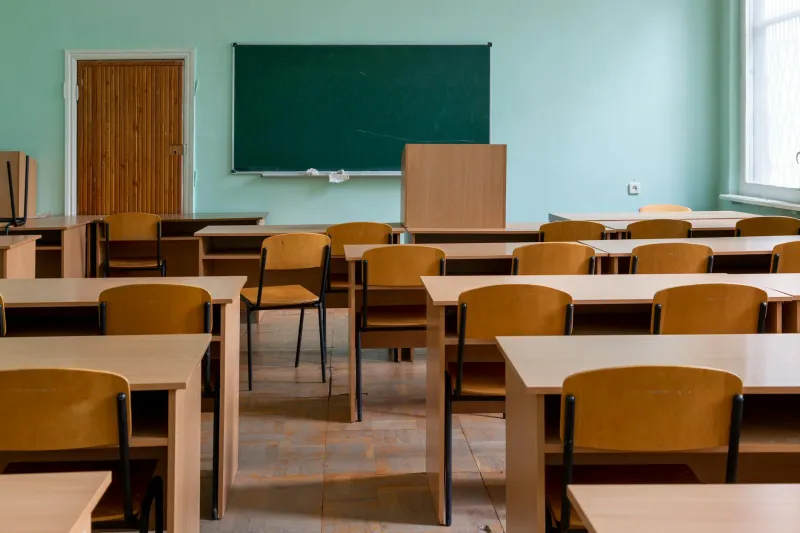
Picture this: thirty children ranging in age from six to sixteen, all crammed into a single room with one teacher who somehow managed to teach reading to first-graders while simultaneously helping eighth-graders with algebra. This wasn't a quaint historical curiosity—it was American education for millions of children well into the 1950s, and in some rural areas, even into the 1960s and beyond.
The one-room schoolhouse represented more than just an educational approach; it was an entire philosophy of learning built on necessity, community, and the radical idea that children of different ages could learn better together than apart. In an era when America was still largely rural and transportation limited, these small schools became the heartbeat of their communities, serving not just as places of learning but as social centers where entire families gathered for everything from spelling bees to Christmas pageants.
When Teaching Meant Everything
The teacher in a one-room school wasn't just an educator—she was a janitor, nurse, counselor, disciplinarian, and often the most educated person for miles around. (Most one-room school teachers were women, though men occasionally filled these roles.) She arrived before dawn to start the wood-burning stove in winter and stayed after sunset to prepare lessons for eight different grade levels.
These teachers knew every child's family history, learning style, and personal challenges. They understood which students came from homes where English wasn't spoken, which ones worked on farms before and after school, and which ones showed promise for continuing education beyond eighth grade. This wasn't by design—it was simply impossible to teach in such intimate settings without developing deep personal knowledge of each student.
The curriculum had to be creative by necessity. With limited resources and no specialized teachers, one-room school educators became masters of multi-level instruction. While younger students practiced handwriting, older ones might be leading reading groups. During arithmetic time, advanced students would help teach basic addition while working on their own geometry problems.
The Unexpected Power of Mixed-Age Learning
What seemed like a limitation—combining multiple grades in one classroom—actually created unique educational advantages that modern schools struggle to replicate. Older students naturally became mentors and teachers, reinforcing their own learning while helping younger classmates. This peer tutoring wasn't a formal program; it was simply how one-room schools functioned.
Six-year-olds learned not just from their teacher but from observing twelve-year-olds tackle advanced problems. Teenagers developed leadership skills and deepened their own understanding by explaining concepts to younger students. The artificial age segregation that characterizes modern education simply didn't exist, creating natural learning communities where knowledge flowed in multiple directions.
Students also learned at their own pace in ways that would make today's personalized learning advocates envious. A mathematically gifted ten-year-old might work alongside fourteen-year-olds, while a student who struggled with reading could take extra time without the stigma of being "held back" in front of same-age peers.
The Community Connection
One-room schools were deeply embedded in their communities in ways that modern schools rarely achieve. Local families often built the schoolhouse themselves, hired the teacher, and took direct responsibility for the school's success. Parents weren't distant consumers of educational services—they were active partners in their children's learning.
School board meetings happened in living rooms. The annual Christmas program drew the entire community. Fundraising for new textbooks or repairs was a neighborhood effort. When the teacher boarded with local families, she became part of the community fabric, not just a professional who commuted from somewhere else.
This connection meant that education wasn't something that happened in isolation from daily life. Students saw direct connections between what they learned in school and how adults in their community worked and lived. The local doctor might stop by to give a science lesson. The bank president might explain mathematics through real-world examples. Learning felt relevant because it was embedded in the community where students would likely spend their adult lives.
The Modern Educational Machine
Today's educational landscape bears little resemblance to the one-room school experience. Students move through grade levels like products on an assembly line, sorted by age rather than ability or interest. They encounter dozens of different teachers throughout their school career, few of whom develop the deep personal knowledge that one-room school teachers had of every student.
Modern schools offer undeniable advantages: specialized teachers with deep subject knowledge, extensive resources, diverse extracurricular activities, and programs designed to serve students with specific needs. Science labs, computer centers, art studios, and gymnasiums provide learning opportunities that one-room schools could never match.
Standardized testing and data-driven instruction promise more precise measurement of student progress. Special education services, English language learning programs, and gifted education initiatives address individual needs that one-room schools often couldn't serve effectively.
What We Gained in Specialization
The transformation from one-room schools to modern educational systems brought genuine improvements. Students today have access to advanced courses, specialized instruction, and resources that would have been unimaginable in rural one-room schools. Teachers can focus their expertise on specific subjects rather than trying to master everything from phonics to advanced mathematics.
Diverse student populations in larger schools expose children to different cultures, backgrounds, and perspectives that homogeneous rural communities couldn't provide. Extracurricular activities, sports teams, and clubs offer opportunities for students to explore interests and develop talents that one-room schools simply couldn't support.
For students with learning disabilities, language barriers, or other special needs, modern schools offer specialized services and trained professionals that one-room schools couldn't match. The resources available to today's students—from libraries to technology to counseling services—far exceed what any single teacher in a one-room school could provide.
What We Lost in Scale
Yet something valuable was lost in the transition to larger, more specialized schools. The intimate knowledge that one-room school teachers had of their students has been replaced by data points and test scores. The natural mentoring relationships between older and younger students have been eliminated by age-based grade segregation.
Modern students can pass through twelve years of education without a single teacher truly knowing them as individuals. The community connection that made one-room schools feel like extensions of family and neighborhood life has been severed by consolidation, transportation systems, and professional boundaries.
Perhaps most significantly, we lost the understanding that learning could be a community responsibility rather than just a professional service. One-room schools succeeded not because they had better resources or more advanced pedagogy, but because entire communities invested in their success.
The Lessons From Little Schools
As modern educators struggle with problems like student engagement, community disconnection, and the isolation that can come with large institutional settings, the one-room school model offers insights worth considering. Not everything about those schools was better—they often lacked resources, served homogeneous populations, and couldn't provide specialized services that many students need.
But they understood something important about learning that we've partially forgotten: education works best when it's personal, when it connects to community life, and when students of different ages learn together. They proved that knowing every student's name, story, and struggles isn't just nice—it's essential for real learning to occur.
In our rush to modernize and standardize American education, we gained efficiency and specialization. But we may have lost something equally valuable: the simple power of one teacher who knew every student, and thirty children who learned together in a single room that somehow felt big enough to contain all their dreams.