Six Hours of Not Knowing: The Lost Art of Waiting for a Score
The Afternoon With a Hole in It
Picture a Sunday in October, 1962. The home team is playing three hundred miles away, and you are not there. You are raking leaves, or driving to your sister's house, or sitting in church, and the game is happening right now, in real time, and you have no idea what is going on inside it.
You know it's the fourth quarter. That's it. That's all you get.
This is not a story about hardship, exactly. It's a story about a texture of attention that has essentially vanished from American life, and it's worth sitting with for a minute before we decide we're better off without it.
The Radio Was Not Always in Your Pocket
Transistor radios changed things in the late 1950s and 1960s, and by the 1970s a determined fan could often find the game on AM — if the signal reached, if the weather cooperated, if you were willing to hold the antenna at the correct angle while standing near a window.
But plenty of fans couldn't. Workers on a shift, drivers out of range, families at a Sunday dinner where nobody was going to turn on a radio. For them, results arrived in a sequence of small, unreliable deliveries: a score flashed on the evening news, a neighbor who'd heard something, a call to a relative who had been listening.
And then, most reliably of all, the newspaper.
The Morning Ritual
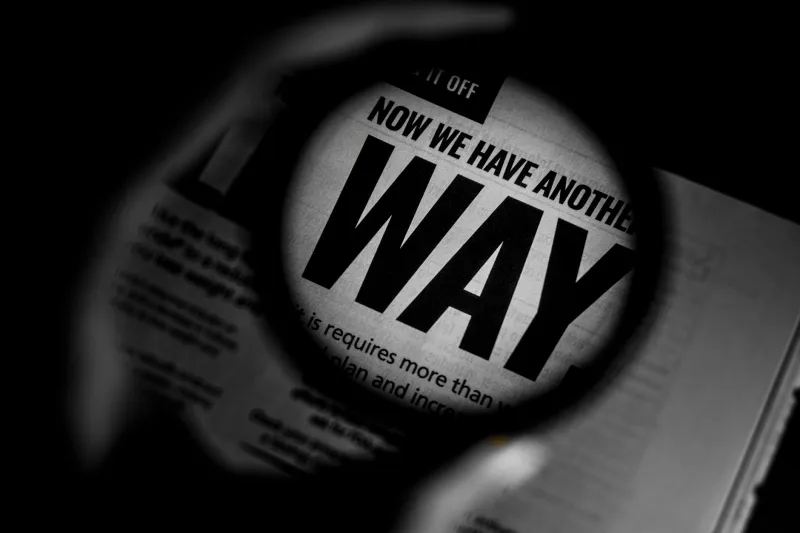
The sports section on the morning after a big game was a genuine event. Not a headline — a full accounting. The box score, so detailed and so mysterious to the uninitiated, listing every player's line and every inning or quarter, printed in a type small enough that grown men would hold the page up to the kitchen window for better light.
Millions of Americans learned to read a game they had not seen, reconstructing it from numbers. You could tell who had pitched well and who had been pulled. You could see that your team had blown a lead in the seventh. You could trace the whole afternoon backward from a column of figures, and in doing so you became, in a small way, a participant rather than a spectator.
The delay wasn't a bug. It was the medium.
What Instant Scores Did to the Nervous System
The change came in waves. Cable television's rolling tickers in the 1980s meant you could see scores for games you weren't watching. Then the internet put the box score a click away. Then the smartphone collapsed everything — the score arriving as a buzz in your pocket, sometimes before the broadcast you're watching has even caught up, a bizarre modern glitch where the alert spoils the play you're about to see.
What did we gain? Obviously, everything. No more waiting by a radio. No more calling a relative for the score. No more missing the ending because you had to drive home.
What did we lose? The interval. The hours between the event and the knowing, which used to be filled with speculation, argument, and imagination. Fans would spend a whole evening arguing about a game they hadn't seen, working from rumor and partial information, each person convinced they had the real story. That was a form of communal life that the push notification quietly ended.
There's a reason the old-timers talk about listening to games on the radio with a kind of reverence. It wasn't only nostalgia. It was the last era when following sports required you to construct the experience rather than receive it — to lean in, to fill gaps, to be, in some small way, a co-author.
The Box Score as Literature
There's one artifact from that world that has survived almost intact, and it's worth defending: the box score.
To a modern fan it looks like clutter. To the generation that grew up with it, it's a document you can read like a short story. It tells you what happened, in order, without opinion. It doesn't require a highlight package or a hot-take panel. It just sits there, dense and patient, and rewards whoever takes the time.
People still learn to read them, mostly out of love. It's the closest thing we have to the old delay — a way of meeting a game on your own time, at your own pace, rather than having it delivered to your nervous system in a burst.
What We Actually Miss
It's easy to romanticize the waiting, and we shouldn't. Plenty of people missed the endings they desperately wanted to see, and nobody should have to drive home from a family dinner guessing.
But there is something in the old delay worth naming. When you didn't know the score, you had to anticipate it. And anticipation, it turns out, is a muscle. The hours before the eleven o'clock news were not empty — they were full of a specific, humming alertness that no push alert has ever replicated.
We have gained perfect information. We have lost the pleasure of not having it yet.
And somewhere in a shoebox of old newspapers, there's a yellowing box score that someone read on a Tuesday morning in 1971, learning for the first time how it all turned out, and reading every line twice.