Six Days a Week, Rain or Shine: The Paperboy Who Owned Your Morning
Sometime around six in the morning, before the coffee finished brewing and before most of the street had stirred, you'd hear it. A soft thump against the porch boards, or maybe a satisfying slap against the screen door. Without looking, you already knew what it was. The paper was here. The day could begin.
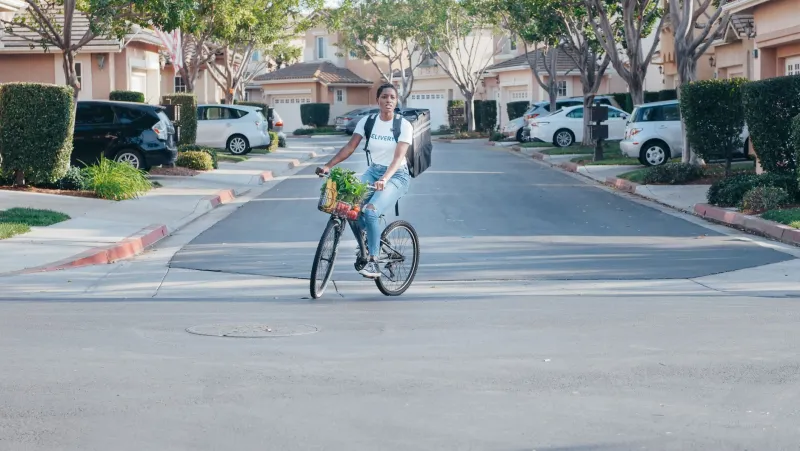
For most of the twentieth century, that small, reliable sound was the opening note of the American morning. And behind it was a kid — usually twelve, thirteen, maybe fourteen years old — who had already been up for an hour, hauling a canvas bag across your neighborhood in the dark, cold, or rain, because that's what the job required.
A Business Deal Between a Kid and Your Whole Street
The paperboy — and sometimes papergirl, though the route was historically dominated by boys — was a fixture of American suburban and small-town life from roughly the 1920s through the 1980s. At its peak, home newspaper delivery was one of the most common first jobs a young American could hold. The Des Moines Register, the Chicago Tribune, the Los Angeles Times — all of them depended on a network of kids who collected their bundle of papers before dawn and distributed them door to door like a one-person postal service for current events.
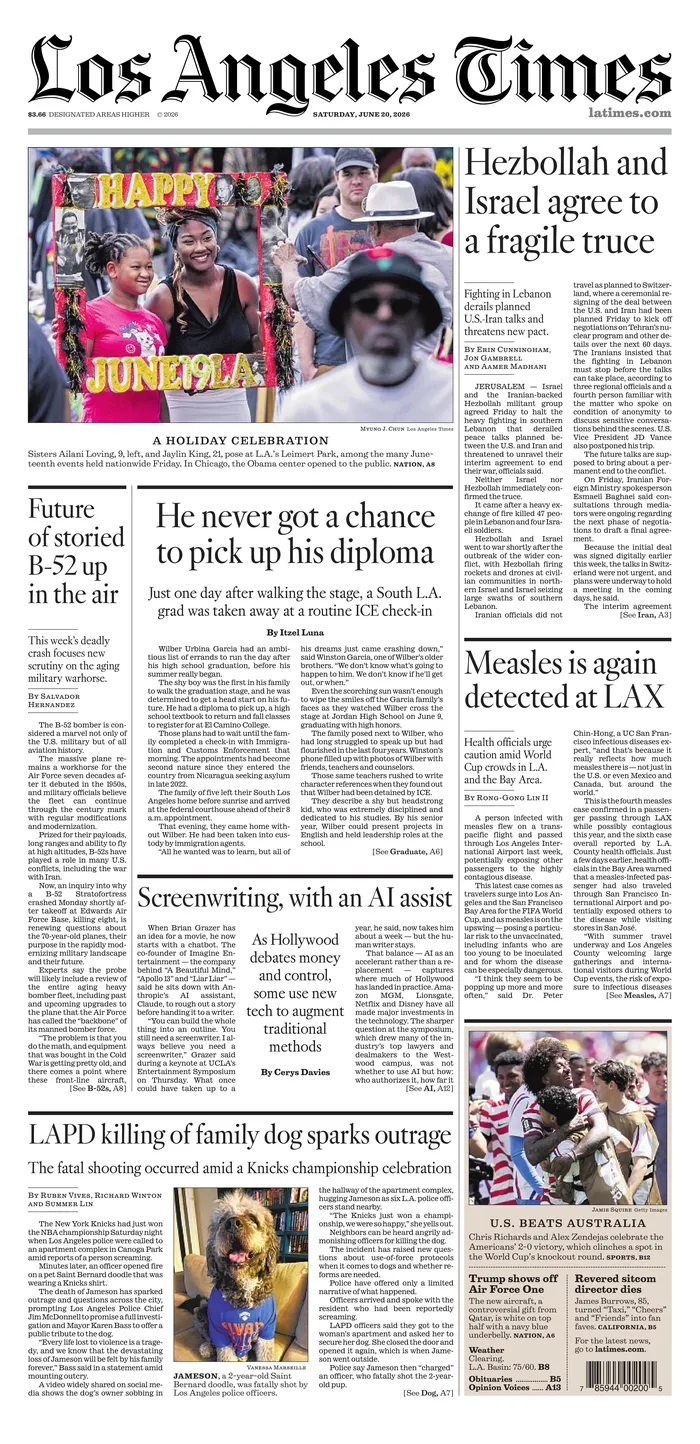 Photo: Los Angeles Times, via cdn.thepaperboy.com
 Photo: Chicago Tribune, via www.chicagotribune.com
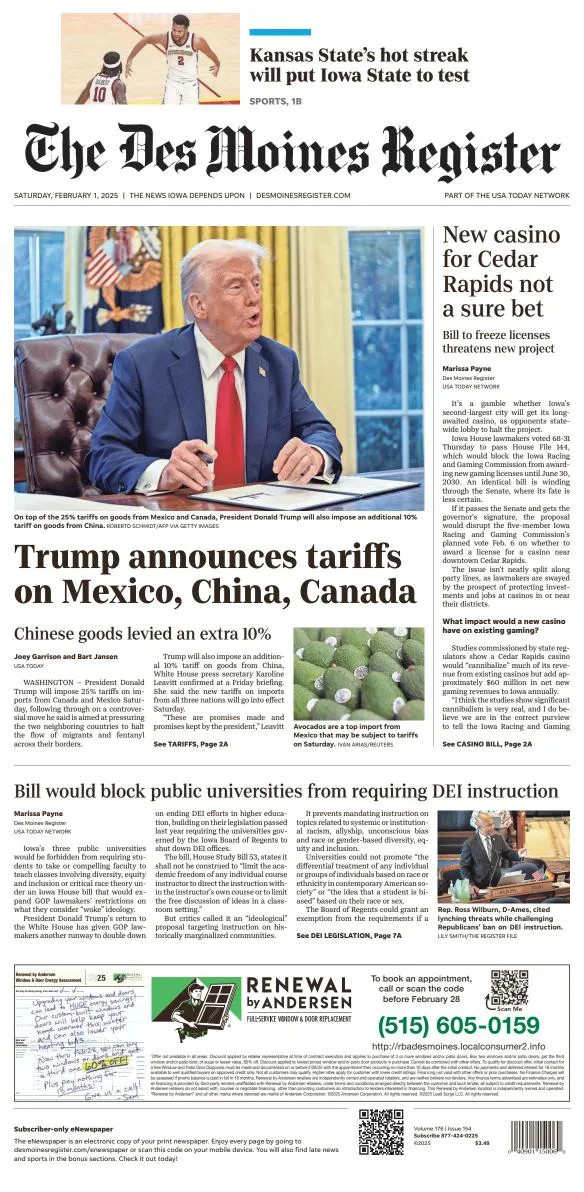 Photo: Des Moines Register, via t.prcdn.co
What made it unusual wasn't just the early hours. It was the structure. Paperboys didn't work for the newspaper directly, at least not in the traditional sense. They were essentially micro-entrepreneurs. They'd buy their papers at a wholesale rate from the publisher and sell them to subscribers at the retail price. The difference was their profit. If a customer stiffed them, that came out of their pocket. If papers were damaged in the rain, that was their problem. For a twelve-year-old, that was a genuine education in how money and accountability worked.
They also collected payments — in person, at the door, usually weekly or monthly. Which meant they knew your name. They knew whether you tipped well. They knew if you were grumpy in the morning or if Mrs. Henderson down the block always offered a cookie. The paperboy wasn't anonymous. He was as much a part of the neighborhood fabric as the mailman or the guy who ran the hardware store.
The Morning Ritual That Organized a Household
For the families on the receiving end, the newspaper wasn't just information. It was a sequence. Dad got the front section and the sports page. Mom took the lifestyle section or the crossword. The comics were fought over by whoever got to the table first. Even the act of dividing up the paper was a kind of daily negotiation that brought people around the same table.
Americans genuinely planned their mornings around that paper. You didn't start the day fully formed until you'd read it. It told you what had happened overnight, what the weather would do, what the stock market had closed at the day before. It was a complete, curated, finite package — and when you finished it, you were done. You folded it back up, set it aside, and got on with your life.
There was no refresh button. No breaking alert at 7 a.m. telling you something had changed since 6:58. The news arrived once, you absorbed it, and you moved on.
When the Routes Started Disappearing
By the 1990s, the paperboy was already becoming a rarer sight. Newspaper circulation had begun its long, painful decline. Adults started taking over routes because the pay wasn't enough to attract teenagers who could earn more at a fast food counter. Then the internet arrived and the economics of print news collapsed almost entirely.
Today, fewer than 20 percent of Americans under 35 subscribe to a print newspaper. The paperboy as a cultural institution is essentially gone. What replaced him isn't a person — it's a feed. A personalized, algorithmically curated stream of content that updates constantly, adjusts to your behavior, and never, ever stops.
Instead of a folded paper landing on your porch, you wake up to a phone screen full of notifications that have been quietly accumulating since you fell asleep. Instead of a finite package of news you could finish and set down, you have an infinite scroll that has no end, no editor deciding what's important, and no kid who's going to knock on your door in November to collect what you owe.
What Got Lost in the Transition
It would be easy to romanticize the paperboy era without acknowledging its limits. Print newspapers had their own biases and blind spots. Coverage was often local to the point of parochialism. And plenty of kids hated those early morning routes, especially in January in Minnesota.
But something genuinely disappeared when the paper stopped arriving at the door. The ritual of it. The shared experience of an entire neighborhood reading the same edition on the same morning. The fact that a child was trusted with a real job that had real financial consequences. The simple, grounding act of consuming a defined amount of news and then being finished.
Today's information environment is faster, broader, and infinitely more accessible. But it's also noisier, more anxious, and strangely less satisfying — like a meal that never quite fills you up no matter how much you eat.
The paperboy delivered something more than headlines. He delivered a beginning and an end to the news day. And in a world where the feed never closes, that kind of boundary turns out to have been worth a lot more than anyone realized while it was still there.