Held at the Counter: The Slow, Deliberate Joy of Paying for Christmas in Installments
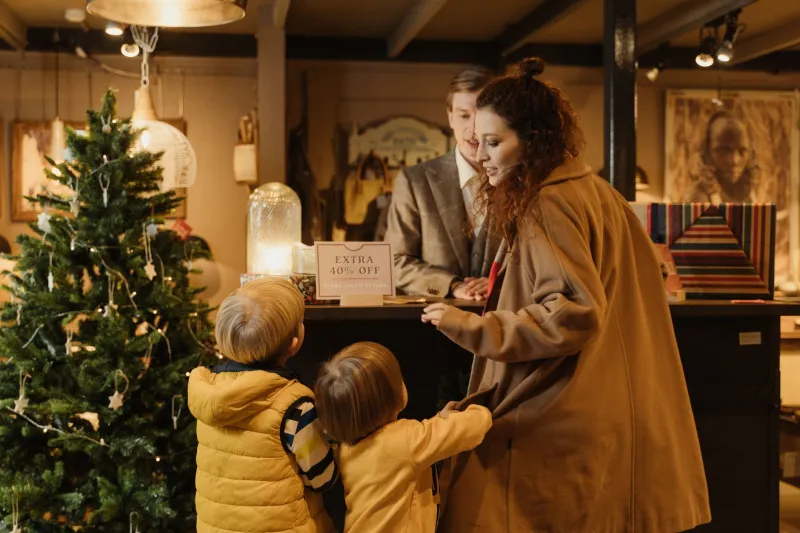
Somewhere in the back of a Kmart, past the clothing racks and the automotive section, there was a counter that didn't look like much. A little signage. A few metal shelves stacked with tagged items in plastic wrap. A clerk with a ledger or, later, a computer terminal. This was the layaway desk, and for a significant portion of American families, it was the most important counter in the entire store.
The concept was straightforward. You picked out what you wanted, paid a small deposit, and the store held the item for you. You came back every week or two and made another payment. When the balance hit zero, the item was yours. No credit card. No interest. No debt. Just incremental progress toward something you'd already decided you wanted badly enough to work for.
How the Ritual Actually Worked
Layaway in its American retail heyday — roughly the 1950s through the early 1990s — was a deeply practical system built for households that didn't have a lot of financial cushion. Working-class families, single-income homes, anyone living paycheck to paycheck used it to smooth out the enormous spike in spending that the holiday season demanded.
A mother might walk into Sears in October, pick out a bicycle for her son, pay ten dollars down, and return every Saturday with another five or ten until Thanksgiving. By the time December arrived, the bike was paid for. She'd walk in, hand over her receipt, and walk out with something that felt genuinely earned — because it was.
The tagged items on those back shelves weren't just merchandise. They were promises, already claimed, already being paid for. Stores loved layaway too, at least initially, because it guaranteed future revenue and brought customers back repeatedly. Regulars who came in to make a layaway payment often bought other things while they were there. It was a loyalty engine before anyone used that term.
If you defaulted — if you stopped making payments and never picked up your item — the store kept your deposit and put the item back on the floor. The stakes were real, but modest. You lost what you'd already paid. That was the penalty for changing your mind or falling short.
The Discipline Built Into the System
What layaway required, more than anything, was a specific kind of financial patience that has become genuinely rare in American consumer culture. You had to decide what you wanted before you had the money to buy it. Then you had to keep showing up, week after week, making payments on something you couldn't take home yet. The gratification was deferred by design.
For children who were old enough to know about the layaway counter — and plenty were — watching a parent make those payments was an education in how money and desire actually worked. You didn't just get things. You built toward them. The gap between wanting something and having it wasn't a problem to be solved with a credit card. It was the process itself.
There was also something meaningful about the physical act of picking up the item at the end. You'd walk in with your final payment and your receipt, and the clerk would disappear into the back and return with your package. Wrapped in plastic, tagged with your name. It had been sitting there, waiting specifically for you, for weeks. That moment of collection carried a weight that clicking "place order" simply doesn't replicate.
What Replaced It — and What That Replacement Costs
Layaway started fading in the 1990s as credit cards became more accessible and retailers found that offering store credit cards was more profitable than managing back-room storage. Walmart eliminated its layaway program in 2006, citing operational costs. The system felt like a relic.
Then came the era of instant everything. Amazon Prime. One-click checkout. Overnight delivery. And most recently, buy-now-pay-later services like Afterpay, Klarna, and Affirm — which let consumers take home purchases immediately and pay in installments afterward. The installment logic is superficially similar to layaway, but the mechanics are inverted. With BNPL, you get the item first and figure out the payments later. With layaway, you figured out the payments first and got the item last.
That inversion matters more than it might seem. Buy-now-pay-later has been linked in multiple studies to increased impulse purchasing, higher rates of missed payments, and a general blurring of the line between what someone can afford and what they feel entitled to have right now. The Consumer Financial Protection Bureau has flagged the industry for practices that leave consumers in worse financial shape than they started.
Layaway, by contrast, was structurally incapable of putting you in debt. You couldn't spend money you didn't have. The worst outcome was losing your deposit.
The Comeback That Never Quite Stuck
Interestingly, layaway experienced a brief revival during the 2008 financial crisis, when tightening credit made consumers suddenly interested in debt-free payment options again. Walmart brought its program back. Kmart leaned into it heavily. For a few holiday seasons, the layaway counter felt almost nostalgic in a good way.
But the revival didn't last. The gravitational pull of instant gratification proved stronger than the discipline of incremental payment. Today, most major retailers have abandoned layaway entirely in favor of BNPL partnerships.
What's gone isn't just a payment method. It's a particular relationship between Americans and the things they wanted — one built on the idea that anticipation was part of the value, that earning something slowly made it mean more, and that the discipline of waiting was itself a form of respect for the gift.
Christmas morning used to feel different when every present under the tree had already been paid for, weeks before anyone opened it. That's a feeling that's genuinely hard to replicate with a four-installment plan and a two-day shipping window.