Gone for the Weekend: The Vanishing Art of Being Truly Unreachable

Friday at five o'clock used to mean something. You'd pack up your desk, maybe say goodbye to a coworker, drive home with the radio on, and that was it. You were off the clock in a way that was total and unquestioned. Your boss couldn't reach you. Your clients couldn't reach you. The office, for two whole days, could not find you — and nobody thought that was strange.
For anyone under thirty-five, that might sound less like a description of adult life and more like a description of a remote wilderness expedition. But for most working Americans through the 1970s, 1980s, and even into the 1990s, genuine disconnection wasn't a luxury or a wellness goal. It was just the weekend.
The Mechanics of Disappearing
The technology of the era made it easy. If you didn't have a home phone — or if you simply didn't answer it — you were unreachable. Full stop. There was no secondary channel. No work email pinging your pocket. No Slack notification sliding in at 9 p.m. on a Saturday. No manager sending a "quick question" that both parties knew wasn't quick.
Leaving a message meant calling a landline and hoping someone picked up, or leaving something on an answering machine that the recipient might not check until Monday morning. That delay wasn't a failure of communication — it was the system working exactly as designed. Urgency had to earn its title. If something genuinely couldn't wait until Monday, you figured out another way. Most things, it turned out, could wait.
The office itself closed. Physically. The lights went off, the doors locked, and whatever was sitting in someone's in-box on Friday afternoon was still sitting there when they walked back in on Monday. There was no digital version of the office following everyone home like a shadow.
What People Did Instead
Without the low-grade hum of work availability running in the background, weekends had a different texture. Attention was less divided. A Saturday afternoon barbecue didn't have to compete with a phone screen. A Sunday drive was actually a Sunday drive, not a Sunday drive interrupted by three work notifications and a voicemail you feel guilty ignoring.
Family time was structurally protected in a way it simply isn't today. Not because families were more committed to each other, but because the competing demand — work — had no mechanism to intrude. Dad wasn't half-present at the dinner table because he was mentally composing a response to an email. He was just at the dinner table.
Hobbies filled the space. Woodworking, fishing, gardening, pickup basketball — not as Instagram content or self-optimization strategies, but as genuine ways people spent time because that time was actually available and uncontested. Boredom, that increasingly rare condition, showed up regularly on weekends and led people toward things they actually enjoyed.
The Slow Erosion
The pager changed things first, but only for certain professions. Doctors, emergency workers, executives — people who genuinely needed to be reachable. For most workers, the pager was a symbol of importance that most of them were happy to live without.
The cell phone broadened the reach, but in the 1990s, mobile phones were still expensive enough and clunky enough that they hadn't yet colonized everyday life. The real inflection point was the smartphone — specifically the moment when work email landed in the same device as your personal messages, your photos, your music, and your social life. Once that happened, the boundary between work and not-work stopped being a physical location and became, instead, a matter of personal willpower.
And willpower, it turns out, is a losing battle against a notification system designed by engineers whose jobs depended on engagement.
The Always-On Bargain We Never Agreed To
Here's the thing nobody really sat down and decided: at some point, American workers collectively accepted that being reachable outside office hours was part of the job. Not in their contracts. Not in any formal negotiation. It just became the expectation, gradually and then all at once.
Studies now consistently show that a significant portion of American workers check work messages on weekends, during vacations, and after 10 p.m. on weeknights. Many do it voluntarily, driven by anxiety about falling behind or appearing insufficiently dedicated. The office didn't follow us home — we invited it in and gave it a comfortable chair.
The costs are real and increasingly well-documented. Chronic stress, difficulty sleeping, strained relationships, and a persistent inability to actually rest are now common complaints among working adults. The irony is that most productivity research suggests that truly disengaged downtime makes people more effective at work — not less. We traded rest for the appearance of availability, and got neither the rest nor the credit.
What Genuine Disconnection Felt Like
Ask anyone who worked through the pre-smartphone era about their weekends, and a certain quality of memory comes through. Whole Saturdays that belonged entirely to them. Sunday mornings with the newspaper and nowhere to be. The specific pleasure of knowing that whatever was happening at the office was, for now, not their problem.
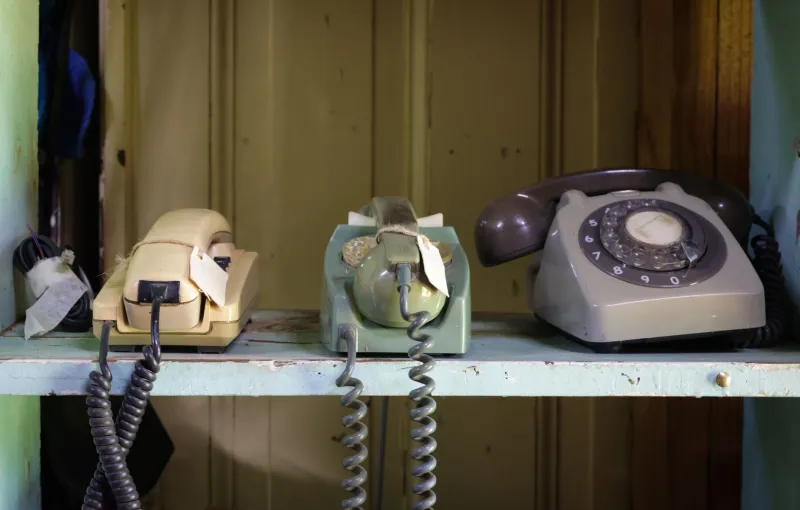
That wasn't laziness. It was a functioning relationship with time — one in which work had its hours and life had its hours, and the two didn't constantly overlap. The phone on the kitchen wall was a tool, not a leash.
Today, some people are trying to claw that back deliberately — screen-free weekends, notification schedules, "do not disturb" hours. The fact that we need apps and rules and personal policies to recreate something that used to be automatic says quite a lot about how far things have shifted.
The weekend isn't gone. But the version of it where you could truly, completely disappear for two days? That one might be.