The Gold Watch Is Gone: How Retirement Went From a Finish Line to a Moving Target
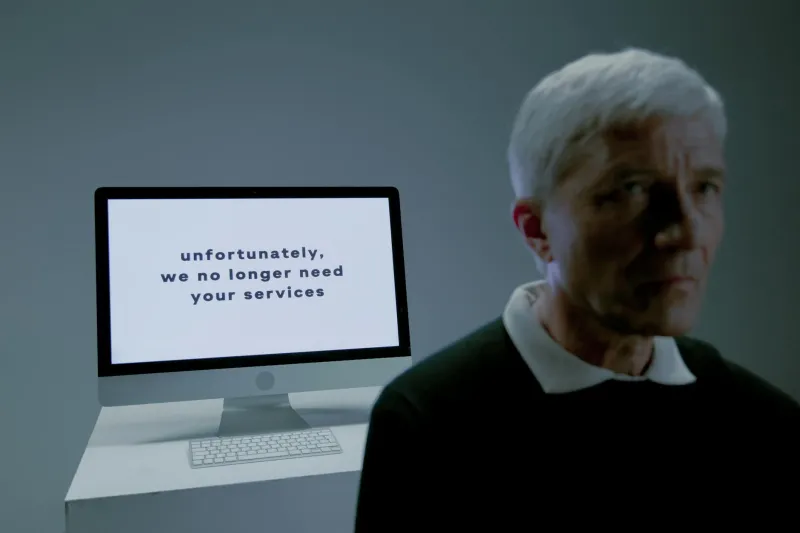
The Gold Watch Is Gone: How Retirement Went From a Finish Line to a Moving Target
For a long stretch of the 20th century, the arc of an American working life had a fairly predictable shape. You got a job — ideally with a decent-sized company or a government employer — you stayed, you contributed, and then somewhere around your early 60s, you collected a pension, received a handshake and possibly a gold watch, and stepped into a retirement that was genuinely designed to last the rest of your life.
That version of retirement still exists, technically. But for most Americans today, it might as well be folklore.
What Retirement Actually Looked Like in 1960
To understand how dramatically things have shifted, it helps to picture the retirement landscape of the mid-20th century clearly.
The defined benefit pension was the centerpiece. Under this model, your employer promised you a specific monthly payment for life after retirement — calculated based on your salary and years of service. You didn't manage it, you didn't stress about market returns, and you didn't make contribution decisions. You just worked, and the promise was kept. At its peak in the early 1980s, roughly 60 percent of private-sector workers with retirement plans had access to a defined benefit pension.
Social Security, established in 1935, had by the postwar era become a genuine and largely reliable foundation. Combined with a pension, it meant that a retiree in 1965 could reasonably expect to cover their basic living costs without ever opening a brokerage account or worrying about whether the stock market was up or down.
There was also a demographic reality working in retirees' favor that rarely gets mentioned: people simply didn't live as long. A man retiring at 65 in 1960 had a life expectancy of roughly 78. That meant a retirement of maybe 13 years needed to be funded — a manageable window for pension systems designed around it.
The Quiet Dismantling of the Old System
The shift didn't happen overnight, and it didn't happen loudly. It happened through a series of policy changes, corporate decisions, and economic pressures that accumulated over decades.
The 401(k) was created almost accidentally — it emerged from a 1978 tax code provision that wasn't originally intended to replace pensions at all. But employers quickly recognized that a defined contribution plan, where employees bear the investment risk, was dramatically cheaper to maintain than a defined benefit pension. Through the 1980s and 1990s, company after company froze or eliminated their pension programs and replaced them with 401(k) plans.
The message to workers, whether stated openly or not, was essentially: you're in charge of this now.
For workers with strong financial literacy, steady incomes, and the discipline to contribute consistently over decades, the 401(k) system can work reasonably well. But that describes a narrower slice of the workforce than the old pension system ever required. The defined benefit model worked even for people who didn't think much about investing, because they didn't have to.
The Numbers Today Are Uncomfortable
The current retirement picture for most Americans is genuinely difficult to look at straight.
The median retirement savings for Americans between 55 and 64 — the people closest to retirement age — sits at roughly $185,000. For someone retiring at 65 and potentially living into their late 80s, financial planners generally suggest having 10 to 12 times your annual salary saved. Very few Americans are anywhere close to that.
Meanwhile, Social Security — while still operational — replaces a smaller share of pre-retirement income than it once did, particularly for middle and higher earners. Full retirement age has been pushed to 67 for anyone born after 1960. And the long-term solvency of the program remains a recurring political conversation without a clean resolution.
The result is a generation of older Americans who are still working — not because they love their jobs, but because stopping isn't financially viable. The labor force participation rate for Americans 65 and older has been rising steadily for two decades. In 1990, about 12 percent of people 65-plus were still working. Today, that figure is closer to 19 percent and climbing.
A Cultural Shift, Not Just a Financial One
Beyond the numbers, something more subtle has changed. Retirement used to be a shared cultural expectation — a milestone that employers, employees, and society all planned around together. The company owed you something. You owed the company your working years. At the end, there was a transaction, and it was honored.
That implicit contract has largely dissolved. The responsibility has shifted entirely onto individuals, and with it has come a new kind of financial anxiety that shadows working life from the first job onward. In your 20s, you're supposed to be thinking about compound interest. In your 40s, you're recalculating whether you're on track. In your 60s, you may be quietly accepting that the finish line moved.
The gold watch was never just about the watch. It was a symbol of a system that acknowledged your contribution and promised security in return. That system, for most Americans, is gone — and what replaced it demands far more from individuals while offering considerably less certainty in exchange.