The Family Medical Bible: How Americans Diagnosed Themselves Before Dr. Google
The Kitchen Table Consultation
Picture this: It's 1978, and your child wakes up with a rash. Today, you'd grab your phone and have seventeen possible diagnoses within minutes, ranging from harmless heat rash to exotic tropical diseases you've never heard of. But in 1978, you'd shuffle to the kitchen in your bathrobe, pull out the family's dog-eared copy of "The Merck Manual for the Home," and spend twenty minutes squinting at black-and-white medical illustrations under the fluorescent light.
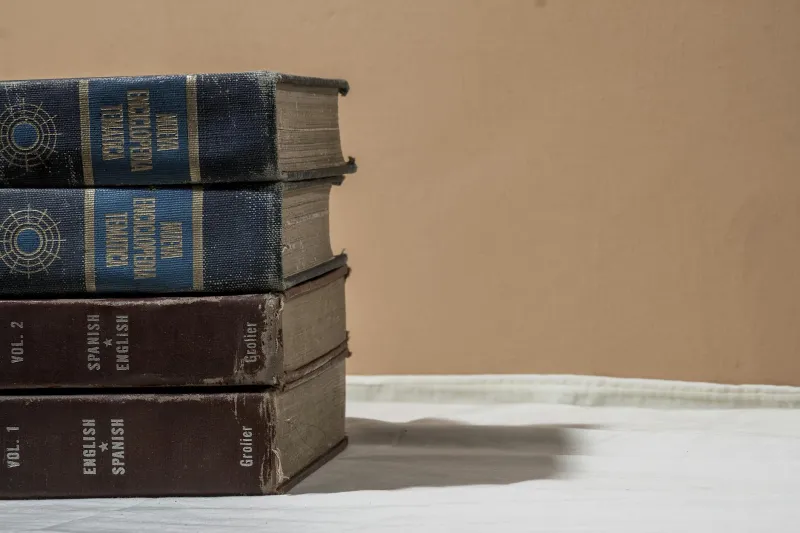
This was America's reality for generations. Medical knowledge lived in heavy books with intimidating names like "The American Medical Association Family Medical Guide" or "Where There Is No Doctor." These volumes sat on kitchen counters and bedroom nightstands like medical security blankets, their pages marked with coffee stains and worried fingerprints.
When the Doctor Was Truly Unreachable
The most striking difference wasn't just the source of information — it was the genuine isolation families felt when medical questions arose. Today's parents can text their pediatrician, video chat with urgent care, or consult online symptom checkers at 3 AM. But before the internet, after-hours medical anxiety meant you were truly on your own until morning.
Doctors had answering services staffed by operators who took messages on paper pads. If you were lucky, the doctor might call back within a few hours. More often, you'd hear: "The doctor will see patients starting at 8 AM tomorrow." This wasn't considered poor service — it was simply how medicine worked.
Families developed elaborate networks of medical folk wisdom to fill the gaps. Every neighborhood had "that mom who used to be a nurse" or the retired teacher who "knew about these things." Phone trees activated when someone's baby had a fever, with advice passing from house to house like a game of medical telephone.
The Reference Book Era
The most trusted medical authorities weren't websites or apps — they were books. "The Merck Manual" became as essential as a first aid kit. Originally written for doctors, it found its way into American homes where families wrestled with its technical language and anatomical diagrams that looked like engineering blueprints.
These books were investments, often costing the equivalent of $100 in today's money. Families treated them with reverence, updating editions every few years like they were replacing the family Bible. The books came with stern warnings about not replacing professional medical care, but everyone used them for exactly that purpose when doctors weren't available.
Reading these manuals required genuine detective work. Without search functions or hyperlinks, you'd flip through indexes, cross-reference symptoms, and try to match your situation to clinical descriptions written in medical jargon. A simple stomachache could send you down rabbit holes of gastroenterological conditions you couldn't pronounce.
The Pharmacy as Information Hub
Before minute clinics and telemedicine, pharmacists served as America's unofficial medical advisors. These weren't the harried technicians behind today's chain pharmacy counters — they were neighborhood fixtures who knew your family's medical history and weren't afraid to offer opinions.
People would describe symptoms to their pharmacist with the same detail they'd give their doctor. "My back's been aching for three days, and it feels worse when I bend over." The pharmacist would ask follow-up questions, recommend over-the-counter remedies, and — crucially — tell you whether this sounded like something that needed a doctor's attention.
This relationship was built over years. Your pharmacist knew you were diabetic, remembered that you were allergic to penicillin, and could spot drug interactions without computer alerts. They filled the gap between home diagnosis and professional medical care in ways that seem almost quaint today.
When Medical Anxiety Had Limits
Perhaps the most profound difference was the natural boundary that limited medical anxiety. Today, you can research symptoms until you've convinced yourself you have everything from a vitamin deficiency to a rare neurological disorder. In 1978, once you'd consulted your medical manual and called your neighbor who "knew about these things," you'd exhausted your research options.
This limitation was both blessing and curse. Families couldn't spiral into the medical rabbit holes that plague today's internet researchers, but they also couldn't access the wealth of legitimate medical information that helps people make informed decisions about their health.
The waiting was different too. When you scheduled a doctor's appointment for next Tuesday, you actually waited until Tuesday. There was no WebMD to consult, no online forums to join, no urgent care centers on every corner. You simply lived with uncertainty until you could get professional answers.
The Transformation
Today's instant medical information represents one of the most dramatic shifts in how Americans relate to their health. We've traded the isolation and uncertainty of the reference book era for immediate access to more medical information than any generation in history has ever had.
The thick medical manuals that once anchored American medicine cabinets have largely disappeared, replaced by smartphones that can identify a skin condition from a photo or connect you with a doctor via video chat. The neighborhood medical wisdom networks have been replaced by online communities where parents share experiences and advice 24/7.
The Lost Art of Medical Patience
What we've gained in information access, we may have lost in medical patience. The families who once waited until morning to call the doctor, who lived with uncertainty until their appointment, who trusted their instincts and home remedies — they inhabited a different relationship with medical anxiety.
Their world wasn't necessarily better or worse than ours, but it was profoundly different. In an age where we can research symptoms faster than we can schedule appointments, it's worth remembering when medical knowledge came from heavy books, trusted neighbors, and the simple acceptance that some questions would have to wait until morning.