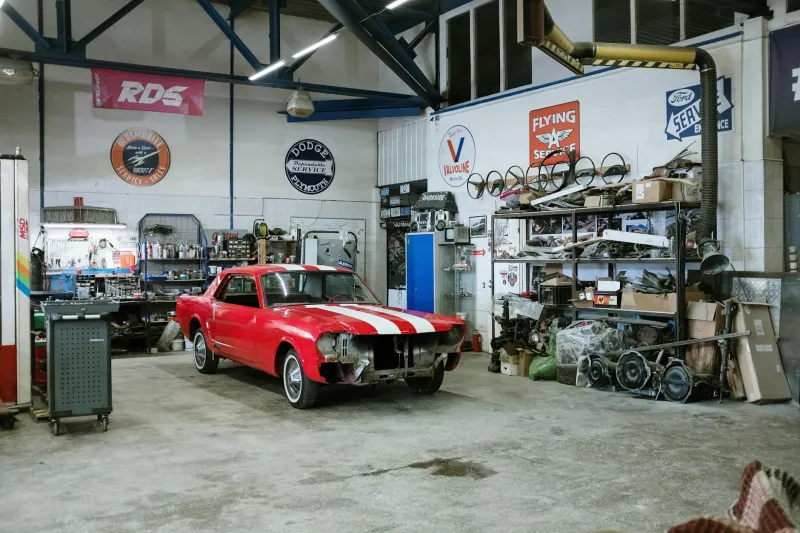
Walk into any American garage today and you'll find a graveyard of broken dreams: printers that cost more to fix than replace, vacuum cleaners abandoned after one belt snapped, and small appliances that died just past their warranty dates. But step back sixty years, and that same garage would have been a workshop where broken things came back to life.
The Golden Age of the Fix
In 1960s America, repair was religion. Every neighborhood had its high priests: the television repairman who made house calls, the shoe cobbler who could resurrect any sole, and the appliance doctor who knew the insides of every Frigidaire and Maytag like a mechanic knows an engine. These weren't desperate measures for desperate times—they were simply how things worked.
Consider the humble television set. When your Zenith Space Command remote stopped working in 1975, you didn't head to Best Buy for a replacement. You called Mel's TV Repair, and Mel showed up at your door with a toolbox and the expectation that he'd have your set running before dinnertime. The average repair cost? About $15, or roughly $75 in today's money. Compare that to the $300-800 you'd spend on a new television today when your current one develops the slightest glitch.
Clothing repairs were so common that most department stores had alteration counters staffed with seamstresses who could patch, darn, and rebuild garments with surgical precision. Socks with holes weren't trash—they were Tuesday evening projects. Mothers taught daughters to darn, and the skill passed down like family recipes.
When Things Were Built to Be Fixed
The difference wasn't just cultural—it was mechanical. Appliances from the 1950s and 60s were designed with repair in mind. Washing machines had accessible parts, clear wiring diagrams pasted inside their cabinets, and components built to standard specifications. You could walk into any hardware store and find the exact belt, knob, or motor brush your Kenmore needed.
Refrigerators were particularly fascinating examples of repairable engineering. A 1962 Whirlpool came with a service manual that assumed the owner might want to understand how their appliance worked. Compressors were accessible, thermostats were replaceable, and door seals could be swapped out in an afternoon. Many of those refrigerators are still running today, having outlasted three or four modern replacements.
Furniture told the same story. A dining room set wasn't a disposable purchase from IKEA—it was an investment meant to last decades. When a chair leg wobbled, you didn't browse for replacements online. You tightened the joints, reglued the connections, or called the local furniture repair shop that specialized in bringing wounded wood back to life.
The Economics of Throwing Away
Somewhere in the 1980s and 90s, the math flipped. Manufacturing costs plummeted as production moved overseas, while labor costs for repairs climbed steadily higher. Suddenly, the hour of work it took to diagnose and fix a coffee maker cost more than buying a new one from Walmart.
Planned obsolescence—the deliberate design of products with limited lifespans—accelerated this shift. Modern appliances often contain proprietary parts that only the manufacturer produces, and many companies stop making replacement components just a few years after a product's release. Try finding a heating element for a five-year-old dishwasher, and you'll discover how thoroughly the repair ecosystem has collapsed.
The environmental cost of this transformation is staggering. The average American household now generates over 70 pounds of electronic waste annually, compared to virtually zero in the pre-digital era. What once would have been a $20 repair job now contributes to landfills that process millions of tons of discarded appliances every year.
The Skills That Vanished
Perhaps more importantly, we lost the knowledge itself. The generation that could rebuild a carburetor, resole a boot, and rewire a lamp is disappearing, taking their expertise with them. Today's young adults often lack the basic tool skills their grandparents considered essential life knowledge.
This wasn't just about saving money—it was about understanding the things you owned. When you fixed your own radio, you learned how it worked. When you patched your own clothes, you understood construction and materials. Americans once had an intimate relationship with their possessions that extended far beyond the initial purchase.
The Repair Renaissance
Interestingly, a small but growing movement is pushing back against throwaway culture. "Right to repair" legislation is gaining traction in several states, demanding that manufacturers provide parts and service manuals for their products. Repair cafes are sprouting up in cities across the country, where volunteers help neighbors fix everything from bicycles to bread makers.
Young people are rediscovering the satisfaction of bringing broken things back to life, sharing repair videos on YouTube and Instagram with the same enthusiasm their grandparents once brought to neighborhood fix-it sessions.
But these efforts remain tiny compared to the massive tide of disposable consumption that defines modern American life. We've traded the inconvenience of waiting for repairs for the environmental cost of constant replacement—and in the process, lost touch with the simple satisfaction of making something work again.
The next time your coffee maker sputters its last breath, pause before heading to Amazon. Somewhere in your community, there might still be someone who remembers when breaking meant building—not buying.