When Americans Fixed Everything With a Toolbox and YouTube Didn't Exist
In 1975, when Mrs. Henderson's kitchen faucet started dripping, she didn't Google "plumber near me" or scroll through Angie's List reviews. She walked next door, borrowed a wrench from Bob, and fixed it herself. If that didn't work, Bob would come over after dinner, and together they'd figure it out. The idea of paying someone $150 to replace a $3 washer would have seemed absurd.
This wasn't because Americans were naturally more mechanically gifted back then. It was because fixing things yourself wasn't a choice—it was the obvious first step when something broke.
The Toolbox Was the Family Bible
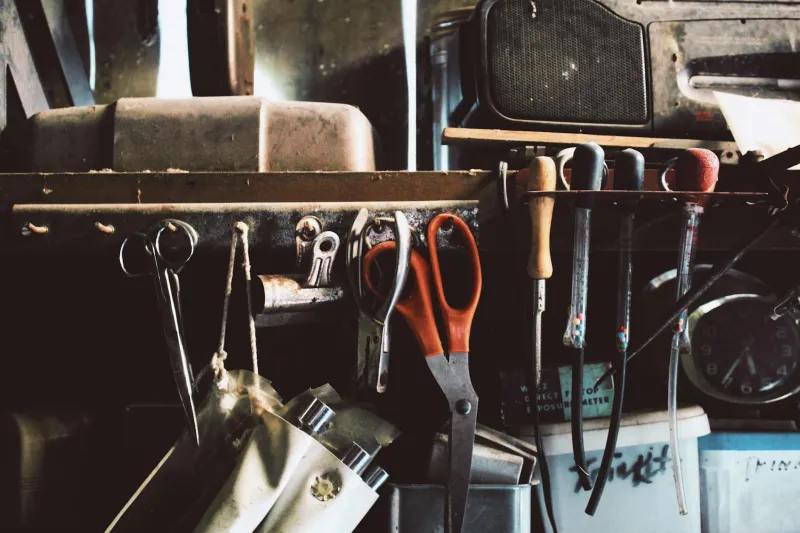
Every American household had a toolbox, and it wasn't just for show. Dad's collection of hammers, screwdrivers, wrenches, and mysterious metal things lived in the garage or basement, ready for action. These weren't precision instruments from specialty stores—they were basic tools that could handle 90% of what went wrong in a typical home.
Kids grew up watching their parents tinker, adjust, and repair. Saturday mornings meant helping Dad fix the lawnmower or watching Mom rewire a lamp. Learning to use tools wasn't a structured lesson—it was osmosis. You held the flashlight while someone else did the real work, gradually picking up skills through observation and necessity.
Today's toolbox, if it exists at all, might contain a screwdriver set, some batteries, and a collection of Allen wrenches from IKEA furniture. The comprehensive workshop has been replaced by the phone number of a handyman.
When Breaking Down Meant Building Up
Appliances were built differently in the mid-20th century, but more importantly, they were designed to be repaired. When your washing machine started making strange noises, you didn't immediately start shopping for a replacement. You opened it up, looked around, and tried to figure out what was wrong.
Manufacturers provided detailed repair manuals with their products. Sears sold individual parts for everything they manufactured. Local hardware stores employed people who could identify mystery screws and suggest solutions for mechanical problems. The entire infrastructure supported the idea that things should be fixed, not replaced.
Contrast this with today's world, where many devices are sealed shut, require specialized tools to open, or cost more to repair than replace. Planned obsolescence isn't just a business strategy—it's trained consumers to think of replacement as the default solution.
The Neighborhood Network
Perhaps the biggest difference was the social aspect of home repair. Fixing things was a community activity. Every neighborhood had its informal experts: the guy who understood electrical work, the woman who could diagnose any appliance problem, the retired mechanic who helped everyone with car trouble.
Knowledge flowed freely between neighbors. If you were stuck on a project, you'd walk down the street and ask for advice. People took pride in helping others solve problems, and there was no shame in admitting you didn't know something. The exchange of favors—I'll help you fix your fence if you help me with my car—was the social currency that held communities together.
Today, we're more likely to text a group chat or post on social media asking for contractor recommendations than knock on a neighbor's door asking for help. Professional services have replaced community knowledge sharing.
When Time Was Cheaper Than Money
The economic calculation was different too. In 1960, the average American earned about $5,300 per year. Calling a professional for a simple repair might cost a day's wages—money most families couldn't afford to spend casually. Time, on the other hand, was abundant. Saturday afternoons were for projects, not scheduled activities.
Modern Americans face the opposite equation. With dual-income households and packed schedules, time has become the precious commodity. Spending four hours figuring out why the garbage disposal isn't working seems wasteful when a professional can fix it in thirty minutes. The $200 service call hurts less than losing a weekend day.
The Confidence Gap
Maybe the most significant change is psychological. Previous generations approached broken things with confidence, even when they had no idea what was wrong. The worst-case scenario was making the problem slightly worse, which didn't seem catastrophic when everything was already broken.
Today's homeowners often feel paralyzed by the possibility of making things worse. Modern homes are complex systems where everything connects to everything else. Touch the wrong wire and you might fry expensive electronics. Make the wrong cut and you could flood the basement. The stakes feel higher, even for simple repairs.
What We Lost in Translation
The shift from DIY necessity to professional dependency represents more than just changing economics. We've lost the satisfaction of solving problems with our hands, the confidence that comes from understanding how things work, and the community bonds formed through shared troubleshooting.
When Americans stopped fixing things themselves, we didn't just outsource repairs—we outsourced a form of self-reliance that connected us to our possessions and our neighbors. The toolbox in the garage wasn't just about saving money. It was about the belief that with enough patience, creativity, and maybe a borrowed wrench, most problems could be solved.
Today's world is undeniably more convenient. Professional services are reliable, efficient, and often come with warranties. But something was lost when Americans decided that fixing things was someone else's job. The question isn't whether we should return to the era of mandatory DIY repairs, but whether we've given up too much in our rush toward professional solutions.
After all, there's still something deeply satisfying about fixing something with your own hands—even if you have to watch three YouTube videos to figure out how.