Picture this: You're standing in the fiction section of your local library on a Saturday afternoon in 1985. There's no smartphone in your pocket, no Amazon app suggesting "customers who bought this also bought that." Just you, thousands of books arranged by author's last name, and the delicious uncertainty of not knowing what story might capture your imagination.
This was how Americans discovered books for most of the 20th century—through wandering, browsing, and the kind of serendipitous encounters that can't be programmed into an algorithm.
The Analog Adventure of Book Discovery
Back then, finding your next read was genuinely unpredictable. You might start by pulling a book because you liked its cover art, only to discover an author who would become a lifelong favorite. Or you'd follow a recommendation from the librarian who remembered that you enjoyed mysteries with strong female protagonists.
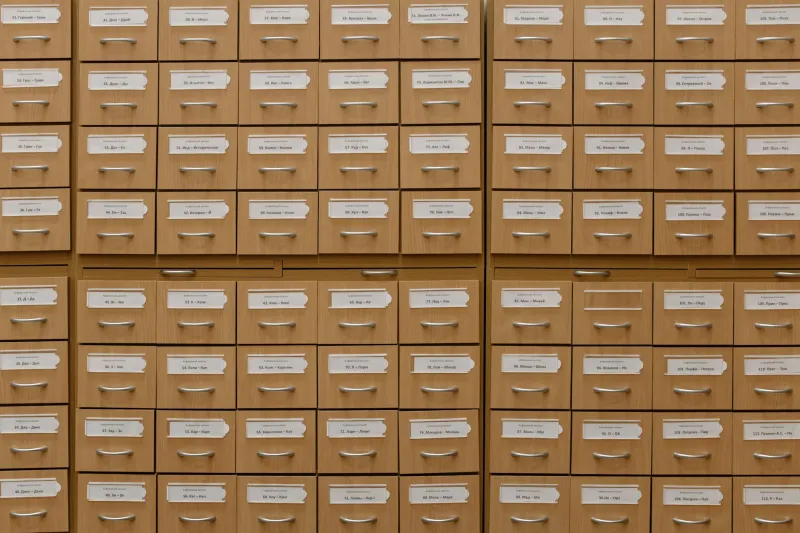
The card catalog system, with its neat rows of typed index cards, was your primary search engine. But unlike today's instant results, using it required patience and strategy. You'd flip through hundreds of cards, reading brief descriptions, cross-referencing subjects, and often stumbling across books you never would have thought to seek out.
Librarians weren't just checkout clerks—they were human recommendation engines with decades of reading experience. Mrs. Henderson at the Riverside branch knew that teenagers who loved "The Outsiders" might also enjoy S.E. Hinton's lesser-known works. She'd write titles on scraps of paper and hand them over like secret treasure maps.
The Beautiful Chaos of Browsing
Physical browsing created a completely different relationship with books. You'd scan entire shelves, letting your eyes drift from spine to spine. A book's physical presence mattered—its thickness, the wear on its cover, even how it felt when you pulled it from the shelf.
Many readers developed personal browsing rituals. Some always started in the new releases section before working their way to the back stacks. Others had favorite aisles they'd visit like old friends. The mystery section regular who knew exactly where Agatha Christie ended and Raymond Chandler began. The science fiction enthusiast who could navigate from Asimov to Vonnegut with eyes closed.
Book discovery often happened in chains. You'd find one author you loved, then systematically read everything they'd written. When you exhausted their catalog, you'd look for books shelved nearby, trusting the alphabetical proximity to yield similar treasures. Sometimes it worked brilliantly. Sometimes you'd end up with something completely unexpected—and occasionally, that unexpected choice became your new obsession.
The Social Network of Reading
Before online reviews and rating systems, book recommendations traveled through genuinely human networks. Friends passed along paperbacks with margins full of penciled notes. Book clubs met in living rooms, not virtual chat rooms. Coworkers left novels on each other's desks with sticky notes saying "you'll love this."
Bookstores functioned as community gathering places where staff recommendations carried real weight. The clerk at the independent bookshop who knew your reading history could guide you toward authors you'd never heard of but would absolutely love. These weren't algorithm-generated suggestions based on purchase patterns—they were human intuitions based on actual conversations about what made a book compelling.
When Libraries Were Cultural Centers
Public libraries served as America's democratic reading rooms, where book discovery happened across economic and social lines. The businessman browsing during lunch break might find himself next to a college student and a retiree, all three discovering different books from the same shelf.
Children's sections buzzed with activity as kids pulled picture books at random, judging them entirely by their covers and first few pages. Summer reading programs introduced young Americans to genres they might never have chosen on their own. The shy kid who thought he only liked comic books might discover fantasy novels. The girl obsessed with horses might stumble into historical fiction.
The Algorithm Revolution Changes Everything
Today's book discovery operates on completely different principles. Amazon's recommendation engine analyzes millions of purchase patterns to suggest your next read. Goodreads uses your rating history to predict what you'll enjoy. Book subscription services curate selections based on detailed preference surveys.
These systems are remarkably efficient. They can introduce you to books that align perfectly with your established tastes. But they also create what researchers call "filter bubbles"—recommendation loops that keep suggesting similar books, gradually narrowing rather than expanding your reading horizons.
The modern reader can find their next book in seconds, but they've lost the element of surprise that came with physical browsing. When an algorithm knows you love cozy mysteries, it's unlikely to recommend experimental literary fiction. The serendipitous discovery—finding a book you'd never search for but absolutely love—becomes increasingly rare.
What We've Gained and Lost
Today's book discovery is undeniably convenient. You can read reviews, preview first chapters, and purchase books instantly. Reading communities exist online where passionate readers share recommendations across geographic boundaries. The sheer volume of available books dwarfs what any physical library could house.
But something irreplaceable disappeared when we traded browsing for algorithms. The physical experience of discovery—the weight of books in your hands, the unexpected conversation with a fellow reader, the librarian who became your literary guide—created a deeper connection to the reading experience itself.
The hunt for your next great read used to be an adventure. Now it's a transaction. Both have their place, but only one could surprise you in ways you didn't know you wanted to be surprised.
In our rush toward efficiency, we've optimized away some of the mystery that made reading feel like exploration rather than consumption. The next time you're in a library, try wandering the stacks without a specific title in mind. You might remember why getting lost was once the whole point.