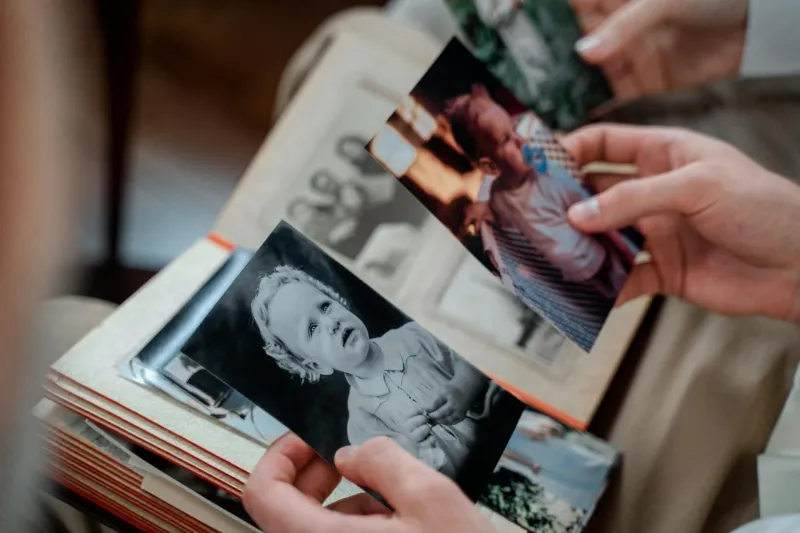
In June 1983, when Jenny Morrison signed her classmate's yearbook with "Stay sweet! Don't ever change!" she meant it literally. Because in the pre-digital world, change wasn't really an option. Your high school identity—captured in grainy black-and-white photos and immortalized in classmate signatures—was permanent. No delete button. No privacy settings. No opportunity to curate a different version of yourself.
For better or worse, the yearbook was forever.
The Weight of Permanent Records
Every spring, America's high school seniors faced a moment of reckoning that today's teenagers can barely comprehend: choosing how they wanted to be remembered forever. Your senior quote, your activity list, your superlative—these weren't rough drafts or temporary posts. They were going to exist as long as paper survived.
The pressure was real, but it was also liberating. Without the option to constantly revise and perfect your image, most students simply presented themselves as they were. The class clown didn't try to reinvent himself as a serious scholar in his senior year—everyone already knew who he was, and the yearbook would confirm it.
Compare this to today's high school experience, where students manage multiple online personas across different platforms. Instagram for the perfect life, Snapchat for authentic moments, TikTok for creativity, LinkedIn for college applications. Each platform allows for careful curation, strategic posting, and the ability to delete anything that doesn't land well.
When Your Reputation Had Roots
In small-town America especially, your yearbook identity carried weight far beyond graduation. The kid who was voted "Most Likely to Succeed" in 1972 would still be introduced that way at the 25-year reunion. The girl who was known for her sense of humor would find people expecting her to be funny decades later.
This permanence shaped behavior in ways that are hard to imagine today. Students understood that their actions would be remembered, discussed, and referenced for years to come. Getting caught doing something embarrassing didn't just mean dealing with immediate social consequences—it meant potentially being known for that moment forever.
The local newspaper often printed senior quotes and graduation honors. In an era before people moved frequently, these public records became part of community memory. Your teenage self wasn't just a phase you went through—it was part of your permanent local identity.
The Democracy of Documentation
Yearbooks captured everyone, not just the photogenic or popular. Every student got their individual photo, usually taken on the same day with the same backdrop and lighting. No filters, no retakes, no choosing your best angle from hundreds of selfies. You got one shot, and that's how you'd be remembered.
The candid photos scattered throughout the yearbook told the real story of high school life. Kids caught mid-laugh in the cafeteria, awkward dance poses at homecoming, intense concentration during chemistry lab. These weren't carefully staged moments—they were genuine documentation of teenage life as it actually happened.
Today's teenagers live in a world of constant documentation, but it's almost entirely self-directed. They choose what to post, when to post it, and how to present themselves. The yearbook removed that control, creating a more democratic but also more vulnerable form of memory-making.
The Ritual of Signing
The last weeks of school were dedicated to yearbook signing—a social ritual that revealed the complex hierarchies and relationships of high school life. Getting certain people to sign your book was a form of social validation. The length and personal nature of someone's message indicated your relationship status.
Popular kids faced the exhausting task of signing hundreds of yearbooks, often resorting to generic messages like "Have a great summer!" Meanwhile, close friends would write novels in the margins, sharing inside jokes and making promises about staying in touch forever.
These signatures became time capsules of teenage emotion and friendship. Reading them years later could instantly transport you back to that specific moment in your relationship with that person. Unlike today's digital messages that can be searched and screenshot, yearbook signatures required you to physically flip through pages to rediscover them.
When Mistakes Became History
Yearbook production was a high-stakes operation because there were no do-overs. If your name was misspelled, if you were accidentally left out of a group photo, if your quote was misattributed—that's how it would exist forever. Yearbook staff members carried enormous responsibility, knowing that their mistakes would outlast their high school careers.
This permanence created a different relationship with imperfection. Students learned to live with their teenage awkwardness being documented, knowing that their braces, bad haircuts, and questionable fashion choices would be preserved for posterity. There was something honest about this acceptance of imperfection that contrasts sharply with today's heavily filtered and edited self-presentation.
The Archaeology of Identity
Decades later, yearbooks became archaeological artifacts of American teenage life. Parents would pull out their high school yearbooks to show their children, creating bridges between generations. These books documented not just individual identities but collective cultural moments—the hairstyles, the slang, the social issues that defined each era.
Unlike social media posts that can be deleted or accounts that can be deactivated, yearbooks remained as physical evidence of who we used to be. They couldn't be edited retroactively to match our current self-image or values. They preserved our teenage selves in amber, complete with all the cringe-worthy moments we'd rather forget.
The Lost Art of Commitment
Perhaps the most significant difference is how permanence shaped identity formation. When you knew your high school self would be preserved forever, you had to commit to being someone. You couldn't test out different personalities or reinvent yourself weekly. This limitation forced a kind of authenticity that's rare in today's fluid digital landscape.
Modern teenagers have unprecedented freedom to explore different aspects of their identity, to make mistakes without permanent consequences, and to curate their image as they grow and change. This flexibility is largely positive, but it comes at the cost of the deep commitment to self that permanence once required.
What Ink Taught Us
The yearbook era wasn't necessarily better—it could be cruel to students who didn't fit conventional molds or who went through difficult periods during their high school years. But it taught valuable lessons about living with consequences, accepting imperfection, and the weight of being truly known by your community.
In a world where everything can be edited, deleted, or reinvented, there's something to be said for the honesty of permanent ink. Your yearbook didn't just capture what you wanted to be remembered for—it captured who you actually were, in all your teenage complexity.
And maybe that's why so many of us still have our yearbooks tucked away in closets, even in the digital age. They're proof that we were real, that we mattered enough to be remembered, and that once upon a time, being yourself was enough—because it had to be.