The Great American Tradition of Being Completely Lost
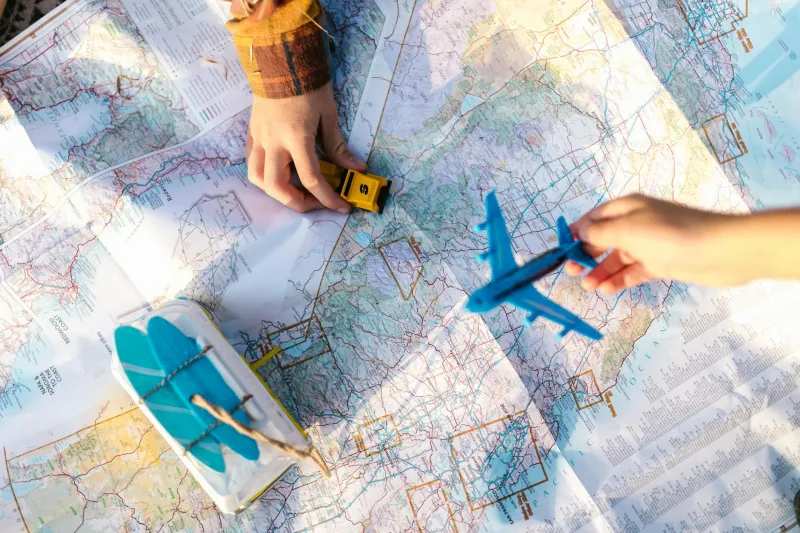
Picture this: You're driving through an unfamiliar city in 1985, squinting at a crumpled Rand McNally atlas while your passenger holds a handwritten list of directions that someone's cousin swore would get you to the wedding venue. The gas gauge is dropping, you've passed the same Dairy Queen twice, and your only hope is pulling into the next service station to ask someone who hopefully knows the area better than you do.
 Photo: Dairy Queen, via imgv2-1-f.scribdassets.com
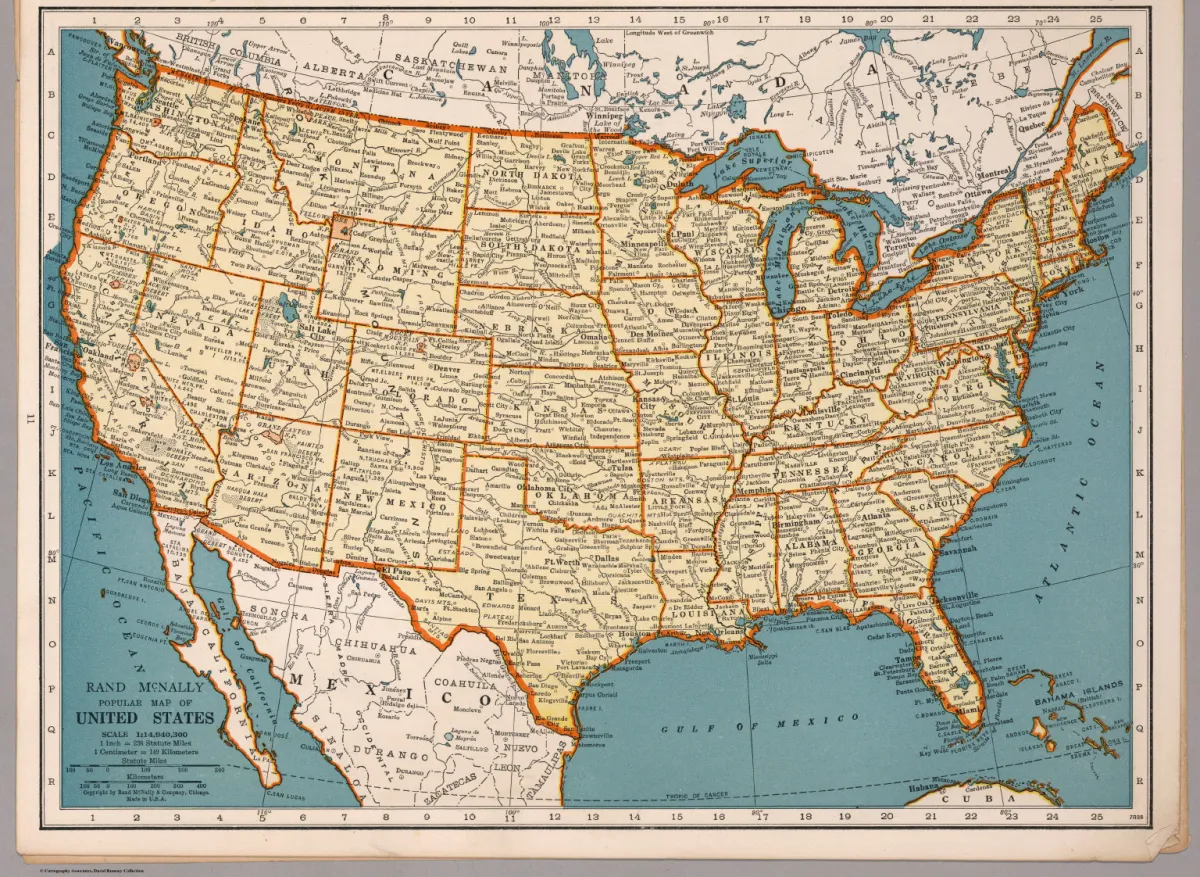 Photo: Rand McNally, via media.davidrumsey.com
This wasn't a nightmare scenario — it was just Tuesday.
Before smartphones turned every American into a navigation expert, getting lost was as much a part of travel as packing a suitcase. The ritual of stopping to ask for directions wasn't a sign of failure; it was how the system worked. And that system, messy as it was, created a uniquely American form of social interaction that disappeared almost overnight when GPS satellites started talking to our phones.
The Gas Station Oracle
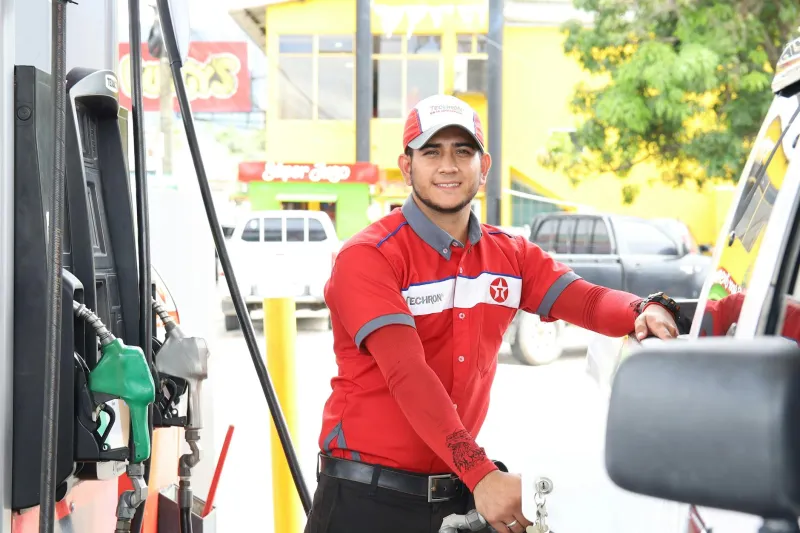
In the pre-digital era, gas station attendants weren't just there to pump fuel and check your oil — they were unofficial neighborhood ambassadors, local historians, and your best hope of finding your way. These folks knew every shortcut, construction zone, and landmark within a twenty-mile radius. They could tell you that the old Miller farm was now a strip mall, that Route 9 was torn up until October, and that you'd want to avoid downtown during the high school football game on Friday night.
The exchange had its own choreography. You'd pull up to the pump, roll down your window, and begin with the universal opener: "Excuse me, do you know how to get to..." What followed was often a masterclass in local geography, complete with hand gestures, references to businesses that may or may not still exist, and the inevitable "You can't miss it" that almost guaranteed you would, in fact, miss it entirely.
These conversations weren't just about directions — they were mini cultural exchanges. The attendant might warn you about a speed trap, recommend a good diner, or share the local gossip. You left with more than just instructions; you got a slice of the community's personality.
The Art of the Napkin Map
When verbal directions weren't enough, Americans became masters of impromptu cartography. Armed with nothing more than a ballpoint pen and whatever paper was handy — usually a napkin, receipt, or envelope — helpful strangers would sketch out your route with the confidence of professional surveyors.
These hand-drawn maps were works of folk art, featuring elaborate landmarks ("Turn left at the big oak tree"), creative shortcuts ("Cut through the Walmart parking lot"), and warnings about local hazards ("Don't take Elm Street — it's all torn up"). The quality varied wildly. Some people could create detailed, accurate diagrams that would make a cartographer proud. Others produced abstract scribbles that looked more like modern art than navigation aids.
But here's the thing: they usually worked. Because the person drawing that napkin map had actually driven those roads, knew which intersections were confusing, and understood that "about two miles" might really mean "until you see the water tower." Their directions came with context that no algorithm could provide.
Wrong Turns and Right Discoveries
Getting lost wasn't always a problem to be solved — sometimes it was an opportunity in disguise. Without the tyranny of the optimal route constantly recalculating in your ear, wrong turns led to unexpected discoveries. That detour through the scenic back roads revealed a covered bridge you never knew existed. Missing your exit introduced you to a mom-and-pop restaurant that became a family tradition.
American road culture was built on these serendipitous moments. The journey mattered as much as the destination because you never knew what you might stumble across. Small towns that weren't on the interstate became hidden gems that only the geographically challenged ever found.
This wasn't just about tourism — it was about understanding your own community differently. Even in your hometown, taking a wrong turn could reveal neighborhoods you'd never seen, shortcuts you'd never considered, or local businesses you'd never noticed from your usual route.
The Social Contract of Directions
Asking for directions required a certain vulnerability that created instant, temporary bonds between strangers. You had to admit you were lost, trust someone you'd never met, and have faith that they wanted to help rather than mislead you. Most of the time, that faith was rewarded.
Americans developed an informal etiquette around these exchanges. Good directions were clear, included landmarks, and came with backup options ("If you hit the railroad tracks, you've gone too far"). Helpful strangers would sometimes even offer to let you follow them part of the way, or suggest you stop at a specific business where someone could help you further.
This social contract extended to passengers, too. The person riding shotgun had responsibilities: hold the map, watch for street signs, and serve as the designated direction-asker when the driver was too proud to admit defeat. These roles created their own relationship dynamics and travel stories that families still laugh about decades later.
What We Lost When We Stopped Getting Lost
Today's navigation is undeniably superior in almost every measurable way. GPS is faster, more accurate, and updates in real-time for traffic and construction. You can plan complex multi-stop trips, avoid tolls, and never worry about whether that gas station attendant really knew what they were talking about.
But efficiency isn't everything. When we stopped getting lost, we also stopped having those random conversations with locals who could tell us about the town's history, the best place to grab coffee, or why everyone avoids Main Street on Saturdays. We stopped discovering those off-the-beaten-path places that only wrong turns could reveal.
Most importantly, we lost a form of human connection that was uniquely American — the willingness of strangers to help each other navigate not just roads, but communities. Those brief encounters at gas stations and parking lots were tiny threads in the social fabric, moments when Americans looked out for each other in the most practical way possible.
The next time your GPS recalculates your route in milliseconds, remember when getting there was half the adventure — and when asking for directions was just another way of saying hello.