Roads to Nowhere: America's Lost Sunday Afternoon Tradition
After Sunday dinner, when the dishes were cleared and the afternoon stretched ahead like an empty highway, American families across the country would perform a ritual that seems almost incomprehensible today: they'd get in the car and drive nowhere in particular.
No GPS coordinates. No Yelp reviews to check. No traffic apps calculating the fastest route. Just the family Buick, a tank of gas, and the simple pleasure of seeing what lay around the next bend. The Sunday drive wasn't about getting somewhere—it was about being together and letting curiosity guide the way.
In our hyperconnected, hyperefficient world, this tradition has vanished so completely that explaining it to younger generations feels like describing an alien ritual.
The Art of Purposeless Wandering
The Sunday drive typically began around 2 PM, after the lunch dishes were done and before evening chores demanded attention. Dad would announce, "Let's go for a drive," and the family would pile into the car—no planning required, no discussion of destinations. Mom might grab her purse and a thermos of coffee. Kids would groan initially but secretly looked forward to the adventure.
The route was improvised. "Let's see what's down that road we've never taken." "I wonder where this path leads." "Didn't Bob mention something about a covered bridge out this way?" The journey unfolded organically, guided by whim and curiosity rather than efficiency or purpose.
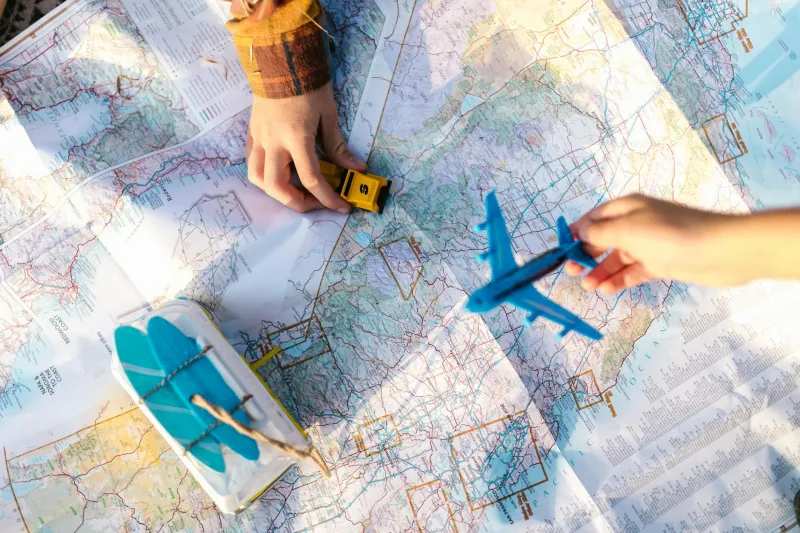
Compare this to today's travel mentality, where every trip is optimized. We check traffic patterns before leaving the driveway, select routes based on real-time congestion data, and know exactly how long each journey will take. The idea of driving aimlessly for hours seems wasteful, even irresponsible.
When Cars Were Living Rooms on Wheels
The Sunday drive happened in an era when American cars were built for comfort, not speed. Those massive bench seats in 1960s sedans could accommodate the whole family, with room for kids to stretch out or even nap in the back. Windows were always down—air conditioning was a luxury—so the car became a mobile porch, open to the sounds and smells of the countryside.
Conversation flowed differently during these drives. Without cell phones, radio was often the only entertainment, and families actually talked to each other. Parents would point out landmarks, tell stories about places they remembered, or speculate about the people who lived in the farmhouses they passed. Kids would play license plate games or compete to spot animals in fields.
Modern family car trips are fundamentally different experiences. Individual entertainment systems, smartphones, and tablets mean family members can travel together while remaining completely isolated from each other and their surroundings. The car has become a mobile office or entertainment center rather than a space for shared experience.
The Geography of Discovery
Sunday drives revealed America to Americans in ways that interstate highways and GPS navigation never could. Families would stumble upon roadside stands selling fresh corn, discover swimming holes that weren't marked on any map, or find themselves in tiny towns that seemed frozen in time. These accidental discoveries became family lore—"Remember that place with the giant rocking chair?" or "Whatever happened to that ice cream stand by the old mill?"
The drives also connected people to their regional geography in intimate ways. Families learned the back roads of their counties, understood how their communities connected to neighboring towns, and developed a mental map of their corner of America that extended far beyond their daily routes to work and school.
Today's navigation technology has eliminated the possibility of accidental discovery. We know where we're going before we leave, we know what we'll find when we get there (thanks to Google Street View), and we take the most efficient route possible. Serendipity has been engineered out of travel.
The Economics of Aimless Driving
The Sunday drive was affordable entertainment for middle-class families. Gas was cheap—around 30 cents per gallon in 1965—and cars were built to last hundreds of thousands of miles. A tank of gas could provide an entire afternoon of family entertainment, costing less than a movie ticket.
The drives also supported a particular kind of American small business: roadside attractions, ice cream stands, fruit markets, and mom-and-pop diners that depended on impulse stops from wandering families. These businesses didn't need advertising or online presence—they just needed to catch the eye of passing drivers who had no particular agenda.
As gas prices rose and cars became more expensive to operate, the economics shifted. Simultaneously, entertainment options multiplied. Why spend money driving around when you could rent a video, go to the mall, or later, browse the internet? The Sunday drive began to seem like an expensive way to do nothing.
When Slow Was the Point
Perhaps the most foreign aspect of the Sunday drive to modern Americans is its relationship with time. These drives were intentionally slow, meandering affairs. Speed limits on country roads were lower, but more importantly, there was no rush to get anywhere. The journey was the destination.
Families would stop frequently—to look at a historic marker, to buy vegetables from a roadside stand, to let kids run around in a park they'd discovered. These stops weren't planned; they happened organically when something caught someone's interest. The entire afternoon might be derailed by the discovery of an antique shop or a particularly scenic overlook.
This stands in stark contrast to contemporary American attitudes toward travel time. We treat time spent traveling as lost time, to be minimized through efficiency and speed. The idea of deliberately taking the long way, or stopping just to see something interesting, feels almost wasteful.
The Social Architecture of Sunday
The Sunday drive existed within a specific social and cultural framework that has largely disappeared. Sundays were genuinely days of rest for most Americans—stores were closed, organized activities were minimal, and families were expected to spend time together. The drive filled the afternoon gap between Sunday dinner and evening preparations for the coming week.
This protected family time has been eroded by the 24/7 economy, youth sports that schedule games on Sundays, and the general acceleration of American life. Even when modern families have free Sunday afternoons, they're more likely to catch up on household tasks, shuttle kids to activities, or simply collapse in front of screens.
What We Lost on the Highway
The death of the Sunday drive represents more than just a change in leisure preferences—it reflects a fundamental shift in how Americans relate to time, space, and each other. We've gained efficiency, convenience, and endless entertainment options, but we've lost something harder to quantify: the art of purposeless exploration, the pleasure of unplanned discovery, and the simple joy of being together without agenda.
In our current world of optimized routes and scheduled activities, the Sunday drive seems almost rebellious—a deliberate rejection of efficiency in favor of experience. Maybe that's exactly what we need.
After all, some of life's best discoveries happen when you're not looking for anything in particular, when you have nowhere to be and all afternoon to get there. The Sunday drive understood something we've forgotten: sometimes the best destination is the one you never planned to reach.
The next time you have a free Sunday afternoon, consider taking the long way home. Turn off the GPS, roll down the windows, and see what you can see. You might rediscover what America used to know: that not all roads need to lead somewhere specific to be worth traveling.