Pull out your phone and Venmo someone $20. The money moves instantly. Your friend gets a notification. The transaction is complete before you've put your phone back in your pocket. The entire exchange takes fifteen seconds and requires zero human trust beyond believing your friend won't immediately spend your money on something ridiculous.
Now imagine a different world: You reach into your wallet and pull out a small booklet filled with numbered slips of paper. You write your friend's name, the amount, today's date, and sign your name with a flourish. Your friend takes this piece of paper — which has zero intrinsic value — and trusts that somewhere, in some bank account, you actually have $20 and that your signature means you're good for it.
This was America for most of the 20th century, when personal checks weren't just a payment method — they were the foundation of an entire economic system built on patience, trust, and the revolutionary idea that a person's word, written in ink, was as good as cash.
The Check-Writing Nation
From the 1950s through the 1990s, Americans wrote checks for virtually everything. Rent checks went out on the first of every month. Grocery bills were settled with checks at the supermarket register while other customers waited patiently behind you. Restaurant tabs were paid with checks, complete with mathematical calculations scrawled on napkins to figure out the tip.
Even small purchases involved check-writing. A $3.50 lunch at the diner? Check. A $8 movie ticket? Check. Splitting a dinner bill four ways? Four separate checks, each requiring careful arithmetic and legible handwriting.
"I wrote maybe thirty checks a month," remembers Barbara Chen, who managed household finances for her San Francisco family throughout the 1970s and 80s. "Electric bill, phone bill, groceries, gas station, department store — everything. My checkbook register was like a diary of our entire life."
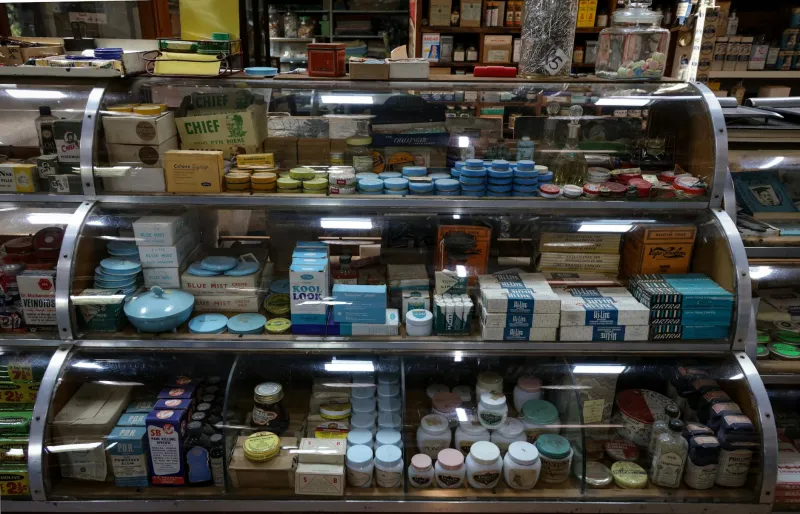
 Photo: San Francisco, via eskipaper.com
This wasn't considered inconvenient or old-fashioned. It was simply how money moved through American society. Banks designed their entire infrastructure around check processing. Employers paid salaries with checks. The U.S. Postal Service delivered billions of checks annually. The whole system hummed along on the assumption that people were generally honest and that a signature actually meant something.
 Photo: U.S. Postal Service, via static.vecteezy.com
The Machinery of Trust
What's remarkable about the check-based economy wasn't the paper itself — it was the massive infrastructure of trust that made it work. When you handed a check to your grocery store cashier, you were asking them to believe several things: that you were who you claimed to be, that you had money in your account, and that you had no intention of defrauding them.
The cashier, in turn, was making their own leap of faith. They'd examine your driver's license, maybe ask for a phone number, and then accept your promise of payment. The grocery store would deposit dozens of these promises at the end of each day, trusting that most customers were honest and that banks would sort out the occasional bad check.
This system required patience that seems almost comical today. Checks took days to "clear" — meaning the money didn't actually move until banks had time to verify funds and process paperwork. You could write a check on Monday and the money wouldn't leave your account until Thursday or Friday. This float time became part of household financial planning, with families carefully timing their check-writing to ensure sufficient funds would be available when checks finally cleared.
The Art of Check Management
Managing a checkbook was a skill that required mathematical precision, organizational discipline, and careful record-keeping. Every check had to be recorded in a register, with running balance calculations that determined whether you could afford your next purchase.
Families developed elaborate systems for check management. Some people wrote checks in numerical order, others reserved certain check numbers for specific types of expenses. Many households had multiple checkbooks — one for the husband, one for the wife, requiring careful coordination to avoid overdrafts.
"You had to be your own accountant," explains Robert Martinez, who ran a small business in Detroit during the check era. "Every night, I'd reconcile my checkbook, making sure I knew exactly how much money I had and which checks were still floating around out there. One mistake and you could bounce a check, which was basically social and financial embarrassment rolled into one."
Bounced checks carried serious consequences beyond bank fees. Writing a bad check was often a criminal offense, and businesses posted warnings about prosecution for insufficient funds. More importantly, bouncing a check damaged your reputation in the community. Word traveled fast in the pre-internet era, and being known as someone who wrote bad checks could affect your ability to shop at local businesses.
The Social Dimension of Payment
Check-writing created social interactions that modern payment methods have eliminated entirely. Every transaction involved human contact — you handed a piece of paper to another person, often accompanied by conversation about the weather, your family, or local events.
Restaurant servers would bring check presenters to your table and wait while you filled out your payment. Store clerks would examine your identification and sometimes ask questions about your address or phone number. These weren't invasive security measures — they were simply part of the human verification system that made check-based commerce possible.
Splitting bills required negotiation, calculation, and trust. If four friends went to dinner, someone had to pay the entire bill with their check, then collect cash or IOUs from the others. This created temporary debts and social obligations that lasted until everyone could settle up — usually at the next social gathering.
The Beginning of the End
Credit cards existed during the check era, but they were primarily used for larger purchases or emergencies. ATM cards provided cash access but weren't widely accepted for purchases. For daily transactions, checks remained king until the 1990s, when debit cards began offering the convenience of cash with the security of bank verification.
The transition away from checks happened gradually, then suddenly. Businesses began posting signs: "We no longer accept checks." Banks started charging fees for check processing. Younger consumers, comfortable with electronic payments, simply stopped carrying checkbooks.
By the 2000s, writing a check at a grocery store had become a minor social embarrassment — a sign that you were either very old or hopelessly behind the times. The payment method that had defined American commerce for fifty years became a relic almost overnight.
What We Lost in Translation
The death of check-writing eliminated more than just a payment method — it removed an entire social and financial ecosystem. The check era required Americans to develop skills that are now obsolete: mental arithmetic, handwriting legibility, financial record-keeping, and most importantly, the ability to function in a trust-based economy.
Modern payment systems are faster, more secure, and infinitely more convenient. But they've also removed the human element from financial transactions. When you tap your card or phone to pay for coffee, you're not asking another person to trust you — you're simply verifying that a computer approves the transaction.
The checkbook era taught Americans that money was personal, that payments required human interaction, and that financial relationships were built on reputation and trust rather than algorithmic approval. In gaining speed and efficiency, we've lost something harder to quantify: the daily practice of making and keeping financial promises to our neighbors.
The next time you Venmo someone for dinner, remember that your grandparents had to look the restaurant owner in the eye, hand them a piece of paper, and trust that their word was their bond. It was slower, more complicated, and required a level of social trust that seems almost naive today. But it also created a world where your signature actually meant something, and where every financial transaction was a small act of faith in human decency.