The Weekly News Appointment
Every Thursday, Americans across the country engaged in a ritual that seems almost quaint today: they sat down with the week's issue of Time magazine and caught up on the world. The cover story might be three days old by the time they read it, but that didn't matter. News wasn't something you consumed minute by minute—it was something you absorbed in thoughtful doses.
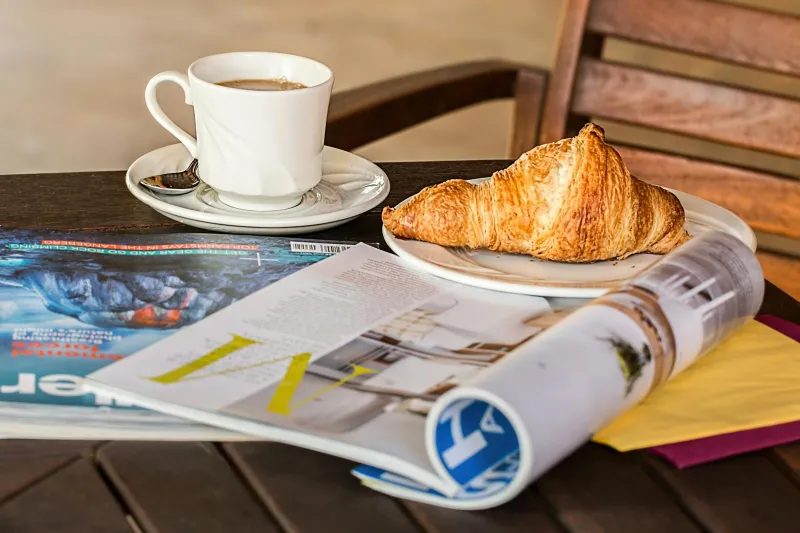
In doctor's offices, barbershops, and living rooms, stacks of magazines served as the primary window into current events for millions of Americans. Life, Look, Saturday Evening Post, and Newsweek weren't just publications—they were institutions that shaped how an entire generation understood their world. The information might have been stale by today's standards, but it came with something we've lost: context, analysis, and the space to actually think about what it all meant.
The Patience of Not Knowing
Consider how Americans learned about major events in the 1960s and 1970s. If something significant happened on a Tuesday, most people wouldn't get the full story until their weekly magazine arrived, or until Walter Cronkite explained it on the evening news. There was no CNN, no Twitter, no push notifications demanding immediate attention.
This delay wasn't seen as a problem—it was simply how information worked. People understood that news had to be gathered, verified, written, edited, printed, and distributed. The process took time, and everyone accepted that some distance between events and understanding was not only normal but probably healthy.
Waiting rooms perfectly captured this relationship with information. A stack of magazines from the past few months provided a kind of archaeological record of recent events. You might read about a political scandal from six weeks ago while waiting for your dentist appointment, gaining perspective that was impossible when the story was breaking news.
Compare this to today's environment, where breaking news alerts interrupt whatever you're doing, demanding immediate emotional reactions to events you barely understand. We've gained speed but lost the luxury of processing information at a human pace.
The Art of the Weekly Summary
Weekly news magazines developed a distinctive style that has largely disappeared: the comprehensive summary. Writers assumed their readers hadn't been following every twist and turn of a story, so they provided background, context, and analysis in digestible packages.
Time magazine's signature approach—confident, sometimes smug, but always comprehensive—shaped how millions of Americans understood everything from foreign policy to cultural trends. A single article might trace a political crisis from its origins to its current status, providing readers with a complete narrative rather than fragmentary updates.
This format encouraged a different kind of civic engagement. Readers weren't expected to have opinions about every development in real time. Instead, they could consider issues after the initial chaos had settled, when patterns became clearer and consequences more apparent.
The Evening News as Appointment Television
Television news in this era operated on the same principle of scheduled information delivery. Walter Cronkite, Chet Huntley, and David Brinkley weren't competing for attention 24 hours a day—they had 30 minutes each evening to tell America what had happened in the world.
Families planned their dinners around the evening news. It was appointment television in the truest sense, a shared national moment when everyone stopped what they were doing to learn about the day's events. The anchors spoke with authority partly because they weren't competing with a constant stream of alternative voices and instant analysis.
If you missed the evening news, you missed it. There were no replays, no on-demand viewing, no endless commentary shows dissecting every story from multiple angles. This scarcity made the information feel more valuable, more worth paying attention to when it was available.
The Paradox of Slower News
Perhaps the most surprising aspect of this slower news cycle was how well-informed people actually were. Without the constant noise of breaking news and hot takes, readers had time to absorb and understand complex stories. Magazine articles could assume a level of attention that seems impossible today, when most online articles are skimmed rather than read.
The weekly format also encouraged deeper reporting. Journalists had time to investigate, interview multiple sources, and craft narratives that explained not just what happened, but why it mattered. The pressure to publish immediately—to get the story online before competitors—didn't exist.
This created a different relationship between news consumers and current events. People felt informed without feeling overwhelmed. They could follow major stories without being subjected to every rumor, speculation, and contradictory report that characterizes modern news cycles.
The Waiting Room as Time Capsule
The stack of magazines in a waiting room served as an accidental archive of recent history. Flipping through issues from the past few months, you could trace how stories developed, see which concerns proved lasting and which faded quickly. This backward glance provided perspective that's harder to achieve when you're constantly focused on the latest update.
A Time magazine from three months ago wasn't outdated—it was historical context. The cover story about a political crisis that seemed earth-shattering in January might look quaint by April, teaching readers something valuable about the temporary nature of most "urgent" news.
This experience of consuming slightly stale information had an unexpected benefit: it taught people to distinguish between what was genuinely important and what was merely current. Stories that still mattered weeks or months later proved their significance. The rest revealed themselves as temporary noise.
What We Lost in the Acceleration
Today's information environment offers obvious advantages: we know about major events as they happen, we can access multiple perspectives instantly, and we can fact-check claims in real time. But we've also lost something valuable that those waiting room magazine stacks represented.
We've lost the ability to not know things temporarily. We've lost the space between events and understanding that allowed for reflection and context. We've lost the shared experience of learning about the world on a schedule that respected human attention spans rather than algorithmic engagement metrics.
Most significantly, we've lost the distinction between being informed and being constantly updated. The weekly news cycle created citizens who understood the broad currents of their time without being subjected to every ripple and eddy. Today's fire hose of information creates the illusion of being better informed while often leaving people more confused and anxious than their magazine-reading predecessors.
The next time you're scrolling through news updates on your phone, imagine waiting until Thursday to learn what happened in the world this week. The delay might seem unbearable now, but it once produced a more thoughtful, less frantic relationship with current events—one that many Americans, buried under the weight of constant information, might secretly welcome back.