The Daily Route: When the Milkman, Iceman, and Bread Wagon Were Your Supply Chain
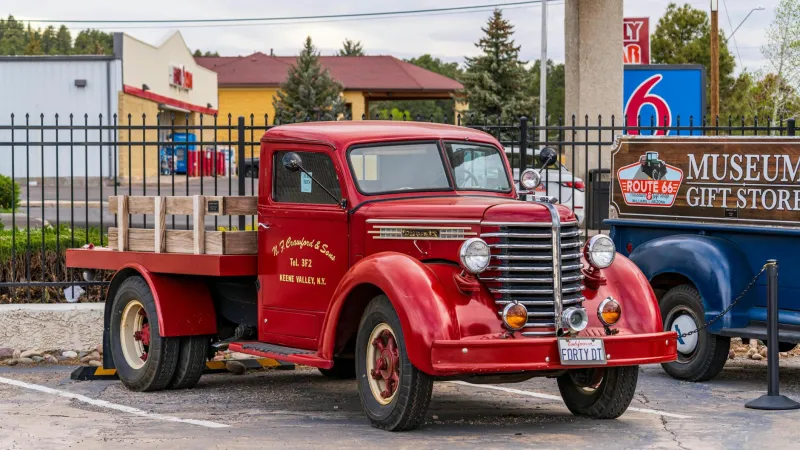
The Sound of the Milkman's Truck
In the 1930s and 1940s, the milkman wasn't a novelty or a luxury service. He was infrastructure. In most American neighborhoods, a milk truck would arrive early in the morning—often before 6 a.m.—and the milkman would make his rounds. Bottles of fresh milk, cream, and buttermilk would be delivered to your front porch or left in a small insulated box. Some customers received milk daily. Others got deliveries three or four times a week.
This wasn't a premium service for wealthy people. It was how ordinary Americans got milk. The alternative was to walk to a store, which might be several blocks away, and carry heavy bottles home. The delivery system was so efficient and so embedded in daily life that it became nearly invisible. You didn't think about how milk appeared on your porch any more than you think today about how packages arrive at your door.
But this simple service required an enormous infrastructure. Dairy companies employed thousands of milkmen. They maintained fleets of refrigerated trucks. They ran routes that covered every neighborhood in every city. The milkman was a familiar figure—often the same person every day, sometimes friendly enough to chat with, always reliable.
The Iceman Cometh, and Nobody Complained
Before electric refrigerators became standard in the 1950s, most American homes didn't have a way to keep food cold. The solution was the iceman.
The iceman delivered large blocks of ice to homes, which were stored in insulated boxes called "iceboxes"—the ancestors of the modern refrigerator. These blocks would keep food cold for several days, but they'd melt, so deliveries had to be frequent. In the hottest months, some customers needed ice delivered every day. In cooler seasons, maybe twice a week.
The iceman would arrive with tongs and a leather apron, carrying blocks of ice that weighed 25 to 100 pounds. He'd place them in the icebox, and the family would use that cold to preserve milk, butter, meat, and vegetables until the next delivery.
It was a laborious system compared to modern refrigeration, but it worked. And it meant that the iceman was as essential to neighborhood life as the water company or the electric utility. In fact, the iceman often became a local character—someone known to the whole block, someone whose arrival was anticipated, someone whose work was essential to survival.
The Bread Wagon and the Butcher's Route
But milk and ice were only part of the delivery economy. The bread wagon came several times a week, often driven by a baker who'd leave fresh bread at the door. The butcher sometimes made rounds, selling meat from a refrigerated truck. The vegetable man came with seasonal produce. The fish wagon arrived on certain days. Some neighborhoods even had dedicated egg deliveries.
Each of these was a separate route, managed by a separate company, employing a separate set of workers. But together, they formed a complete supply chain that brought most of a household's food directly to the door. You didn't go to the grocery store because the grocery store came to you.
This wasn't true everywhere—cities had public markets and small groceries—but in residential neighborhoods and suburban areas, the route system was the primary way people got food. It was decentralized, localized, and surprisingly efficient.
The Economics of the Route
How did this work economically? The answer is that it required a lot of labor. A milkman might make 100 deliveries in a morning. A bread wagon driver might cover 50 stops. The butcher might have 30 regular customers on a route. These weren't high-value transactions—a bottle of milk cost a few cents—but the volume and the regularity made it sustainable.
Customers paid a small premium for the convenience of delivery, but not an enormous one. The system worked because labor was cheap and abundant, and because there were no alternative options. If you wanted milk, you either had the milkman deliver it or you walked to the store yourself.
Routes were valuable property. A milkman with a good route—one with many customers and short distances between stops—could make a decent living. The route itself had value. Drivers were often independent operators or worked for small, local dairy companies. There was no national supermarket chain to compete with them.
The Refrigerator Changed Everything
The decline of the delivery economy didn't happen because of malice or bad management. It happened because of technology: the electric refrigerator.
As refrigerators became affordable and standard in American homes during the 1950s and 1960s, the need for frequent deliveries evaporated. You could now buy milk in bulk and store it for a week. You could buy meat and keep it frozen. You could buy bread and it would stay fresh for days. Suddenly, you didn't need the milkman or the iceman or the bread wagon.
At the same time, supermarkets were expanding. The first supermarket opened in the 1930s, but they didn't become dominant until the 1950s and 1960s. These massive stores offered everything in one place—milk, bread, meat, vegetables, canned goods—at prices lower than the delivery services could match, because they operated at scale.
The combination was devastating. Refrigeration eliminated the need for frequent deliveries. Supermarkets eliminated the convenience advantage of delivery. Within a generation, the entire route-based delivery economy had collapsed. The milkman became a relic. The iceman disappeared entirely. The bread wagon and the butcher's route faded into memory.
By 1970, most Americans did their shopping at supermarkets, buying everything at once and storing it at home. The delivery economy had been completely replaced by the retail economy.
The Return of the Route
Here's where it gets interesting: we're living through a return to route-based delivery, just with different technology and different products.
Amazon Prime and similar services operate on a fundamentally similar principle to the milkman era. Instead of going to the store, you place an order and someone brings the product to your door. The route exists again, but it's optimized by algorithms instead of by human knowledge of the neighborhood. The delivery driver doesn't know their customers personally—they're just following GPS directions to the next stop.
But the underlying logic is remarkably similar. A company maintains a fleet of vehicles. Drivers make multiple stops in a defined area. Customers don't have to leave their homes. The system only works if there's enough density of orders to make the route economically viable.
We're also seeing subscription services—grocery delivery, meal kits, regular shipments of household items—that echo the old milk and bread routes. You sign up, and items arrive on a regular schedule. It's a return to predictability and convenience, even if the mechanism is completely different.
The difference is that the old routes were driven by necessity. There was no alternative. The new routes are driven by choice and convenience. And they're much more expensive, because labor costs are much higher, and because customers now expect the convenience to be optional rather than essential.
What We Gained and What Disappeared
The route-based delivery economy of the early 20th century was inefficient by modern standards. It required enormous amounts of labor to deliver small quantities of goods. The system only worked because there was no alternative and because labor was cheap.
The supermarket system was a massive improvement. It was more efficient, cheaper, and gave customers far more choice. The ability to see the product before buying it, to compare prices and options, to get everything in one trip—these were genuine improvements over the old system.
But something was lost. The milkman knew his customers. He knew which families had children, which ones were elderly, which ones were struggling. He was part of the neighborhood. When the iceman came, it was an event. The bread wagon's arrival was anticipated. These weren't just transactions—they were social connections embedded in the economic system.
Today's delivery services are impersonal by design. The driver is a stranger following GPS coordinates. The interaction is transactional. The algorithm doesn't know or care about you as a person—only about optimizing the route.
In a way, we've come full circle. We've returned to a delivery-based economy after 50 years of retail dominance. But we've lost the human element that made the old system work as a social as well as economic system. The milkman is gone, replaced by the delivery driver. The route remains, but the relationship is gone.
It's faster, cheaper, and more convenient than ever. But the neighborhood connection that once came with a knock on the door at dawn—that's something we've traded away in the pursuit of efficiency.