When Words Had Weight
Every Tuesday, Margaret walked to her mailbox with the same flutter of anticipation she'd felt for three years running. Her son was stationed in Germany, and his letters – when they came – were the highlight of her week. She'd save them until evening, make herself a cup of coffee, and read each word twice, sometimes three times, searching between the lines for clues about his real state of mind.
This wasn't unusual. This was how Americans maintained relationships across distance for most of the 20th century: through the deliberate, patient art of letter writing. No instant responses, no read receipts, no emoji to soften the edges of difficult conversations. Just carefully chosen words, trusted to paper, and sent into the world with hope.
Today, Margaret's granddaughter fires off dozens of messages daily, expecting responses within minutes. The idea of waiting three weeks to hear from someone seems not just inconvenient but almost cruel. Yet for generations of Americans, this patience wasn't a burden – it was simply how communication worked.
The Ritual of Correspondence
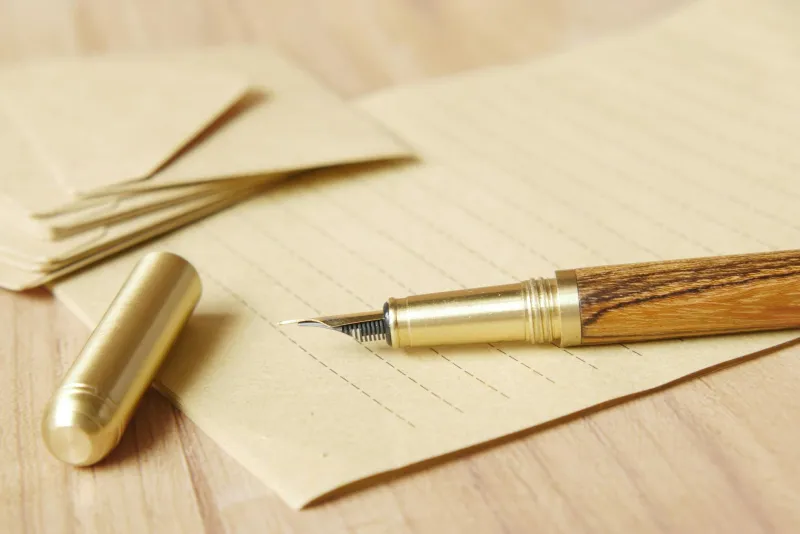
Letter writing in mid-20th century America was a formal affair with unspoken rules. You didn't dash off a quick note on any scrap of paper. Good stationery mattered. Penmanship mattered. The ritual began with selecting the right paper – perhaps your personal letterhead for business correspondence, or the good cream-colored paper for important personal letters.
Families often gathered around the kitchen table on Sunday afternoons for "letter writing time." Children learned proper formatting: date in the upper right corner, greeting on the left, careful attention to spacing and margins. You didn't abbreviate words or use slang. A letter was a small performance, a chance to present your best self on paper.
The physical act itself was meditative. No backspace key meant thinking before writing. Mistakes required starting over entirely, which made people more deliberate with their word choices. The scratch of pen on paper, the careful formation of each letter, the way your hand cramped after two pages – all of this slowed communication down in ways that seem almost luxurious now.
Love Letters and Life Updates
Romantic correspondence was an art form. Couples separated by distance – whether by military service, work, or college – poured their hearts onto paper in ways that text messages rarely capture. These weren't quick "miss you" notes but elaborate declarations, stories about daily life, dreams for the future.
Soldiers in World War II and Vietnam wrote letters that their wives and girlfriends kept in shoeboxes, tied with ribbons. These weren't just communications – they were keepsakes, physical proof of love that could be touched, smelled, reread on difficult days. The paper itself carried meaning: the weight of good stationery, the slight smudge of a tear, the pressed flower enclosed as a surprise.
Family letters served as newsletters before newsletters existed. Mothers wrote round-robin letters that traveled from sibling to sibling, each adding their own news before mailing it to the next family member. These letters became family archives, documenting births, deaths, job changes, and daily life in ways that scattered text messages never could.
The Economics of Distance
Communication cost money in ways that are hard to imagine today. Long-distance phone calls were expensive – often several dollars per minute in today's money. Most families reserved them for emergencies or special occasions. Letters, at the price of a stamp, were the economical choice for staying in touch.
This economic reality shaped relationships. You couldn't casually check in with someone across the country. Maintaining long-distance friendships required genuine commitment. If you moved away, some friendships naturally faded – not from lack of caring, but from the simple friction of keeping in touch.
Businesspeople carried address books filled with carefully maintained contacts. Losing someone's address meant potentially losing touch forever. There was no Facebook to reconnect years later, no Google to track down old friends. Relationships required active maintenance or they withered.
The Patience Economy
Perhaps most striking was how letter writing created what we might call a "patience economy." When you sent a letter, you knew you wouldn't hear back for at least a week, often longer. This built patience into the very structure of relationships.
Arguments unfolded differently when responses took weeks. The immediate heat of anger cooled during the time it took for letters to travel. People had time to think, to reconsider, to craft more thoughtful responses. Misunderstandings that might explode instantly in text message chains had time to resolve themselves.
This patience extended to major life decisions. When getting advice from distant family or friends meant waiting weeks for their input, people learned to sit with uncertainty, to think through problems independently before seeking outside perspective.
The Digital Avalanche
Email arrived in the 1990s like a quiet revolution. Suddenly, letters could travel instantly. The first email users marveled at responses arriving within hours instead of days. But email still maintained some formality – proper greetings, complete sentences, thoughtful composition.
Text messaging shattered what remained of communication formality. Abbreviations proliferated: "u" for "you," "2" for "to." Sentences became fragments. The careful construction of thoughts gave way to streams of consciousness punctuated by emoji.
Social media completed the transformation. Instead of writing detailed letters to specific people, Americans began broadcasting brief updates to networks of hundreds. The intimate, one-to-one conversation became a public performance.
What the Speed Cost Us
Today's communication is undeniably more efficient. We can maintain relationships across vast distances with minimal effort. We can share news instantly, get immediate comfort during difficult times, and stay connected to people we'd have lost touch with entirely in the letter-writing era.
But efficiency came with costs that are only now becoming clear. The thoughtfulness that came from having to get things right the first time. The anticipation that made receiving communication genuinely exciting. The permanence that turned casual correspondence into family history.
Modern digital communication is ephemeral by design. Text messages disappear into phone memory. Emails pile up until we delete them. Social media posts vanish into algorithmic feeds. We communicate more but preserve less.
The Weight of Paper
Perhaps most significantly, we lost the physical weight of communication. Letters had heft – literally and figuratively. They could be held, stored in special boxes, discovered years later in attics. They aged, yellowed, became artifacts of specific moments in time.
Digital communication feels weightless because it is weightless. A text message carries no more physical presence than any other collection of pixels. Love letters can be deleted by accident. Family updates disappear when phones are upgraded.
The transformation from letters to instant messaging represents more than technological progress – it's a fundamental shift in how Americans think about communication itself. We've gained speed and convenience but lost patience, permanence, and the particular intimacy that comes from knowing someone took time to sit down and write to you, and only you.
In our rush to communicate faster, we may have forgotten that some things are worth waiting for.