Gone After Two Rings: The Vanished Art of Catching Someone at Home
Gone After Two Rings: The Vanished Art of Catching Someone at Home
Imagine this: the phone rings while you're in the backyard. By the time you get inside, it's stopped. You have absolutely no idea who called, what they wanted, or whether it was urgent. And there is nothing — not a single thing — you can do about it.
That was just Tuesday in 1965.
Before answering machines became common in American homes during the 1980s, a missed phone call was exactly that: missed. Gone. Swallowed by the ether. No callback number flashing on a screen, no voicemail blinking on your handset, no push notification telling you that Mom tried to reach you at 2:14 p.m. The call happened, and then it didn't, and you'd simply never know.
It sounds almost comically stressful by today's standards. But for most of the 20th century, this was the entirely unremarkable reality of telephone communication in America.
The Phone Was a Two-Way Gamble
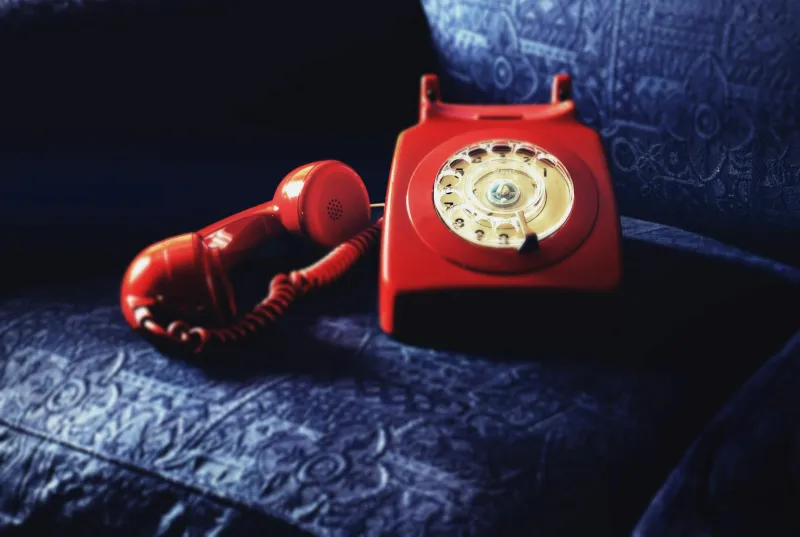
Here's the thing people forget: making a phone call back then was just as uncertain as receiving one. You'd pick up the receiver, dial the number — actually dial it, spinning that rotary wheel one digit at a time — and then hope. Hope that the person was home. Hope that they weren't already on another call, which would give you a busy signal and send you back to square one. Hope that the timing was right.
If no one answered, you hung up. That was it. You might try again in an hour. Or tomorrow. Or you'd just show up at their house.
For personal calls, this created a kind of low-grade social anxiety that's hard to fully appreciate now. Making plans required actual coordination. If you and a friend agreed to meet for dinner on Saturday, that plan was made in advance and it held — because there was no easy way to cancel, confirm, or nudge each other in the days leading up to it. You simply showed up, because you said you would.
Business Ran on Timing and Luck
In professional settings, the stakes were considerably higher. Businesses employed receptionists and secretaries whose entire job, in part, was to make sure calls were answered and messages were taken by hand on small pink slips of paper. "While You Were Out" pads were a genuine office staple — a low-tech solution to a problem that seems almost quaint now but was a daily operational challenge.
Miss a client call? You might not find out until they called again — if they bothered. Important negotiations, job offers, sales leads — all of it could vanish because someone stepped away from their desk at the wrong moment. The telephone was powerful, but it was also deeply unforgiving.
Some businesses installed multiple lines to reduce the chance of a busy signal. Others kept someone near the phone during key hours the way you might keep someone near a loading dock during a delivery window. The phone wasn't just a communication tool. It was a commitment.
The Answering Machine Changes Everything
When consumer answering machines started showing up in American homes in the late 1970s and became genuinely widespread through the 1980s, the shift was profound — even if it didn't feel revolutionary at the time. Suddenly, the call didn't have to land perfectly to matter. You could leave a message. You could know someone called. You could call back.
It sounds basic. It was basic. But it fundamentally altered the relationship between time and communication. For the first time, a phone call could be asynchronous. The caller and the recipient no longer had to occupy the same moment for information to transfer.
From there, the evolution accelerated fast. Voicemail replaced tape-based machines. Caller ID — introduced commercially in the late 1980s — meant you could see who called even if they didn't leave a message. Cell phones untethered the whole system from the wall. And now, in 2025, a missed call generates a notification, a missed call log, often an automatic voicemail transcription, and sometimes a follow-up text from the caller within minutes.
What We Actually Lost
There's a reasonable argument that something small but real disappeared when the missed call became impossible to truly miss.
Back when reaching someone required effort, timing, and a little luck, there was a certain weight to communication. Plans meant something because they couldn't be easily undone with a last-minute text. Showing up mattered. Being reachable was a form of respect.
Today, the expectation of instant contact has flipped the dynamic entirely. Not responding to a message feels like a choice — sometimes even a statement. The burden has shifted from connecting to responding, and the anxiety hasn't gone away so much as changed shape.
The old world asked: Will I be able to reach them?
The new world asks: Why haven't they answered yet?
Different stress. Different era. Same very human need to know that someone, somewhere, is on the other end of the line.