The Doctor Who Knew Your Childhood Secrets: When Healthcare Was Personal, Not Corporate
The Man With the Black Bag
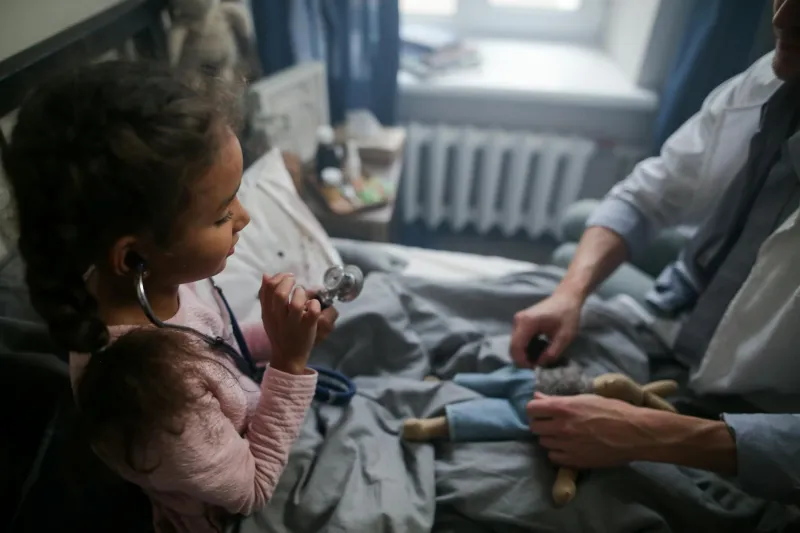
Dr. Henderson knew that little Tommy had been afraid of needles since his first vaccination, that Mrs. Johnson's back pain flared up every winter, and that the entire Miller family carried a genetic predisposition to heart disease. He knew because he had delivered Tommy, treated Mrs. Johnson's pregnancies, and watched three generations of Millers grow up, age, and pass away.
This wasn't exceptional—it was normal. Until the 1960s, most American families had a single family physician who provided cradle-to-grave care. He carried his entire practice in his memory, supplemented by handwritten notes in manila folders. He knew your medical history not because he consulted a computer database, but because he had lived through it with you.
The family doctor made house calls as a matter of course. Childhood illnesses, difficult births, and elderly care all happened in the familiar surroundings of home. The doctor's black bag was a symbol of medical care that came to you, rather than requiring you to navigate sterile institutional settings.
Medicine as Relationship, Not Transaction
The old model of American healthcare was built on decades-long relationships that transcended simple medical transactions. Your family doctor had probably delivered you, treated your childhood illnesses, guided you through adolescence, and would eventually help manage your aging process.
These relationships created a kind of medical intimacy that's almost unimaginable today. The doctor knew your family's financial struggles, your parents' marital problems, and your personal fears about illness. Medical care was embedded in a web of community relationships and personal trust.
Appointments weren't scheduled in twelve-minute increments. The doctor took time to actually talk—about your symptoms, your family, your life circumstances. Medical advice was tailored not just to your physical condition but to your personality, your resources, and your family dynamics.
Payment was often flexible, sometimes involving bartered goods or services. During the Depression, doctors frequently treated patients who couldn't pay immediately, trusting that compensation would come when families could afford it.
The Doctor's Mental Database
Without computer systems or electronic records, family physicians developed extraordinary memories for medical detail. Dr. Peterson could recall that the Thompson boy had a severe reaction to penicillin in 1952, that Sarah Williams had struggled with postpartum depression after her second child, and that the entire Rodriguez family needed to be watched carefully for diabetes.
 Photo: Dr. Peterson, via s1.ticketm.net
This human database created continuity of care that modern medicine struggles to replicate. Every interaction built on decades of accumulated knowledge about not just your medical history, but your family patterns, your response to different treatments, and your personal preferences for care.
The doctor's office was typically a converted room in his house or a small standalone building. The waiting room was filled with neighbors who knew each other, creating a community atmosphere around healthcare that made medical visits social as well as medical events.
When Specialists Were Rare
The family doctor handled everything: broken bones, difficult births, mental health crises, and terminal illnesses. Specialists existed but were consulted only for the most complex cases. Most Americans received all their medical care from a single physician who understood their complete health picture.
This generalist approach meant that medical care was holistic by necessity. The doctor who treated your pneumonia also knew about your anxiety, your work stress, and your family relationships. Physical and mental health weren't artificially separated into different specialties.
Surgery often happened in the doctor's office or the patient's home. Minor procedures, dental work, and even some major operations were performed in familiar settings with trusted physicians rather than in large institutional hospitals.
The Transformation of American Healthcare
The shift away from family medicine happened gradually, driven by advancing medical knowledge, insurance systems, and changing economics. As medicine became more complex, specialization became necessary. As insurance companies standardized payment systems, the personal relationships that defined old-style healthcare became economically unsustainable.
By the 1980s, most Americans received care through networks of specialists, urgent care clinics, and hospital systems. The family doctor who knew your entire medical history was replaced by a series of professionals who consulted computer records and saw you for specific, isolated problems.
House calls virtually disappeared, replaced by emergency rooms and urgent care centers. The personal touch of medicine gave way to efficiency, standardization, and clinical protocols designed to serve large populations rather than individual relationships.
Today's Fragmented System
Modern American healthcare offers unprecedented clinical sophistication but often feels impersonal and fragmented. Patients see different doctors for different problems, often in different locations, with medical records that don't always communicate effectively between providers.
The average primary care appointment lasts twelve minutes. Doctors spend more time looking at computer screens than at patients. The pressure to see more patients in less time has largely eliminated the unhurried conversations that once defined medical care.
Insurance networks determine which doctors you can see, often changing annually and disrupting long-term relationships. The idea of having the same physician for decades has become rare, replaced by the reality of constantly changing providers based on employment and insurance changes.
Telemedicine, accelerated by the COVID pandemic, has made healthcare more accessible but further removed the personal connection that once defined medical relationships.
What We Gained and Lost
Modern medicine offers incredible advantages: advanced diagnostics, sophisticated treatments, evidence-based protocols, and specialist expertise that can save lives in ways the old family doctor never could. Medical outcomes for most conditions have improved dramatically.
But something irreplaceable was lost in the transition. The comfort of being known, the trust built over decades, the holistic understanding of health that came from long-term relationships. The family doctor who delivered your children and held your hand during family crises has been replaced by efficient professionals who provide excellent clinical care but may never really know you.
The economic model of modern healthcare prioritizes efficiency and specialization over relationship and continuity. This creates better clinical outcomes in many cases but often leaves patients feeling like medical consumers rather than individuals with complex, interconnected health needs.
The Search for Connection in Modern Medicine
Some Americans are trying to recreate elements of the old model through concierge medicine, direct primary care, or other arrangements that prioritize longer appointments and ongoing relationships. But these options are often expensive and available primarily to affluent patients.
The challenge for American healthcare is finding ways to combine modern medical sophistication with the human connection that made the old family doctor model so satisfying for patients. Technology offers some solutions—better record-keeping, improved communication tools, and data systems that help providers understand patients more completely.
But ultimately, the question isn't whether we can return to the past—we can't and probably shouldn't. The question is whether we can learn from what worked in the old model while building healthcare systems that are both clinically excellent and deeply human.
The doctor with the black bag may be gone forever, but the human need for medical care that feels personal, trustworthy, and connected to our broader lives remains as strong as ever.