Gas, Maps, and a Prayer: What a Cross-Country Drive Actually Looked Like in 1955
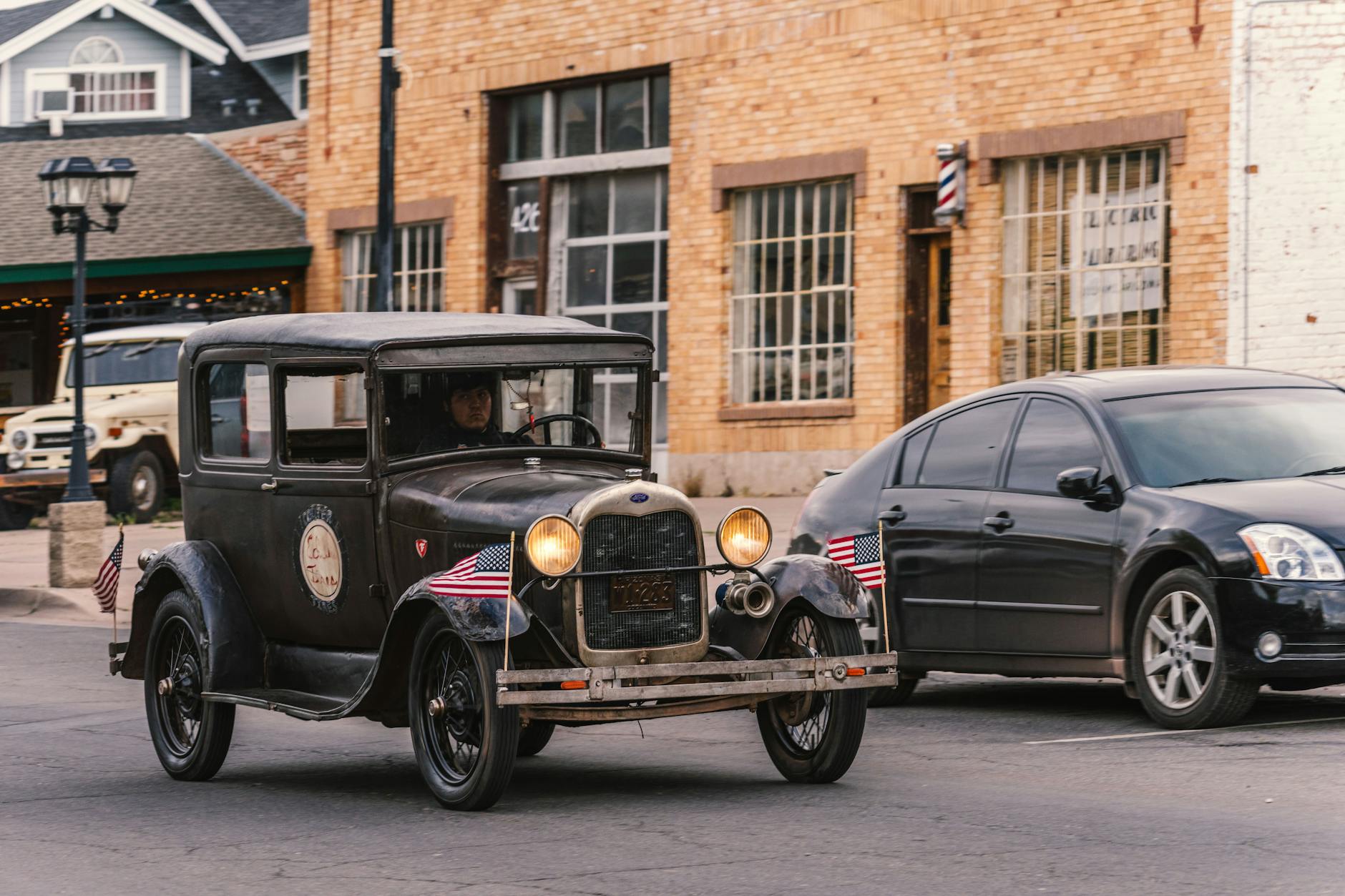
Gas, Maps, and a Prayer: What a Cross-Country Drive Actually Looked Like in 1955
Picture this: you're sitting behind the wheel of a 1955 Chevrolet Bel Air, the windows rolled down because there's no air conditioning, a folded paper map spread across your passenger seat, and somewhere ahead of you lies roughly 2,400 miles of open road between Chicago and Los Angeles. No GPS. No smartphone. No interstate highway system to speak of. Just you, Route 66, and a whole lot of hope.
Today, that same drive takes about 33 hours of moving time according to Google Maps, and most people treat it like a logistical puzzle they can solve in ten minutes on their phone. Back in 1955, it was closer to an expedition.
The Road Itself Was a Different Animal
Here's something that surprises a lot of people: the Interstate Highway System as we know it didn't exist in 1955. President Eisenhower signed the Federal Aid Highway Act in 1956, which means the network of wide, divided, limited-access highways that Americans now take completely for granted was still just a proposal when most of their grandparents were hitting the road.
Before the interstates, cross-country travelers relied on US highways like Route 66 — two-lane roads that wound straight through the middle of every small town along the way. That sounds charming, and sometimes it was. But it also meant stop signs every few miles, slow stretches through downtown districts, and no bypasses around congested areas. A trip from Chicago to LA that might take 30-something hours today could easily stretch to a week or more in 1955, depending on your pace and how often things went wrong.
And things went wrong a lot.
Your Car Was Basically a Gamble
Modern vehicles are engineering marvels by comparison to what people were driving in the mid-1950s. Today's cars routinely go 100,000 miles with little more than oil changes and tire rotations. In 1955, a road trip of any real distance meant packing a toolkit, knowing at least the basics of engine repair, and mentally preparing for the possibility of a breakdown in the middle of nowhere.
Overheating was common. Flat tires were practically a scheduled part of the journey — bias-ply tires of that era were far more vulnerable than modern radials, and most experienced road-trippers expected at least one blowout on a long haul. Fuel efficiency was dismal by today's standards, with many popular cars of the era getting somewhere between 15 and 18 miles per gallon on a good day.
Gas itself cost around 23 cents a gallon in 1955, which sounds wonderful until you adjust for inflation — that's roughly $2.60 in today's money, not far off from what drivers pay now in many states. The financial math wasn't as favorable as the sticker price suggests.
Planning Ahead Wasn't Optional
One of the most underappreciated differences between then and now is how much preparation a road trip required before you ever turned the key. There was no Yelp to find a diner with good reviews, no Hotels.com to book a room on the fly, and no way to check whether the gas station 40 miles ahead was actually open.
Travelers in 1955 relied heavily on the AAA TripTik — a customized, spiral-bound strip map that the auto club would prepare for members, highlighting the route, noting road conditions, and flagging recommended stops. It was genuinely useful, but it required planning days or even weeks in advance. You couldn't just decide on a Tuesday to leave Thursday.
Finding a place to sleep was its own adventure. The motel industry was still in its early boom years, and while Route 66 was lined with independent motor courts and roadside cabins, quality varied wildly. Some were charming. Some were questionable. Chain hotels with consistent standards were rare, and without any way to read reviews or see photos, you were essentially judging a place by its sign from the road.
The Experience Was More Human — for Better and Worse
There's a reason the road trips of that era have such a mythological quality in American culture. Traveling without a safety net forced a kind of engagement with the journey that's genuinely hard to replicate today. You talked to locals at diners because they were your best source of information about what lay ahead. You noticed towns because you drove through the middle of them. You were, in a real sense, present.
But let's not over-romanticize it. Road fatalities in the 1950s were catastrophic by modern standards — the death rate per mile driven was roughly five times higher than it is today. Seatbelts weren't standard equipment. Highway safety was barely a concept. A breakdown at night in a rural area wasn't an inconvenience you'd solve with a roadside assistance app; it was a genuinely stressful situation with no obvious solution.
Same Miles, Different Universe
The distance between Chicago and Los Angeles hasn't moved an inch. But the act of covering that distance has been so thoroughly transformed that a traveler from 1955 would barely recognize the experience. Smooth multi-lane highways, climate-controlled cars, turn-by-turn navigation, same-day hotel bookings, 24-hour truck stops with fast food and clean restrooms — these things feel ordinary now because they've always been there for most people alive today.
They haven't always been there. And appreciating just how recently they arrived makes that next road trip feel a little more remarkable than it might have otherwise.