Brochures, Blind Faith, and a Rotary Phone: The Forgotten Ordeal of Planning a Family Vacation
Brochures, Blind Faith, and a Rotary Phone: The Forgotten Ordeal of Planning a Family Vacation
Picture this: you want to take your family to a beach resort in Florida. You open a browser, filter by dates and budget, scan a few hundred reviews written by real guests in the last six months, pull up satellite imagery of the exact stretch of coastline, compare prices across a dozen booking platforms, and lock in a reservation — all in about twenty minutes, from your couch, in your pajamas.
Now travel back to 1978. Same goal. Completely different journey to get there.
The process of planning a vacation before the internet arrived was a minor project in its own right — one that required weeks of lead time, a healthy relationship with the US Postal Service, and a level of trust in strangers that modern travelers have essentially been trained out of. Here's what it actually looked like.
The Travel Agent Was the Algorithm
For most American families in the 1970s and 1980s, the first step in planning any significant trip was picking up the phone and calling a travel agent. These weren't luxury professionals reserved for the wealthy — they were practical middlemen that ordinary families relied on because the alternative was navigating a genuinely opaque system on your own.
Travel agents had access to reservation systems, airline schedules, and hotel contacts that the average consumer simply couldn't reach independently. They knew which tour operators were reputable, which Caribbean resorts were worth the price, and which budget airlines had a habit of overbooking. That institutional knowledge was real and valuable — and it came bundled with a human relationship that, like banking in the same era, was often the deciding factor in whether a trip came together smoothly.
But working with a travel agent also meant operating on their timeline, within their expertise, and largely trusting their recommendations. Comparison shopping was limited to whatever options they presented. Pushing back required confidence and a willingness to do your own legwork — which brought you to the next step.
Sending Away for the Brochure
For the genuinely motivated vacation planner, there was always the brochure system. Hotels, resorts, state tourism boards, and national parks all produced printed promotional materials — glossy, enthusiastically written pamphlets that presented every destination in its absolute best light.
To get them, you wrote a letter or filled out a postcard request, mailed it off, and waited. Two weeks later, if you were lucky, a small envelope arrived with a foldout brochure featuring carefully selected photographs, room descriptions written in the language of pure optimism, and a rate card that was already potentially out of date.
The photos were chosen by the hotel's marketing department. The descriptions were written by people whose job was to make everything sound wonderful. There were no guest reviews. No candid snapshots of the actual view from Room 214. No complaints about the pool being closed for maintenance or the neighboring construction site. You got the version of the place that the place wanted you to see.
For many families, this was enough. You made your best guess, booked your room, and showed up hoping the reality matched the brochure. Sometimes it exceeded expectations. Sometimes it very much did not.
The Guidebook Problem
For travelers who wanted independent, unbiased information, printed guidebooks were the gold standard. Fodor's, Frommer's, AAA TourBooks — these were serious reference works that families consulted like scripture when plotting out a road trip or an overseas adventure.
The catch? A guidebook published in 1981 was researched in 1980, written through the spring, and printed and distributed by fall. By the time it sat on a shelf in a bookstore and a traveler purchased it for a 1982 trip, some of the information was already two years old. Restaurants had closed. Hotels had changed ownership. Admission prices had gone up. The "charming family-run inn" recommended in chapter four might now be under completely different management.
Experienced travelers learned to treat guidebook information as directional rather than definitive — a starting point, not a guarantee. Calling ahead to confirm that a recommended restaurant still existed was considered basic due diligence. Showing up and finding a parking lot where the landmark used to be was a genuine possibility.
Booking Without Seeing
Perhaps the most striking difference between then and now is this: for most of the pre-internet era, you booked a hotel room without ever seeing a single photograph of it.
You might have a brochure image of the lobby or the pool. You might have a sentence describing the room as "tastefully appointed with modern conveniences." But the actual room — its size, its view, its cleanliness, the quality of the mattress, the noise level from the street — was entirely unknown until you walked through the door with your suitcase.
This wasn't considered unusual or reckless. It was simply how it worked. Travelers developed their own heuristics: stick to familiar chains when possible, call ahead and ask specific questions, ask the travel agent which properties they'd personally visited. And when the room turned out to be smaller, darker, or noisier than hoped? You adapted, because there wasn't much else to do.
The Moment Everything Changed
The internet didn't transform travel planning in one dramatic moment — it happened in stages through the late 1990s and into the 2000s. First came basic airline and hotel websites. Then Travelocity and Expedia introduced price comparison at scale. TripAdvisor arrived in 2000 and fundamentally changed the information balance, putting the honest, unfiltered experiences of real guests directly in front of prospective travelers for the first time.
Google Street View, launched in 2007, meant you could virtually walk the street outside a hotel before booking. Satellite imagery let you see exactly how close the "beachfront" property actually sat from the water. Review platforms aggregated thousands of guest opinions, making it nearly impossible for a genuinely bad property to hide behind polished marketing copy.
The friction didn't just decrease — it essentially evaporated.
What We Gained, What We Traded
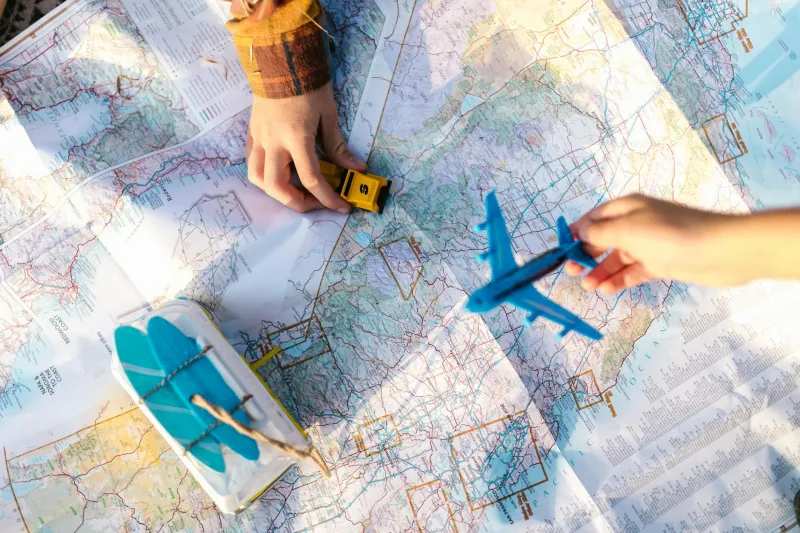
There's a real case for nostalgia here. The anticipation of waiting for a brochure to arrive, the ritual of spreading a paper map across the kitchen table and tracing a route with your finger, the genuine surprise of a destination that turned out to be more beautiful than any photograph could have prepared you for — those experiences had a texture that instant booking can't quite replicate.
But let's be honest about what we traded away: stress, uncertainty, and the very real possibility of a ruined vacation built on outdated information and blind trust. Modern travelers complain about too many choices and decision fatigue. Their grandparents worried about showing up to a hotel that had never heard of their reservation.
The friction is gone. The adventure, if you want it, is still entirely yours to find.