Your Money Was Locked Up Until Tuesday: Banking in America Before the ATM
Your Money Was Locked Up Until Tuesday: Banking in America Before the ATM
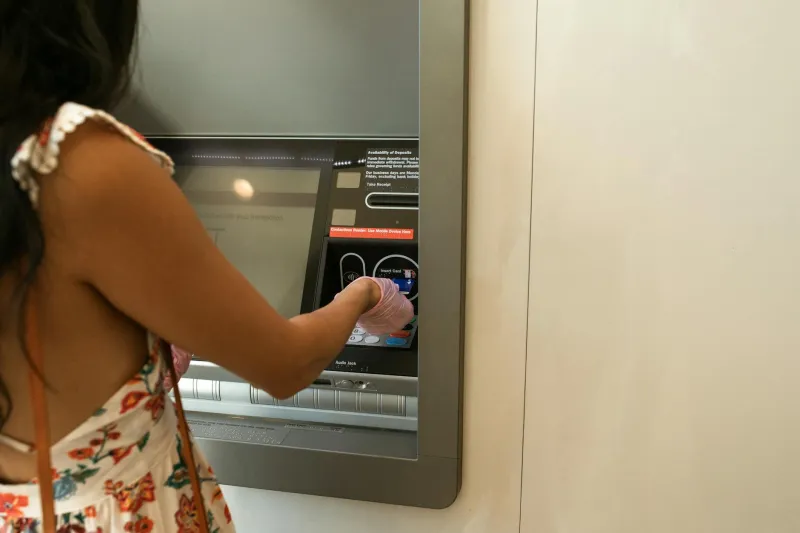
Imagine it's Friday afternoon. You're heading out of town for the weekend, and you suddenly realize you're short on cash. No problem — you'll just stop at an ATM, tap your phone, or transfer funds from your app in about thirty seconds.
Now imagine it's 1965. Same Friday. Same problem. Except the bank closed at 3 p.m., it's already 4:30, and the next time those doors will open is Monday morning. Your weekend just got a whole lot more complicated.
That was the quiet, daily reality of American financial life before the ATM changed everything. And most people today have absolutely no idea how different — and frankly, how inconvenient — managing money used to be.
Banking Was a Relationship, Not a Transaction
In the mid-twentieth century, your local bank branch wasn't just a place you visited. It was a community institution, and the people inside it knew you by name. That wasn't just a nice touch — it was often a practical necessity.
Cashing a check, especially one from an out-of-town bank, frequently required the teller to recognize you or vouch for your identity. If you were a stranger in an unfamiliar town trying to cash a personal check, you might be politely turned away. Banks had significant discretion, and trust was currency in its own right.
For regular customers, this personal relationship had real value. A teller who knew you might cash a check a little larger than the rules technically allowed, or process something quickly as a favor. But that same system left travelers, newcomers, and anyone without deep local roots in a genuinely difficult spot.
The Tyranny of Banker's Hours
The phrase "banker's hours" didn't become a cultural shorthand for cushy scheduling by accident. For most of the 1950s and 1960s, banks across America operated on schedules that seemed almost designed around the needs of the bank rather than the customer. Typical hours ran roughly 9 a.m. to 3 p.m., Monday through Friday. Saturday hours, where they existed at all, were limited. Sundays? Completely out of the question.
This meant that anyone who worked a standard nine-to-five job had a narrow window — essentially their lunch break — to conduct any banking business. Depositing a paycheck, withdrawing cash, or handling anything more complex meant either racing over on your break or taking time off work. The idea of banking on your own schedule was simply not part of the equation.
Missing that window had consequences. Run short on cash Thursday evening? You were stretching what you had until Monday. Planning a road trip that started Saturday morning? You'd better have withdrawn your travel money by Wednesday, just to be safe.
Cash on the Road: A Logistical Puzzle
Family vacations in the pre-ATM era required a level of financial planning that would feel almost surreal today. Before leaving home, you had to calculate — as accurately as possible — every dollar you expected to spend over the entire trip. Gas, motels, meals, souvenirs, emergencies. You'd withdraw a lump sum and carry it with you, in cash, for the duration.
For longer trips, traveler's checks became the practical solution. Introduced by American Express in the late 1800s and widely used through most of the twentieth century, these pre-purchased checks offered some security against loss or theft — you could report them missing and eventually get replacements. But cashing them still required finding a bank or a participating merchant willing to accept them, which wasn't always a given in smaller towns.
Running short on a Sunday in a small town wasn't just inconvenient. It could mean skipping dinner, sleeping in the car, or calling home to ask a relative to wire money — a process that itself took time and cost fees. There was no quick fix. You either had the cash or you didn't.
The First ATMs Were Treated Like Science Fiction — And Not in a Good Way
When Barclays Bank in the UK installed what's widely considered the first true ATM in 1967, the concept was genuinely radical. The United States followed with its own early machines in the late 1960s and into the 1970s, but public adoption was slow — and skeptical.
Many Americans simply didn't trust the machines. Would the transaction actually go through? What if it took your card and didn't give it back? What if it dispensed the wrong amount? The idea of handing your financial business over to an unattended machine felt deeply uncomfortable to a generation that had built its banking life around human relationships and face-to-face accountability.
Banks had to work hard to convince customers to try ATMs at all. Some offered small cash bonuses just to get people to use the machines for the first time. Adoption crept forward slowly through the 1970s before finally accelerating in the 1980s as the technology proved reliable and the convenience became impossible to ignore.
What We Stopped Noticing
Today, the average American barely registers the act of getting cash. An ATM on every corner, a bank app on every phone, and a debit card accepted nearly everywhere means money is essentially always accessible — at midnight, on Christmas, in a town you've never visited before.
The friction that once defined everyday financial life has been almost completely erased. We've gained something genuinely remarkable: the ability to move money on our own terms, on our own schedule, without needing to know anyone's name or plan days ahead.
But there's something worth pausing on in that old system too. The teller who knew your family, the branch that was woven into the fabric of a neighborhood, the deliberate pace that forced people to think ahead — those things weren't all bad. They were just the cost of a world that hadn't figured out a better way yet.
The better way arrived. It just took longer than you might think.