When 'See You at Dinner' Was Enough
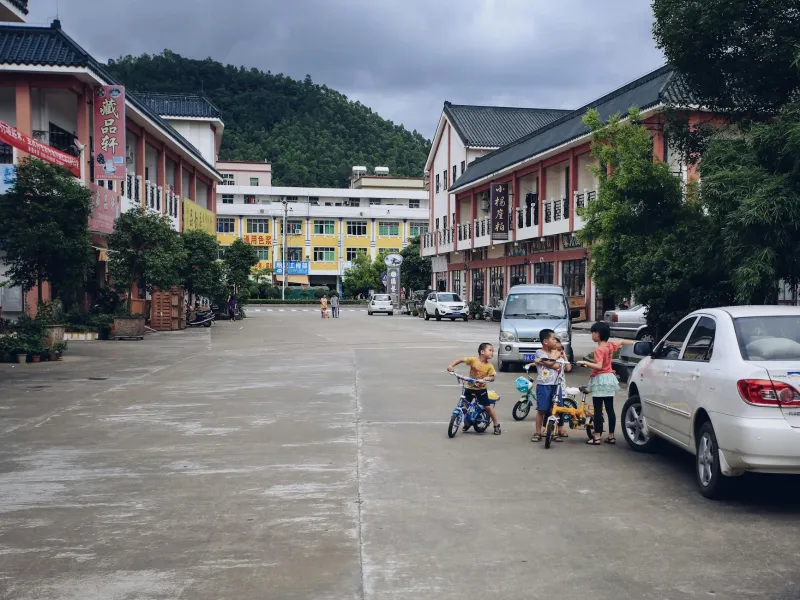
At 3:15 PM on a Tuesday in June 1978, ten-year-old Danny grabbed his bike from the garage and called to his mother, "Going to the creek!" Her response floated through the kitchen window: "Be back by six!" And that was it. No cell phone check-ins, no GPS tracking, no detailed itinerary of where exactly he'd be or which friends he might encounter.
Danny and his neighborhood crew would spend the next five hours building forts, catching frogs, and inventing elaborate games that required nothing more than sticks, imagination, and the kind of boredom that modern parents seem terrified their children might experience. When the streetlights came on, kids materialized from all corners of the neighborhood, grass-stained and exhausted, ready for dinner and maybe some TV before bed.
Today, Danny's grandson Marcus has a different kind of summer. Monday is soccer camp from 9 to 12, followed by lunch and academic enrichment until 3. Tuesday brings swimming lessons, Wednesday means art camp, Thursday is back to soccer, and Friday offers the luxury of "free play" – which still happens under careful supervision at a structured playdate arranged days in advance through a text chain between parents.
The transformation of American childhood from autonomous adventure to managed experience represents one of the most dramatic shifts in family life over the past fifty years. We've essentially professionalized childhood, turning what used to be free-form exploration into a carefully curated sequence of skill-building activities.
The Geography of Freedom
In the 1970s and 80s, most American children operated within what researchers call a "roaming radius" – the distance they were allowed to travel unsupervised. For suburban kids, this often stretched several miles from home. Children as young as eight walked to school alone, rode bikes to friends' houses across town, and spent entire afternoons in local parks without adult supervision.
Neighborhoods functioned as extended playgrounds. Kids knew which yards they could cut through, which dogs were friendly, and which houses had the best trees for climbing. They developed intimate knowledge of their physical environment – every shortcut, hiding spot, and adventure zone within biking distance.
The concept of "stranger danger," while not entirely absent, hadn't yet crystallized into the pervasive anxiety that shapes modern parenting. Children were taught basic safety rules, but the default assumption was that the world was generally safe for kids to navigate independently.
Compare this to today's reality: the average child's roaming radius has shrunk by 90% since the 1970s. Many suburban children have never walked anywhere alone, even within their own neighborhoods. The idea of an eight-year-old walking to school solo now seems not just unusual but potentially negligent.
The Scheduling Revolution
Summer vacation once meant exactly that – vacation from structure, schedules, and adult-directed activities. Children woke up when they wanted, ate lunch when they got hungry, and filled their days with self-directed play. Boredom was not a crisis to be solved but a natural state that led to creativity and independence.
The typical summer day for a 1970s child was gloriously unplanned. You might start by riding bikes with neighborhood friends, migrate to someone's backyard for an impromptu baseball game, get distracted by an interesting bug or construction site, and end up spending two hours building an elaborate mud fortress. Plans changed constantly based on whim, weather, and who happened to be around.
Today's children experience summer more like a series of mini-semesters. Parents research camps months in advance, comparing curricula and outcomes. Children's schedules are coordinated through shared Google calendars. Even "free time" is often scheduled – "Marcus has free play from 2 to 4 PM on Saturday."
This shift reflects changing parental anxieties about competition and achievement. Summer is no longer seen as a break from learning but as an opportunity for enrichment. Parents worry that unstructured time means falling behind academically or missing out on skill development that other children are receiving.
The Vanishing Art of Self-Entertainment
Perhaps nowhere is the change more dramatic than in children's relationship to boredom. In previous generations, "I'm bored" was met with suggestions like "go find something to do" or "boredom is good for you." Children were expected to generate their own entertainment, solve their own social conflicts, and navigate their own adventures.
This forced self-reliance created a particular kind of resilience. Kids learned to negotiate with peers without adult mediation, to entertain themselves without external stimulation, and to assess and manage physical risks independently. They developed what psychologists call "executive function" – the ability to plan, organize, and regulate their own behavior.
Modern children, by contrast, rarely experience true boredom. When not in structured activities, they have access to infinite entertainment through screens. When conflicts arise during playdates, parents step in to mediate. When they face physical challenges, adults provide immediate assistance or remove the obstacle entirely.
The result is a generation that's incredibly accomplished in adult-directed activities but often struggles with self-direction, risk assessment, and independent problem-solving. Many college counselors report seeing students who excel academically but struggle to manage basic life decisions without parental input.
The Safety Paradox
The irony of modern childhood management is that it emerged during the safest period in American history for children. Crime rates, accident rates, and most other measures of child safety have improved dramatically since the 1970s. Yet parental anxiety about child safety has skyrocketed.
This disconnect reflects the amplifying effect of media coverage and social media. Rare but tragic events receive national attention, creating the perception that dangers are more common and more immediate than they actually are. Parents who grew up with considerable freedom now feel that providing similar independence would be irresponsible.
The 24-hour news cycle and social media have made every parent acutely aware of worst-case scenarios. Stories of children being injured during unsupervised play or approached by strangers spread instantly, reinforcing the sense that constant vigilance is necessary.
Meanwhile, the risks of over-supervision – decreased physical fitness, reduced independence, increased anxiety – receive less attention because they're gradual and less dramatic than acute safety threats.
Technology Changes Everything
Smartphones and GPS tracking have made helicopter parenting logistically possible in ways previous generations couldn't imagine. Parents can now monitor their children's exact location in real-time, communicate instantly, and coordinate complex schedules through apps.
What started as safety tools have become management systems. Children carry phones not primarily for their own convenience but to ease parental anxiety. The result is that children are simultaneously more monitored and more isolated than previous generations – connected to parents constantly but often disconnected from peers and their physical environment.
Social media has also changed the stakes of childhood experiences. What used to be private experimentation and mistakes now risk becoming permanent digital records. Parents feel pressure to curate not just their children's activities but their children's online presence.
The Academic Arms Race
The transformation of childhood also reflects changing economic realities. As college admission has become more competitive and economic inequality has increased, parents feel intense pressure to give their children every possible advantage. Summer camps aren't just fun – they're resume builders. Free play isn't just entertainment – it's a missed opportunity for skill development.
This "enrichment arms race" means that what used to be luxury activities – private lessons, specialized camps, tutoring – have become standard expectations in many communities. Parents who might prefer a more relaxed approach feel compelled to keep up with increasingly intensive childhood programming.
The result is childhood that looks remarkably similar to adult professional life: packed schedules, constant evaluation, and little time for genuine rest or self-directed exploration.
What We've Gained and Lost
Today's children are undoubtedly more skilled, more educated, and more supervised than previous generations. They have access to opportunities and experiences that would have been unimaginable to their grandparents. They're safer in measurable ways and more prepared for academic success.
But they've also lost something essential: the experience of genuine autonomy, the confidence that comes from navigating challenges independently, and the particular kind of creativity that emerges from unstructured time and space.
The question facing American parents isn't whether to return to 1970s-style childhood – that's neither possible nor entirely desirable. Instead, it's whether we can find ways to preserve what was valuable about childhood independence while addressing legitimate modern concerns about safety and achievement.
The transformation of American childhood reveals our broader cultural shift from accepting risk as part of growth to viewing risk as something to be eliminated entirely. In trying to protect our children from every possible harm, we may have inadvertently harmed their ability to protect themselves.
The children who once disappeared into neighborhoods until dinner weren't just having fun – they were learning to be human in ways that no amount of structured programming can replicate. The question is whether we're wise enough to remember that before it's too late.